Ubi has developed into an important business and industrial area in eastern Singapore, with a strong presence of engineering companies, equipment suppliers, technical service providers, inspection businesses, construction-related firms, and other specialized operations. For organizations whose work depends on reliable inspection and technical judgment, having a structured system for competence, impartiality, procedures, and records can be essential.
ISO/IEC 17020:2026 Certification Consultant in Ubi provides consultancy and accreditation-readiness support for organizations that perform inspection activities. Global Quality Services (GQS) helps businesses understand the requirements of the standard, review their existing inspection practices, strengthen technical and management controls, and prepare for the applicable accreditation assessment.
In Singapore, ISO/IEC 17020 is used as a basis for accreditation of inspection bodies through the Singapore Accreditation Council (SAC). SAC states that accreditation is available to both in-house and independent inspection bodies and is granted for a defined scope of inspection activities.
Why Is ISO/IEC 17020:2026 Important for Businesses in Ubi?
Inspection companies in Ubi may work with machinery, structures, equipment, construction activities, engineering systems, vehicles, or other technical assets. Their customers need confidence that inspection results are based on competent personnel, appropriate methods, objective evidence, and controlled decision-making.
ISO/IEC 17020:2026 provides a framework for managing these requirements. It addresses how an inspection body operates, including its competence, impartiality, inspection processes, personnel, equipment, records, and reporting arrangements.
For a technical business in Ubi, the standard can therefore become part of the organization’s operational structure rather than simply another compliance document.
Competent Inspection Personnel
Inspectors need appropriate qualifications, experience, technical knowledge, training, and authorization for the activities they perform. Competence should be demonstrated and maintained through suitable records and evaluation.
Impartial Inspection Decisions
Inspection findings need to be based on objective evidence. Organizations should identify potential risks to impartiality and establish controls where commercial, financial, personal, or organizational relationships could affect inspection decisions.
Controlled Inspection Methods
Inspection bodies need suitable procedures and instructions for the activities included in their accreditation scope. SAC’s inspection requirements also emphasize maintaining applicable standards, codes, technical literature, and inspection procedures.
Reliable Records and Reports
Inspection records should provide enough evidence to demonstrate what was inspected, how it was inspected, who performed the work, what findings were identified, and how the final decision was reached.
Who Can Benefit From ISO/IEC 17020:2026 Consultancy in Ubi?
Engineering Inspection Companies
Engineering firms providing independent inspection, examination, verification, or technical assessment can establish a more structured system for managing inspection activities.
Equipment and Machinery Inspection Providers
Organizations involved in inspection of machinery, lifting equipment, pressure equipment, or other technical assets can use a defined management system to support consistent inspection practices.
Construction and Structural Inspection Firms
Companies involved in structural steelwork, building-related inspection, site investigation, or construction supervision may require clearly defined competencies, inspection methods, and reporting controls.
Testing and Technical Service Providers
Specialized companies providing technical inspection, surveying, measurement, or conformity assessment services can benefit from documented processes and controlled personnel authorization.
In-House Inspection Functions
ISO/IEC 17020 is not limited to independent inspection companies. SAC’s scheme also covers in-house inspection bodies, subject to the applicable accreditation requirements and scope.
ISO/IEC 17020:2026 and Ubi’s Engineering Environment
The character of Ubi makes the standard particularly relevant to businesses that combine technical expertise with practical inspection work.
Areas such as Ubi Avenue, Ubi Crescent, Ubi Road, Ubi Techpark, and Kaki Bukit contain businesses involved in engineering, machinery, equipment, construction, technical services, and other specialized commercial activities.
Nearby Eunos and Kaki Bukit also connect Ubi with a wider eastern Singapore network of industrial and technical businesses. This makes it practical for an inspection organization to develop an accreditation system that can support work across multiple customer sites while maintaining the same technical and management controls.
For organizations serving customers outside Ubi, a well-defined ISO/IEC 17020 system can also provide a structured basis for demonstrating competence and reliability across different inspection assignments.
What Are the Benefits of ISO/IEC 17020:2026 Accreditation?
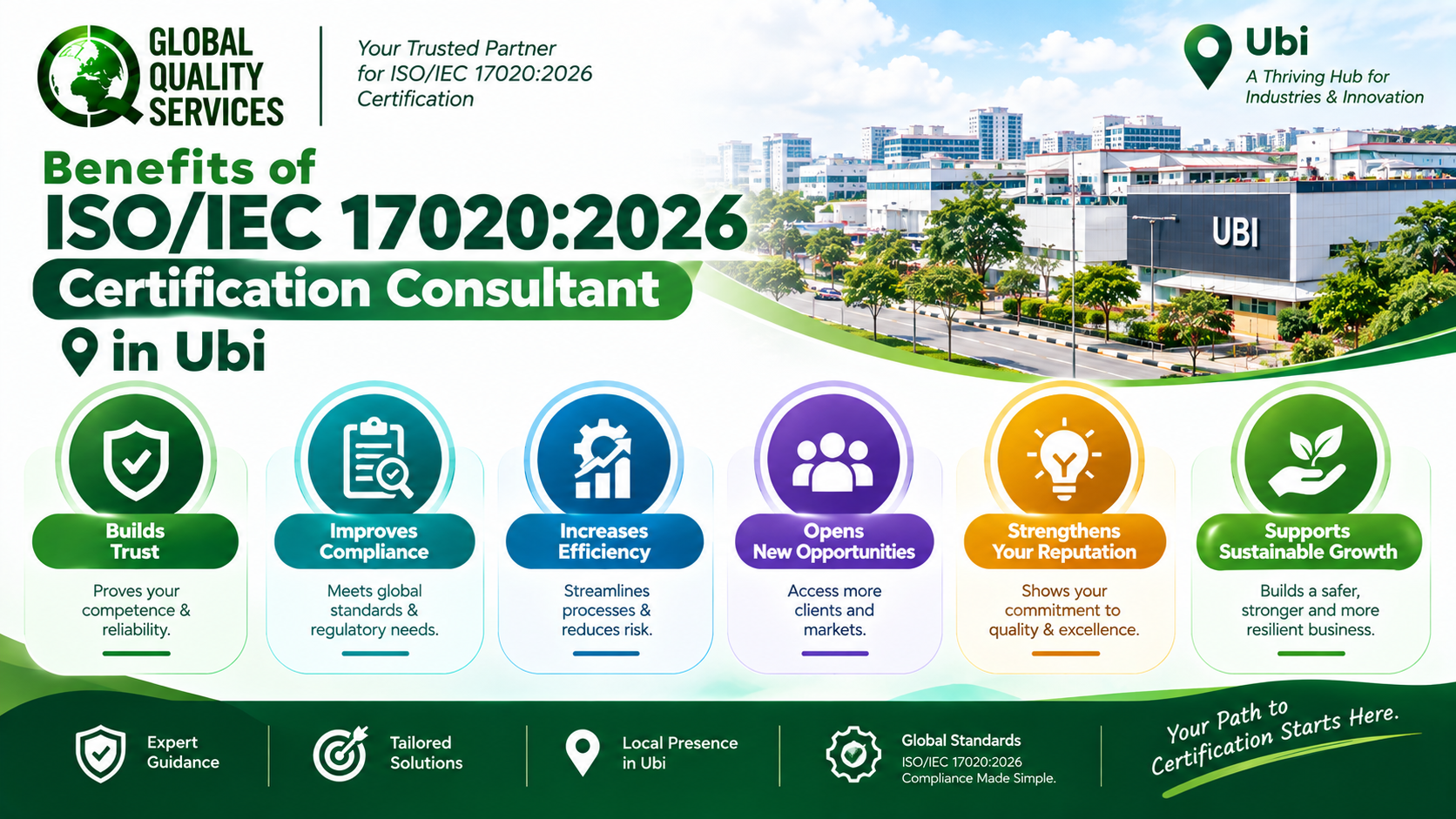
Establish Clear Technical Competence
A structured competency system helps define what inspectors are qualified and authorized to inspect.
Improve Inspection Consistency
Documented methods, instructions, acceptance criteria, and reporting formats can help different inspectors follow a consistent approach.
Strengthen Impartiality
Controls for conflicts of interest and commercial influence can help protect the objectivity of inspection decisions.
Improve Traceability
Controlled records make it easier to connect inspection findings with personnel, equipment, methods, dates, and final decisions.
Build Customer Confidence
SAC explains that inspection accreditation provides independent recognition of an inspection body’s competence and reliability within its accredited scope.
Support Specialized Inspection Scopes
Accreditation can be established for defined inspection activities rather than treating every service provided by an organization as automatically accredited.
How Does the ISO/IEC 17020:2026 Consultancy Process Work?
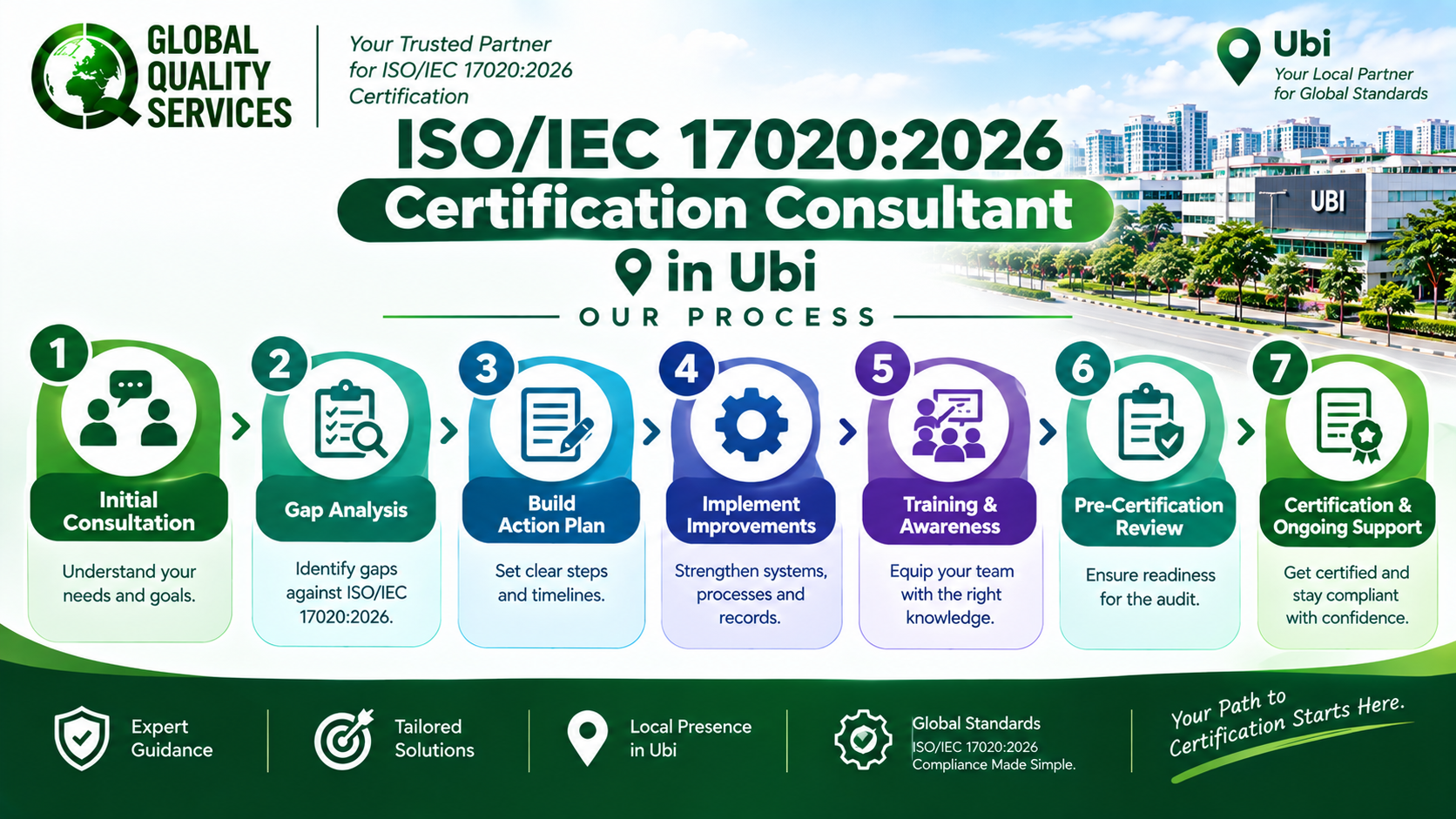
1. Identify the Intended Inspection Scope
The process begins by identifying exactly what the organization wants to have accredited. This could involve equipment, structures, machinery, site activities, engineering systems, or another defined inspection field.
2. Review the Existing System
GQS assesses current procedures, personnel competencies, impartiality arrangements, inspection records, equipment controls, and technical resources.
3. Identify Gaps
The existing system is compared against ISO/IEC 17020:2026 and applicable SAC requirements for the intended scope.
4. Develop and Implement Controls
Required procedures, competency arrangements, inspection methods, reporting formats, impartiality controls, and record systems are developed or strengthened.
5. Conduct Internal Checks
Internal audits and management review help determine whether the system is working effectively before the formal accreditation assessment.
6. Prepare for SAC Assessment
Once the organization meets the relevant base requirements, it can proceed with the SAC application process. SAC states that applications are submitted through SACiNet and that the overall accreditation timeline can vary according to scope complexity, compliance, witnessing requirements, and nonconformity clearance.
Site Supervision and Construction Inspection in Ubi
Site supervision is another area that has become relevant under Singapore’s inspection body accreditation framework. SAC launched its accreditation program for Site Supervision Firms effective September 1, 2026, with assessment based on ISO/IEC 17020:2026 and the applicable SAC technical requirements.
For organizations involved in construction inspection or site supervision around Ubi, the preparation process may therefore need to address personnel competence, inspection and supervision procedures, technology, records, reporting, and evidence demonstrating that inspection activities are effectively controlled.
Areas We Serve Around Ubi
GQS supports organizations across Ubi Avenue, Ubi Crescent, Ubi Road, Ubi Techpark, Kaki Bukit, Eunos, and the wider eastern Singapore business corridor. The consultancy can support engineering inspection companies, equipment inspection providers, technical service organizations, construction-related inspection bodies, and in-house inspection functions operating from or serving these areas.
Why Choose GQS for ISO/IEC 17020:2026 Consultancy?
GQS focuses on making ISO/IEC 17020:2026 requirements practical for the organization’s actual inspection activities.
Rather than developing documentation in isolation, the consultancy approach considers the intended accreditation scope, inspection personnel, technical methods, equipment, impartiality risks, reporting practices, records, and day-to-day operations.
If your organization performs inspection or technical examination in Ubi, the first step is to clearly define the inspection activities you want to bring under the accreditation scope.
GQS can help you review your existing arrangements, identify gaps, establish the required controls, and prepare your organization for the applicable SAC accreditation process.
Frequently Asked Questions
1. Is ISO/IEC 17020:2026 a certification standard?
ISO/IEC 17020 is used for the accreditation of bodies performing inspection. In Singapore, SAC operates the Inspection Body Accreditation Scheme against the applicable requirements. Therefore, organizations should generally refer to ISO/IEC 17020 accreditation rather than conventional management-system certification.
2. Can an in-house inspection department in Ubi seek accreditation?
Yes. SAC states that its Inspection Body Accreditation Scheme is available to both in-house and independent inspection bodies, subject to the applicable requirements and defined scope.
3. Does accreditation cover every inspection service provided by an organization?
No. SAC states that accreditation is granted for a specific scope of inspection activities. Only activities included within the accredited scope receive accreditation recognition.
4. Can ISO/IEC 17020:2026 apply to site supervision firms?
Yes. SAC’s site supervision accreditation program became effective on September 1, 2026, and applicants are assessed against ISO/IEC 17020:2026 together with the relevant SAC requirements and Technical Note SSF 01.
5. How long can the SAC accreditation process take?
SAC states that accreditation can take approximately three to six months, depending on factors including the organization’s compliance, scope complexity, witnessing requirements, and clearance of nonconformities.