Singapore plays a pivotal role in global trade, acting as a strategic hub for re-exports and regional distribution. Additionally, exports expanded 4.8% overall in 2025, highlighting sustained demand across global markets.
With such high shipment volumes, even minor quality issues can disrupt operations. This makes second-party and third-party pre-shipment inspections essential, and hiring a professional consultant ensures accuracy, compliance, and risk-free shipment decisions.
What are Second-Party and Third-Party Pre-Shipment Inspection Services
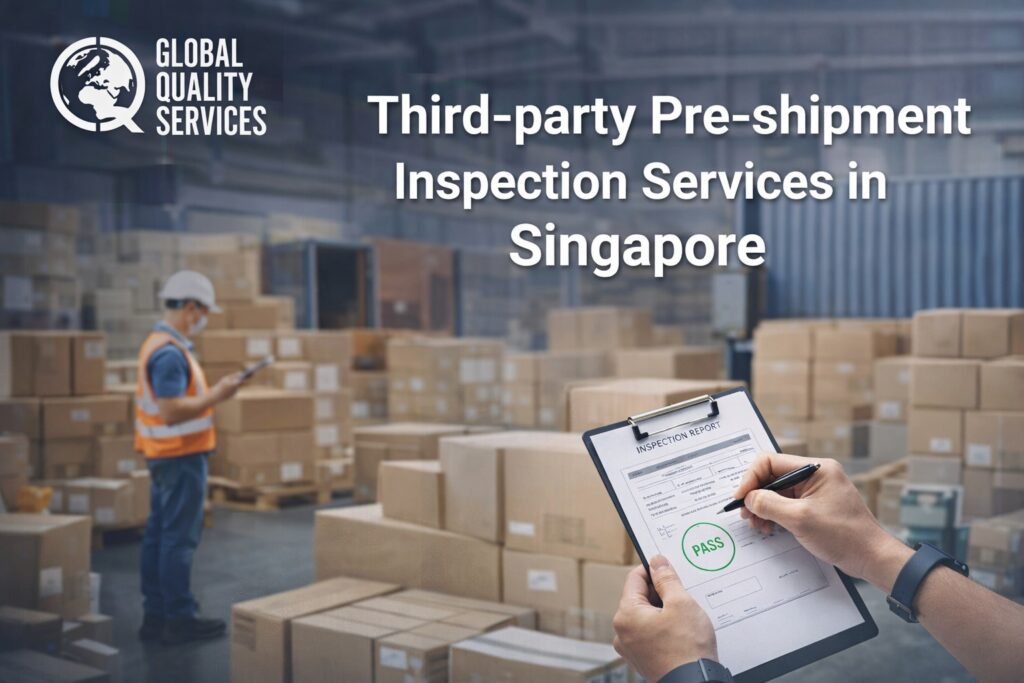
A pre-shipment inspection (PSI) is a systematic quality control process conducted before goods are dispatched from a warehouse, supplier facility, or distribution center.
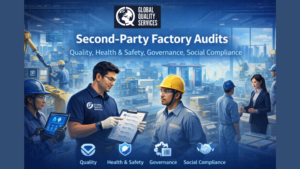
- Second-party inspection is carried out by the buyer or a representative agency acting directly on behalf of the buyer.
- Third-party inspection is conducted by an independent inspection company with no direct ties to either the buyer or the supplier.
Pre-shipment inspections occur when production is 80–100% complete and goods are packed, verifying compliance with specifications, quality standards, and regulations using AQL sampling methods for consistent, accurate batch evaluation.
Why Pre-Shipment Inspection Services are Crucial in Singapore
Even in a highly efficient trade environment, relying solely on supplier assurance can expose your business to risks. Here’s why inspection services are essential:
- Quality Assurance Before Dispatch: You confirm that the products meet your exact specifications before they leave the facility.
- Cost Control and Risk Reduction: Fixing defects locally is significantly more cost-effective than handling returns or disputes after delivery.
- Regulatory Compliance: Singapore enforces strict import/export regulations. Inspections ensure compliance with labeling, safety, and packaging standards.
- Payment Protection: Since many contracts require payment before shipment, inspections ensure you only release funds for verified goods.
- Supply Chain Transparency: You gain complete visibility into product quality, packaging integrity, and shipment readiness.
Types of Pre-Shipment Inspection Services in Singapore
Different business needs require different inspection approaches. The most commonly used services include:
Initial Production Check (IPC): Conducted at the beginning of production, this inspection verifies raw materials, components, and initial samples to prevent large-scale errors.
During Production Inspection (DPI): Performed when 30–50% of production is complete, this ensures consistency in quality and identifies deviations early.
Final Random Inspection (FRI): The most widely used inspection type, conducted when goods are fully manufactured and packed. It includes detailed quality, quantity, and packaging checks.
Container Loading Supervision (CLS): Inspectors monitor the loading process to ensure that correct products, quantities, and handling procedures are followed.
Step-by-Step Pre-Shipment Inspection Process
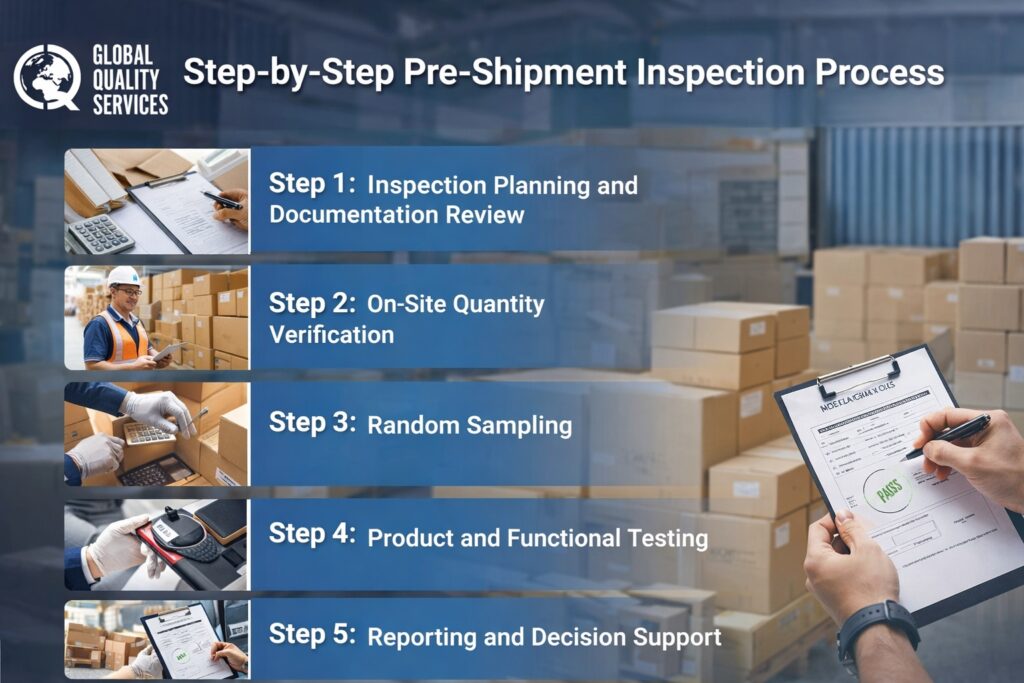
To maintain accuracy and reliability, inspection agencies follow a structured process:
Step 1: Inspection Planning and Documentation Review
Inspectors review purchase orders, specifications, and compliance requirements, then define inspection criteria and AQL levels to ensure the process aligns with agreed quality standards and expectations.
Step 2: On-Site Quantity Verification
The inspector verifies total production output and carton quantities on-site, ensuring the order is complete and matches the agreed shipment volume before proceeding with further inspection checks.
Step 3: Random Sampling
Samples are randomly selected from different batches using standard sampling methods, ensuring an unbiased and accurate representation of the overall production quality for inspection and testing.
Step 4: Product and Functional Testing
Each selected sample undergoes detailed visual checks and functional testing to evaluate performance, durability, and compliance based on product type, ensuring it meets required quality and operational standards.
Step 5: Reporting and Decision Support
A comprehensive inspection report with images, defect classification, and pass or fail results is delivered within 24 hours, enabling informed decisions on shipment approval or corrective actions.
What Does a Pre-Shipment Inspection Checklist Include
A pre-shipment inspection checklist ensures every critical aspect of your product is systematically verified before dispatch, minimizing risks and ensuring compliance with quality standards.
- Quantity verification (total units and cartons)
- Workmanship inspection (visual defects, finishing quality)
- Product specifications (size, weight, color accuracy)
- Functional testing (performance and usability checks)
- Labeling verification (barcodes, legal markings, origin details)
- Packaging inspection (inner packing and master carton strength)
- Compliance checks (regulatory and buyer-specific requirements)
Common Defects Identified During Inspection
Identifying defects before shipment helps avoid costly disruptions:
- Critical Defects: Safety hazards or non-compliance issues leading to immediate rejection
- Major Defects: Functional or visual issues affecting usability or marketability
- Minor Defects: Small imperfections that do not impact product function
Industries That Benefit from Inspection Services in Singapore
Singapore supports diverse industries where quality control is non-negotiable:
- Electronics – Verification of functionality and compliance with international standards
- Pharmaceuticals & Healthcare – Strict adherence to safety and labeling norms
- Consumer Goods – Ensuring packaging integrity and product consistency
- Luxury Products – Maintaining brand quality and presentation standards
- Industrial Equipment – Functional testing and durability checks
Why Choose Professional Inspection Services in Singapore
Partnering with a reliable inspection agency ensures:
- Local Expertise: Inspectors understand Singapore’s regulatory environment and regional supply chains.
- Unbiased Evaluation: Independent inspections eliminate supplier bias and provide accurate reporting.
- Fast Turnaround: Timely inspections align with tight shipping schedules and reduce delays.
- Clear Communication: Reports are concise, actionable, and supported with photographic evidence.Ensure shipment quality with expert inspection services in Singapore. Contact us today for reliable, accurate, and hassle-free pre-shipment inspections.
FAQ’s
- When should I schedule a pre-shipment inspection?
You should schedule a pre-shipment inspection when at least 80% of production is complete and goods are fully packed, ensuring accurate quality assessment before shipment. - What is the difference between second-party and third-party inspection?
Second-party inspections are conducted by the buyer or their appointed representatives, while third-party inspections are performed by independent agencies, ensuring unbiased evaluation and objective reporting. - How long does the inspection process take?
A standard pre-shipment inspection is typically completed within one working day, and the detailed inspection report, including findings and images, is usually delivered within 24 hours. - Can inspections be customized based on product type?
Yes, inspection services are fully customizable, allowing businesses to define specific quality parameters, testing methods, and compliance requirements based on product type, industry standards, and buyer expectations. - Do inspection reports help in dispute resolution?
Yes, inspection reports serve as official documentation, providing clear evidence of product condition and compliance, which helps resolve disputes, support claims, and strengthen negotiation positions with suppliers.