Organizations should care about environmental, social, and governance (ESG) performance because it impacts reputation, risk management, and competitiveness. Singapore has specific sustainability disclosure requirements that listed organizations need to consider as regulations evolve alongside stakeholder expectations.
As per Singapore’s regulations, companies listed on the Singapore Exchange (SGX) will have to disclose Scope 1 and 2 greenhouse gas emissions starting from the financial year ending December 31, 2025. Source: Monetary Authority of Singapore. Therefore, organizations in Singapore should consider sustainability reporting standards when developing their sustainability strategies to meet regulatory requirements.
At Global Quality Services, we partner with organizations to build robust ESG performance, disclosure, and sustainability strategies aligned with applicable accounting frameworks. We do not take a generic approach since every organization faces unique circumstances and management structures. Our consultants understand your specific needs, industry practices, and internal controls, and we advise accordingly. From assisting organizations with their initial ESG reports to enhancing existing sustainability initiatives, we help organizations navigate ESG requirements effectively. Keep reading to find out more about ESG reporting in Singapore.
What is ESG Reporting
Environmental, Social & Governance (ESG) reporting entails measuring and communicating a firm’s performance regarding three aspects: its environmental stewardship, social responsibilities, and corporate governance framework. Such reporting helps stakeholders understand how a business addresses its environmental footprint, engages with employees, and conducts itself.
An ESG report may include details related to energy usage, carbon footprint, waste management, occupational safety and health standards, employee relations, ethical conduct, corporate leadership, and risk management frameworks, among others. However, the type of information provided depends on factors like the organization’s sector, size, regulatory requirements, and stakeholder demands.
From a business perspective, ESG reporting goes beyond annual reporting. Through the practice, organizations gain insight into potential risks, resource management, workplace conditions, and overall strategic considerations. With robust data and responsible management behind the process, companies can leverage ESG reporting to guide decision-making and strengthen their commitments towards sustainability.
Why is ESG Reporting Important for Businesses in Singapore
Being a global hub for commerce and finance makes it likely that organizations will deal with stakeholders including investors, creditors, clients, and suppliers who want accurate sustainability data. An ESG reporting framework allows companies to meet stakeholder demands as well as get ready for evolving regulatory requirements. Here’s why it’s important:
- Regulatory Preparedness: Familiarize yourself with all relevant sustainability and climate disclosure regulations ahead of time.
- Stakeholder Trust: Provide investors, customers, employees, and partners with transparency about your ESG results.
- Risk Management: Spot potential hazards associated with the environment, people, ethics, and governance practices.
- Operational Efficiency: Monitor energy consumption, emissions, waste generation, and other metrics to find ways to improve.
- Supply Chain Management: Tackle sustainability surveys, supplier evaluations, and customer demands more effectively.
- Data-Driven Decision-Making: Leverage actionable ESG information when setting objectives, tracking success, and managing budgets.
- Credibility in the Market: Prove your sustainability claims through verified data rather than generic assertions.
ESG Reporting Requirements in Singapore
The ESG reporting environment in Singapore includes mandatory ESG disclosures for companies listed on the SGX exchange, mandatory climate change disclosures, industry expectations, and international reporting frameworks. What ESG reporting requirements will apply to a particular company depends on various criteria, such as whether it is listed on the SGX exchange.
1. SGX Sustainability Reporting Requirements
SGX-listed companies need to release annual sustainability reports that include information on significant environmental, social, and governance issues, sustainability strategy and achievements, goals, sustainability reporting methodology, and oversight at the board level.
In addition to these requirements, companies will have to make disclosures related to climate change under SGX regulations. For guidance on this matter, refer to the SGX Listing Rules and Sustainability Reporting Guide, which outline requirements according to the company’s financial year.
2. Climate-Related Disclosures
Climate reporting involves understanding and communicating your organization’s climate risks and opportunities. Based on the applicable reporting standards, this can entail:
- Scope 1 greenhouse gas emissions from sources owned or controlled by the company.
- Scope 2 emissions associated with purchased electricity, steam, heating, and cooling.
- Scope 3 emissions across relevant parts of the value chain, where applicable.
- Climate-related risks and their potential financial or operational effects.
- Management responsibilities, climate targets, and relevant risk management practices.
SGX compliance rules are rolled out progressively depending on issuer types and financial year periods. It is essential to avoid assuming that all disclosure obligations apply to all SGX-listed companies simultaneously.
3. International ESG Reporting Frameworks
Businesses may use recognized reporting frameworks and standards to organize their ESG disclosures. The appropriate choice depends on reporting obligations, industry requirements, investor expectations, and the information the company needs to communicate. Commonly referenced frameworks include:
- GRI Standards: Focus on an organization’s impacts on the economy, environment, and people.
- IFRS Sustainability Disclosure Standards: IFRS S1 addresses general sustainability-related financial disclosures, while IFRS S2 addresses climate-related disclosures.
- SASB Standards: Provide industry-based guidance on sustainability-related information relevant to investors.
- GHG Protocol: Provides methods for measuring and reporting greenhouse gas emissions.
What Does an ESG Report Include?
An ESG report outlines a company’s environmental impact, social responsibilities, and governance practices. It typically covers:
- Environmental Performance: Energy use, carbon emissions, waste management, water consumption, and climate risks.
- Social Responsibility: Employee health and safety, labor practices, diversity, human rights, and community impact.
- Corporate Governance: Business ethics, board oversight, risk management, regulatory compliance, and anti-bribery controls.
- ESG Goals and Progress: Sustainability targets, performance metrics, and progress toward improvement.
Who Can Benefit from ESG Reporting Support
ESG reporting support can be valuable for organizations that need to improve sustainability disclosures, meet stakeholder expectations, or strengthen internal oversight. Businesses that may benefit include:
- SGX-listed companies
- Large private companies
- Manufacturing and industrial businesses
- Financial services organizations
- Construction and infrastructure companies
- Technology companies
- Suppliers working with multinational customers
How to Prepare for ESG Reporting in Singapore
Developing an ESG report involves coordination among multiple teams, accurate documentation, and a deep understanding of stakeholder requirements. Using a framework can streamline processes and avoid duplicate work in gathering information.
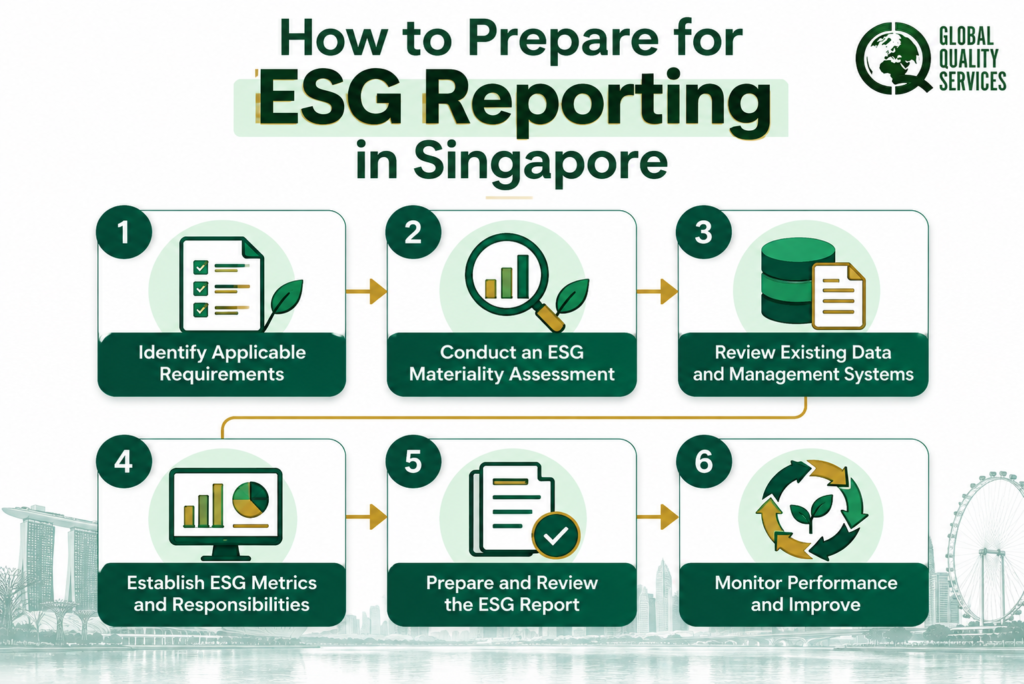
Step 1: Identify Applicable Requirements
Decide whether your company falls under SGX compliance guidelines, mandatory climate disclosures, client demands, or any other reporting obligation. Then choose the reporting period and relevant framework before starting data collection.
Step 2: Conduct an ESG Materiality Assessment
Determine which environmental, social, and governance factors matter to your company and its stakeholders. It could range from assessing the impact of your operations on local ecosystems to evaluating how your board handles executive compensation controversies.
Step 3: Review Existing Data and Management Systems
Look at the data that the finance, HR, procurement, operations, facilities, and compliance teams currently track. Pinpoint any gaps in documentation, calculation errors, ambiguity around roles, and places where documentation is weak.
Step 4: Establish ESG Metrics and Responsibilities
Define metrics, designate data stewards, record methodologies, and determine reporting processes. When appropriate, set quantifiable goals around emissions, energy use, occupational health and safety, waste management, and other material topics.
Step 5: Prepare and Review the ESG Report
List the data you have validated, outline the key ESG concerns of your organization, and show how you’re meeting your goals on each topic. Scrutinize the numbers, backing data, and disclosures before release. Maintain documentation of reporting sources.
Step 6: Monitor Performance and Improve
ESG reports must promote continual progress rather than simply being completed once per year. It is necessary to review past results, adjust goals as needed, fill any data gaps, and prepare for future regulations on reporting practices.
ESG Reporting and ISO Certification: How Are They Connected
ESG reporting and ISO certification may help achieve similar goals when it comes to sustainability, yet there are fundamental differences between the two concepts. While ESG reporting aims to provide a means for companies to communicate their performance to interested parties, ISO certification implies verification by an accredited body of conformity to the requirements of a certain standard.
For example, ISO 14001 Environmental Management System Certification can help an organization establish a structured approach to managing environmental responsibilities, monitoring environmental performance, and pursuing continual improvement. These practices can also provide useful information for the environmental section of an ESG report.
However, ISO 14001 certification does not, by itself, demonstrate that a company meets every ESG reporting requirement. Businesses should select management system standards and reporting frameworks based on their specific obligations and objectives.
ESG Consulting Support Across Singapore
Global Quality Services supports businesses seeking ESG reporting and related management system guidance across Singapore’s commercial districts, including Raffles Place, Marina Bay, and Novena. Our consulting approach considers the organization’s reporting needs, existing systems, and relevant industry expectations.
Whether your company is establishing its ESG reporting practices for the first time or strengthening an existing program, GQS can help you identify the areas that need attention and determine the next steps toward more consistent sustainability management.
How Global Quality Services Helps with ESG Reporting in Singapore
Global Quality Services (GQS) is a reputed consultant with a strong background in management systems, quality assurance, and compliance consulting. Our key strengths include:
- GQS is a reputed consultant with 26 years of experience in quality and management systems consulting.
- Expertise in internationally recognized ISO standards and sustainability-related management systems.
- Experience supporting businesses across diverse industries and markets.
- Practical understanding of environmental management, compliance, and corporate responsibility requirements.
- Client-focused consulting backed by industry knowledge and management systems expertise.
- Commitment to reliable guidance, professional service, and long-term client relationships.
Get Expert ESG Reporting Support from Global Quality Services
Create a better structure for your company’s ESG reporting efforts with expert advice based on your specific industry, regulations, and objectives. You can count on Global Quality Services to guide you through relevant requirements, assess weaknesses in your existing framework, and improve processes needed for effective reporting.
For consultations on your organization’s ESG reporting needs, call Global Quality Services at +65 9344 1973 or send us an email at info@gqssingapore.com. Partner with a well-known advisory firm in building your company’s readiness for sustainability considerations.
Frequently Asked Questions
1. How can SMEs in Singapore get started on ESG reporting?
One way to do so is for companies to determine what sorts of sustainability information customers, investors, or business partners ask for most frequently. Then SMEs should delegate someone to track metrics related to topics including energy consumption, waste production, worker health and safety, and labor practices. Establishing baseline measurements allows organizations to be prepared to provide any additional information they need to share about their ESG performance.
2. What is an ESG materiality assessment, and why is it important?
A materiality assessment is a framework that guides companies toward determining which environmental, social, and governance topics affect them the most. This process enables management teams to allocate resources strategically, establish objectives aligned with priorities, and avoid spending valuable time sharing irrelevant data about their operations.
3. How should organizations handle ESG data in various departments?
Organizations should allocate data ownership responsibilities, standardize measurement processes, and maintain documentation. Departments such as finance, human resources, procurement, and operations need to adhere to a consistent process for reporting so that the data stays consistent and verifiable during publication.
4. What distinguishes ESG reporting from a sustainability report?
ESG reporting means sharing environmental, social, and governance performance data. Sustainability reporting describes a specific type of document where organizations share ESG performance data along with sustainability objectives and outcomes. These concepts are sometimes used synonymously; however, reporting scopes may differ depending on frameworks and reporting standards adopted by organizations.
5. How often should a company review its ESG data and targets?
Companies should monitor important ESG indicators throughout the year rather than waiting until the annual reporting period. Regular reviews help identify missing information, unexpected performance changes, and delays in meeting targets. The review frequency should reflect the company’s operations, risks, and reporting commitments.