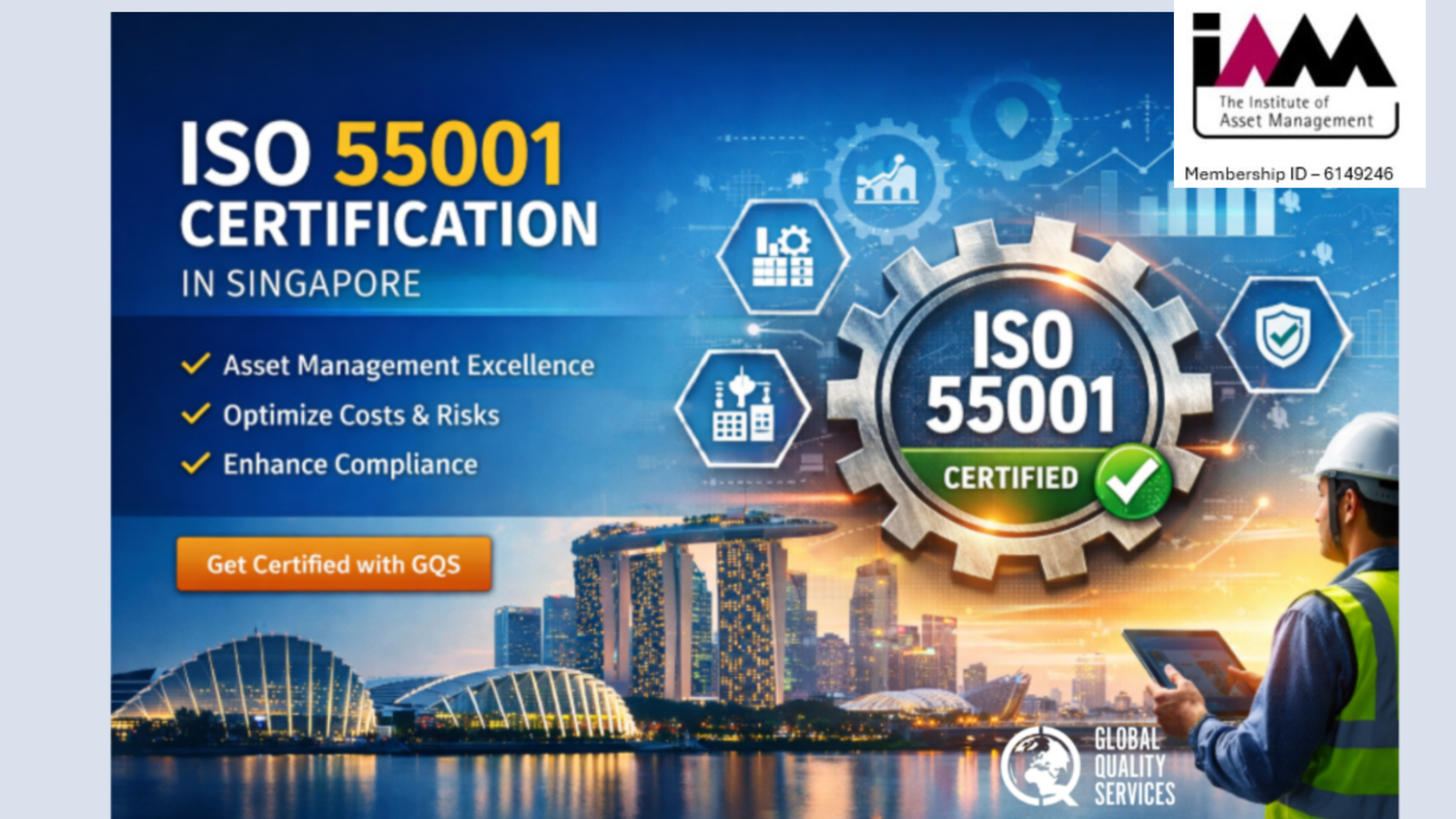
Managing assets efficiently is no longer optional for businesses in Singapore. From infrastructure and manufacturing to utilities and logistics, organizations rely on structured asset management systems to reduce costs and improve performance. ISO 55001 certification provides a globally accepted framework that helps businesses control, maintain, and optimize their physical assets throughout their lifecycle. At Global Quality Services (GQS), we support organizations in Singapore with end-to-end ISO 55001 certification, ensuring a smooth and compliant implementation process.
What Is ISO 55001 Certification?
ISO 55001 is an international standard for Asset Management Systems (AMS). It focuses on managing physical assets such as machinery, buildings, equipment, and infrastructure in a systematic and risk-based way. The standard helps organizations align asset management strategies with business objectives. It ensures assets deliver maximum value while minimizing operational risks and lifecycle costs. ISO 55001 is widely adopted by industries that depend heavily on asset performance, including energy, transport, construction, and manufacturing.
Benefits of ISO 55001 Certification
Organizations in Singapore operate in a competitive and compliance-driven environment where asset performance directly impacts profitability. Without a structured system, asset-related decisions often become reactive, leading to higher costs and unexpected failures. ISO 55001 provides a disciplined, measurable approach that helps businesses take full control of their asset lifecycle.
Improved Asset Performance
ISO 55001 introduces clear processes for monitoring, maintaining, and improving asset efficiency. Instead of reactive maintenance, businesses move toward planned and predictive maintenance strategies. This reduces unexpected breakdowns and ensures assets operate at optimal capacity for longer periods.
Cost Optimization Across Asset Lifecycle
The standard focuses on the entire lifecycle of an asset—from acquisition to disposal. This helps organizations avoid overspending on repairs, reduce premature replacements, and make better investment decisions. Over time, this leads to significant cost savings and improved return on assets.
Stronger Risk Management and Business Continuity
ISO 55001 helps identify risks linked to asset failure, safety issues, or operational disruptions. It ensures preventive controls are in place to reduce these risks. This improves business continuity and reduces the chances of costly downtime or compliance violations.
Better Compliance and Governance
Singapore has strict regulatory and operational standards across industries. ISO 55001 supports compliance by creating documented processes, audit trails, and accountability structures. This makes it easier to meet both local regulations and international expectations.
Data-Driven Planning and Decision Making
Organizations gain structured access to asset data, performance metrics, and maintenance history. This enables better forecasting, budgeting, and long-term planning. Decisions are based on actual data rather than assumptions, improving accuracy and efficiency.
Improved Coordination Across Departments
Asset management often involves multiple teams such as operations, finance, and maintenance. ISO 55001 creates a unified system that aligns all departments with common objectives. This improves communication, reduces duplication of work, and ensures smoother operations.
Increased Stakeholder Confidence
Certification demonstrates that your organization adheres to a globally recognized system for managing assets. This builds trust among investors, clients, regulators, and partners. It also strengthens your reputation in competitive markets like Singapore.
Key Requirements of ISO 55001 Asset Management System
ISO 55001 provides a clear framework for managing assets in a structured, measurable way. It ensures assets deliver value while aligning with business goals and risk management practices.
- Establish an asset management policy aligned with organizational objectives
- Define roles, responsibilities, and leadership commitment
- Develop and maintain an asset management plan
- Identify risks and opportunities related to assets
- Implement lifecycle management for assets
- Use data-driven performance evaluation methods
- Maintain proper documentation and records
- Conduct internal audits and ensure compliance
- Focus on continual improvement of the system
ISO 55001 Certification Process
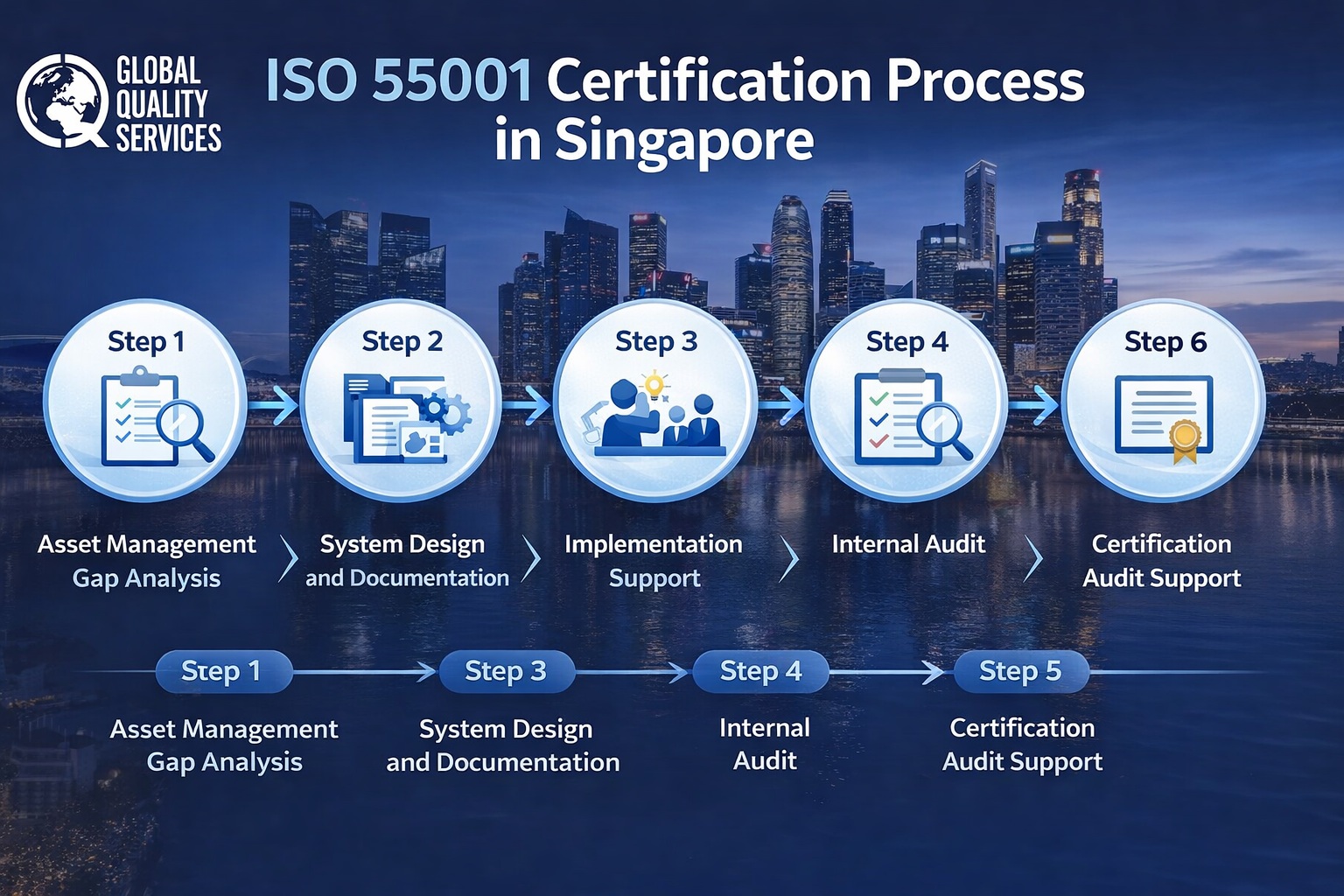
The ISO 55001 certification process generally includes:
-
Initial Energy Gap Analysis – Assessment of current energy practices against ISO 55001 requirements
-
EnMS Design and Documentation – Development of energy policies, reviews, baselines, and controls
-
Implementation and Training – Applying energy management controls and building internal awareness
-
Internal Audit – Evaluating system effectiveness and readiness
-
Certification Audit – Conducted by an accredited certification body
-
Ongoing Surveillance Audits – Ensuring sustained compliance and improvement
Certification is valid for three years, subject to annual surveillance audits.
Who Should Seek ISO 55001 Certification?
Not every business requires a formal asset management system, but for organizations that rely heavily on physical assets, ISO 55001 can bring measurable value. Companies dealing with high-value equipment, infrastructure, or complex operations often face challenges in maintenance, cost control, and risk management. ISO 55001 is best suited for organizations that want to move from reactive asset handling to a structured, performance-driven approach.
Asset-Intensive Industries
Industries such as manufacturing, energy, utilities, and transportation depend on continuous asset performance. ISO 55001 helps these sectors reduce downtime, improve efficiency, and extend asset life.
Infrastructure and Construction Companies
Organizations managing large-scale infrastructure projects or facilities can use ISO 55001 to maintain consistency in asset planning, maintenance, and long-term performance.
Facilities and Property Management Firms
Companies responsible for managing buildings, commercial spaces, or industrial facilities benefit from better lifecycle management and cost control through structured asset systems.
Logistics and Supply Chain Operations
Businesses that rely on fleets, warehouses, and handling equipment can improve asset tracking, maintenance schedules, and operational reliability with ISO 55001.
Organizations Facing Frequent Asset Failures or High Maintenance Costs
If your business struggles with unexpected breakdowns, high repair costs, or inefficient asset usage, ISO 55001 provides a framework to address these issues systematically.
Companies Aiming for Long-Term Growth and Compliance
Organizations planning expansion or aiming to meet international standards can use ISO 55001 to strengthen governance, improve decision-making, and build stakeholder trust.
Why Choose Global Quality Services for ISO 55001 Certification?
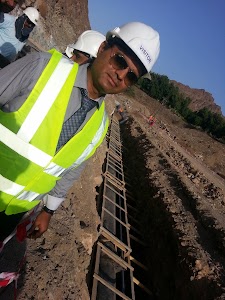
Global Quality Services Pte Ltd, headed by Mr. Shaktidhar Nayak, a Singapore Certified Management Consultant certified by TUV SUD, ISO 55001 auditor. Extensive experience in ISO 55001 Gap analysis, Auditor training, implementation towards ISO 55001 Asset management system certification in various sectors such as Airports, Public transportation companies, Power generation, Asset management companies, Facility management, IT Companies, Data centers, Manufacturing companies spread across in Singapore, Malaysia, Philippines, Indonesia, India, Bahrain, KSA, UAE, Oman.
GQS Singapore is a member of the Institute of Asset Management UK (Membership ID – 6149246), SCMC Singapore certified management consultant by TUV SUD, Lead auditor in ISO 55001 and has extensive experience in implementing ISO 55001 Asset management system towards successful certification of the standards across different industries such as Airports, Public transport companies, Manufacturing companies, Asset management holding companies, Facility management companies in Singapore, Indonesia, Malaysia, Philippines, Indonesia, Thailand, South Korea, Vietnam.
FAQs – ISO 55001 Certification
1. Who needs ISO 55001 certification?
Organizations that manage physical assets such as machinery, infrastructure, or facilities benefit the most. This includes manufacturing companies, utilities, transport operators, and construction firms in Singapore.
2. How long does ISO 55001 certification take?
The timeline depends on the size and complexity of your organization. On average, it can take 3 to 6 months, including implementation, documentation, and audit preparation.
3. Is ISO 55001 mandatory in Singapore?
No, it is not mandatory. However, many organizations pursue it to improve asset efficiency, meet stakeholder expectations, and gain a competitive advantage.
4. Can ISO 55001 be integrated with other ISO standards?
Yes, ISO 55001 can be integrated with standards such as ISO 9001 and ISO 14001 to form a unified management system.
5. How can GQS help with certification?
GQS provides comprehensive support, including gap analysis, documentation, implementation guidance, internal audits, and certification readiness, ensuring a smooth, efficient certification process.