As Singapore moves towards a more circular and resource-efficient economy, businesses are under increasing pressure to rethink how packaging is designed, used and managed at the end of its life.
For manufacturers, food and beverage companies, retailers, FMCG businesses and packaging suppliers, choosing materials that can be recovered responsibly is becoming an important part of environmental strategy. Singapore’s Mandatory Packaging Reporting framework also requires qualifying producers of packaged products and retailers to report packaging data and submit 3R plans to the National Environment Agency (NEA).
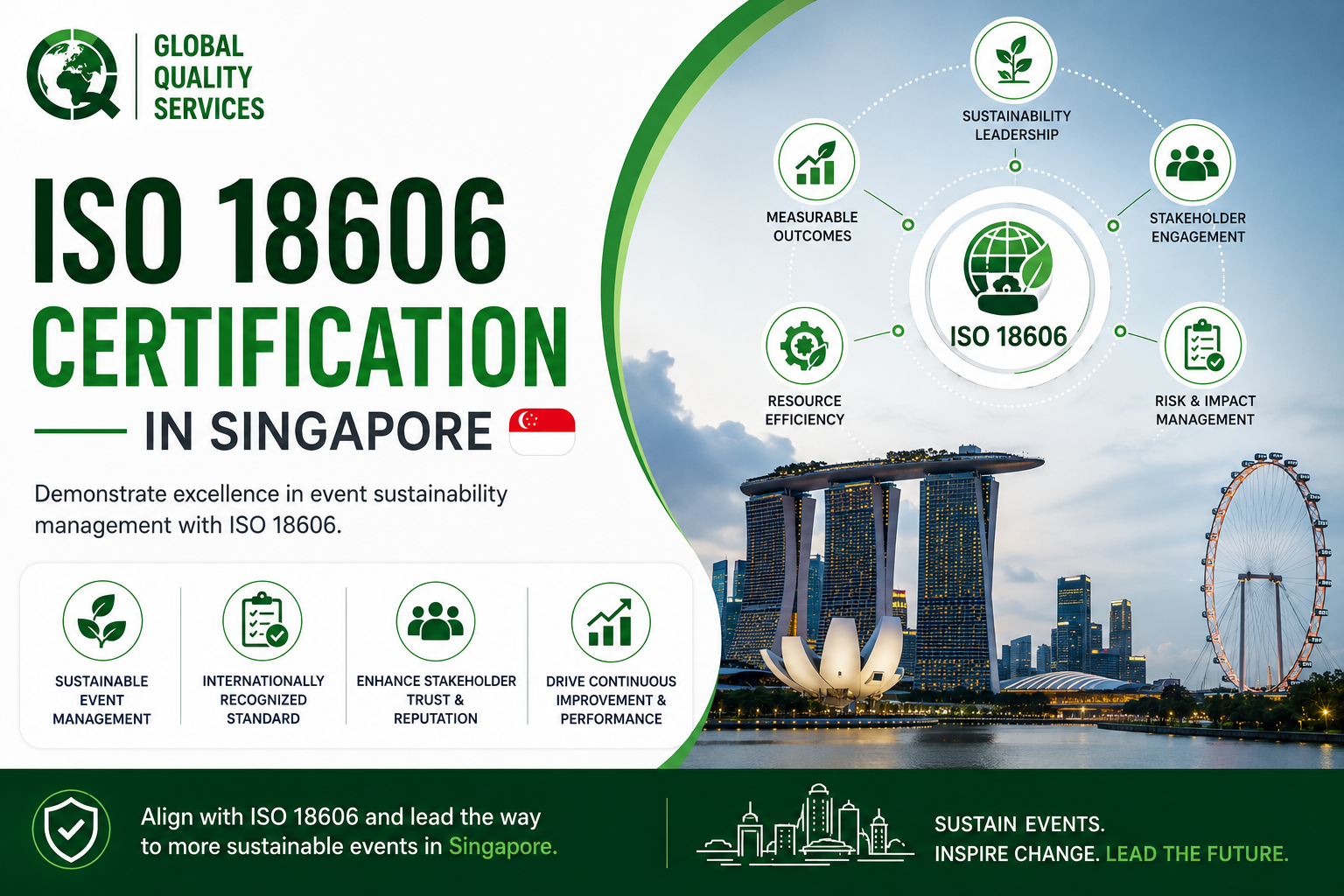
ISO 18606:2013 provides an international framework for evaluating packaging that is suitable for organic recycling. It addresses biodegradation, disintegration, effects on biological treatment processes and potential impacts on the quality of the resulting compost.
GQS Singapore helps organisations understand ISO 18606 requirements, assess their packaging materials, prepare supporting evidence and coordinate the assessment and verification activities required for their intended conformity or certification arrangement.
What Is ISO 18606 Certification?
ISO 18606:2013, Packaging and the environment — Organic recycling, specifies requirements and procedures for packaging intended for recovery through organic recycling. ISO states that packaging is considered recoverable through organic recycling only when its individual components meet the applicable requirements. Where components can be physically separated before disposal, the separated components can be considered individually.
The standard considers four important areas:
- Biodegradation during biological treatment
- Disintegration during processes such as composting
- Potential negative effects on biological treatment
- Potential effects on the quality of the resulting compost, including regulated metals and other environmentally hazardous substances
ISO 18606 sits within the ISO 18601–18606 family of packaging and environmental standards. ISO 18601 provides the general framework for applying the packaging standards, while related standards address areas such as source reduction, reuse, material recycling, energy recovery and organic recycling.
It is also important to distinguish organic recyclability under ISO 18606 from a general claim that packaging is “compostable” in every environment. ISO 18606 addresses organic recycling under defined biological treatment conditions. It does not treat littering or ordinary disposal in the soil environment as an organic recovery route.
Why ISO 18606 Matters for Singapore Businesses
Packaging waste remains an important part of Singapore’s waste-management challenge. NEA states that packaging waste, including plastics, accounts for about one-third of domestic waste disposed of in Singapore. The Mandatory Packaging Reporting scheme was introduced to encourage businesses to understand how much packaging they place on the market and identify opportunities to reduce, reuse and recycle it.
Under the current Mandatory Packaging Reporting framework, businesses that supply regulated goods in Singapore, meet the prescribed annual turnover threshold of more than S$10 million, and use or import specified packaging are required to comply. Obligations include submitting packaging data and 3R plans to NEA and retaining relevant records.
ISO 18606 does not replace these legal reporting obligations. Instead, it can complement a company’s wider packaging sustainability programme by providing a structured technical basis for evaluating packaging intended for organic recycling.
For businesses, this can help support:
Better packaging decisions: Technical evaluation helps organisations assess whether selected packaging materials are suitable for the intended organic recycling route.
Stronger sustainability claims: Evidence-based packaging claims are more credible than unsupported statements about biodegradability or compostability.
Improved environmental performance: Understanding packaging composition and end-of-life characteristics can help businesses identify opportunities for better material selection and waste reduction.
Customer and supply-chain confidence: Documented conformity with an international packaging standard can support sustainability questionnaires, procurement requirements and customer assessments where relevant.
Key Requirements of ISO 18606
ISO 18606 does not simply ask whether a package breaks down. It evaluates whether packaging is suitable for organic recycling without creating unacceptable problems during the biological treatment process or compromising the quality of the resulting compost.
Biodegradation
Packaging components must demonstrate appropriate biodegradation under the applicable test conditions. This helps establish whether the material can be biologically broken down within the relevant organic recycling process.
Disintegration
The packaging must also meet applicable requirements for physical breakdown during biological treatment. A material that biodegrades chemically but fails to disintegrate appropriately may not satisfy the intended organic recycling requirements.
Effects on Biological Treatment
Materials should not negatively affect the biological treatment process. This is important because packaging entering an organic recycling stream should not interfere with the process used to treat the organic waste.
Compost Quality and Hazardous Substances
ISO 18606 also considers potential effects on the resulting compost. This includes consideration of regulated metals and other substances that may create environmental concerns if present at inappropriate levels.
ISO 18606 Assessment and Certification Process
GQS follows a structured approach based on the type of packaging, intended organic recycling route and available technical evidence.
1. Initial Gap Assessment
We begin by reviewing your packaging materials, components, specifications, supplier information and existing test reports. This establishes where your current evidence meets the relevant requirements and where additional work may be required.
2. Packaging Component Review
Each relevant component is examined rather than assessing only the main packaging material. This is important because ISO 18606 considers the individual components of packaging when determining organic recyclability.
3. Testing and Technical Evidence
Where existing evidence is insufficient, appropriate laboratory testing can be coordinated to evaluate characteristics such as biodegradation, disintegration and potential effects on biological treatment or compost quality.
The required testing depends on the packaging material, composition and assessment scope.
4. Documentation and Compliance Review
Technical specifications, material composition, test reports, supplier information and assessment results are compiled into a structured evidence package.
5. Independent Assessment
Where third-party conformity assessment or certification is part of the agreed service, an appropriate independent assessment is conducted against the applicable ISO 18606 requirements.
6. Certification or Verification Outcome
After successful completion of the applicable assessment process, the organisation receives the relevant conformity documentation from the responsible certification or verification body.
Benefits of ISO 18606 for Singapore Organisations
Support for Sustainable Packaging
ISO 18606 gives businesses a recognised framework for evaluating packaging intended for organic recycling. This can support wider packaging sustainability programmes and complement Singapore’s 3R objectives.
Greater Confidence in Environmental Claims
Environmental claims need reliable evidence. Technical assessment against ISO 18606 can provide supporting documentation when communicating about packaging designed for organic recycling.
Better Material Selection
Assessment can reveal whether individual packaging components are suitable for the intended biological treatment process. This information can help packaging teams work with suppliers to improve material selection.
Stronger Supply-Chain Requirements
Large retailers, manufacturers and multinational customers may ask suppliers for evidence of sustainable packaging practices. ISO 18606-based documentation can become part of a broader supplier and sustainability evidence package.
Support for Circular Economy Goals
Singapore’s packaging strategy increasingly focuses on reducing packaging waste and improving resource recovery. ISO 18606 can support organisations seeking to design packaging with an appropriate end-of-life recovery pathway.
Who Can Benefit From ISO 18606 in Singapore?
ISO 18606 can be relevant to organisations that manufacture, import, design or supply packaging intended for organic recycling.
This can include food and beverage manufacturers, FMCG companies, retailers, packaging manufacturers, consumer-product companies, hospitality businesses and logistics organisations.
It can also be useful for companies developing new packaging materials or products where customers require evidence of environmental performance.
For businesses subject to Singapore’s Mandatory Packaging Reporting requirements, ISO 18606 can form part of a broader packaging strategy alongside packaging reduction, reuse, recyclability and other 3R initiatives. NEA’s current framework requires qualifying companies to submit packaging information and 3R plans annually.
Why Choose Global Quality Services?
Global Quality Services provides certification and compliance support for organisations seeking to strengthen their environmental and packaging practices.
Our approach looks at ISO 18606 alongside the wider packaging requirements affecting your organisation. Depending on your objectives, this may include ISO 14001, sustainable packaging requirements and Singapore’s NEA packaging framework.
We help clients understand the applicable requirements, identify documentation gaps, coordinate technical evidence and prepare for independent assessment where required.
GQS works with organisations across manufacturing, food and beverage, retail, FMCG and other sectors where packaging sustainability is becoming an important commercial and environmental consideration.
If you want to assess whether your packaging is suitable for organic recycling under ISO 18606, contact GQS Singapore to discuss your requirements.
Frequently Asked Questions
1. What types of packaging does ISO 18606 apply to?
ISO 18606 applies to packaging intended for recovery through organic recycling. It considers individual packaging components and addresses biodegradation, disintegration, effects on biological treatment and effects on the resulting compost.
The exact requirements and testing depend on the material, packaging composition and intended organic recycling process.
2. Is ISO 18606 the same as compostability certification?
Not exactly. ISO 18606 establishes requirements for packaging suitable for organic recycling. While composting is one form of biological treatment covered by the standard, it is not accurate to treat ISO 18606 as a universal claim that a package is compostable in every setting.
The intended treatment conditions and applicable testing must be considered before making an environmental claim.
3. Does ISO 18606 certification make my company compliant with Singapore’s packaging regulations?
No. ISO 18606 and Singapore’s Mandatory Packaging Reporting framework address different requirements.
Qualifying companies under the MPR scheme must report specified packaging data and submit 3R plans to NEA. ISO 18606 can support the technical and sustainability aspects of packaging management, but it does not replace statutory reporting obligations.
4. Can small businesses pursue ISO 18606?
Yes. ISO 18606 is not restricted to large companies. Smaller organisations can assess packaging against the standard where there is a commercial, customer or environmental reason to demonstrate suitability for organic recycling.
However, the business should first determine whether ISO 18606 is the appropriate standard for its packaging and intended end-of-life route.
5. How long does ISO 18606 assessment take?
There is no fixed timeline for every organisation. Duration depends on the number and complexity of packaging components, existing technical evidence, laboratory testing requirements and the scope of independent assessment.
A straightforward packaging assessment with complete test documentation can move faster than a project involving several materials, components and new laboratory testing. GQS can provide a more realistic timeline after reviewing your packaging scope.