Does your organization perform inspection, technical assessment, or site supervision activities in Singapore? ISO/IEC 17020:2026 Certification Consultant in Singapore services can help you understand the revised requirements, strengthen your inspection processes, prepare documented information, and get ready for the applicable accreditation assessment.
ISO/IEC 17020:2026 is the international standard for bodies performing inspection. It focuses on competence, impartiality, and consistent operation of inspection bodies. In Singapore, the Singapore Accreditation Council (SAC) operates an accreditation scheme for inspection bodies based on ISO/IEC 17020.
Global Quality Services (GQS) provides consultancy and readiness support for organizations preparing for ISO/IEC 17020:2026 and the applicable Singapore accreditation requirements.
What Is ISO/IEC 17020:2026?
ISO/IEC 17020:2026 establishes requirements for organizations that inspect products, equipment, installations, processes, services, or other specified subjects and determine whether they conform to defined requirements.
The 2026 edition brings important changes from the previous version, including a simplified approach to independence classification, greater emphasis on risk-based thinking, and new provisions related to data and information control.
For an inspection body, this means demonstrating that inspection decisions are objective, personnel are competent, inspection methods are controlled, and results are properly recorded and reported.
Benefits of ISO/IEC 17020:2026 Accreditation
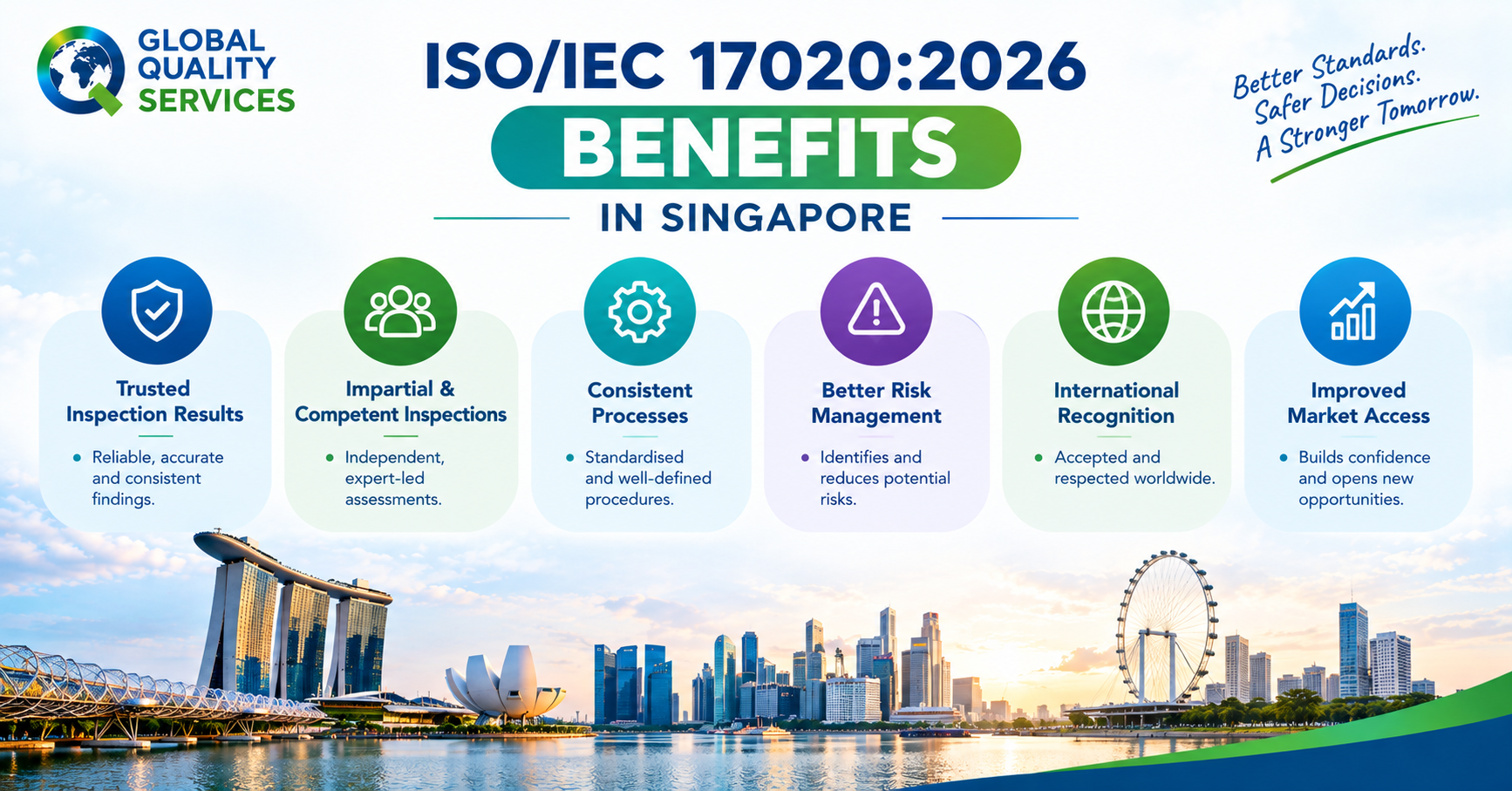
ISO/IEC 17020:2026 accreditation helps inspection bodies demonstrate that their inspection activities are performed by competent personnel, using controlled methods and impartial decision-making processes.
Demonstrate Technical Competence
Accreditation provides independent recognition that an inspection body has the personnel, procedures, resources, and technical arrangements needed for its defined inspection scope. This can strengthen confidence among customers, regulators, contractors, and other stakeholders.
Strengthen Impartiality and Objectivity
ISO/IEC 17020:2026 places strong emphasis on impartial inspection decisions. Organizations can establish processes for identifying and managing conflicts of interest and other risks that could affect the objectivity of inspection results.
Improve Consistency of Inspection Activities
Documented inspection methods, defined responsibilities, competent personnel, controlled equipment, and proper records help organizations perform inspection activities more consistently across projects and customers.
Build Customer Confidence
Independent accreditation can give customers greater confidence that inspection results are produced through a recognized and controlled conformity assessment process. This can be particularly important where inspection findings influence safety, quality, regulatory compliance, or commercial decisions.
Strengthen Traceability and Records
A structured inspection system provides clearer evidence of what was inspected, which requirements were applied, who performed the inspection, what findings were identified, and how conclusions were reached. This improves traceability when records need to be reviewed later.
Support Digital Inspection Controls
The 2026 edition includes greater emphasis on data and information control. This helps organizations establish appropriate controls around electronic inspection reports, digital records, inspection software, BIM information, and other technology used during inspection activities.
Support Singapore Site Supervision Requirements
For eligible Site Supervision Firms, ISO/IEC 17020:2026 accreditation can provide a structured framework for managing supervision personnel, SOPs, technology, project records, competency evidence, and inspection-related activities in line with applicable SAC requirements.
Support Market and Business Opportunities
Accreditation can help inspection organizations demonstrate recognized competence when responding to customer requirements, tenders, contracts, and supply-chain expectations where independent inspection capability is required.
Who Can Benefit from ISO/IEC 17020:2026 Consultancy?
ISO/IEC 17020:2026 may be relevant to:
- Independent inspection bodies
- In-house inspection departments
- Engineering inspection organizations
- Equipment and machinery inspection companies
- Structural inspection organizations
- Marine and cargo inspection providers
- Construction inspection and supervision firms
- Technical assessment organizations
SAC’s inspection-body accreditation scheme is applicable to both in-house and independent inspection bodies, depending on their activities and proposed scope. (SAC)
What Does ISO/IEC 17020:2026 Require?
A successful inspection system needs to work in practice, not simply exist as a set of documents.
Impartiality
Inspection bodies need arrangements for identifying and controlling threats to impartiality. Commercial, financial, organizational, or personal relationships that could influence inspection decisions should be appropriately addressed.
Competent Personnel
Inspectors need suitable qualifications, experience, training, technical knowledge, and authorization for the inspection activities they perform.
Controlled Inspection Methods
The organization should have suitable inspection procedures and technical methods covering how inspections are planned, performed, reviewed, and reported.
Equipment and Resources
Equipment and other resources used for inspection should be suitable for their intended purpose and appropriately controlled, including calibration or verification where applicable.
Records and Reporting
Inspection findings and decisions should be supported by appropriate records so that the inspection activity and its outcome can be demonstrated objectively.
Data and Information Control
The 2026 edition places additional emphasis on controlling data and information. This is particularly relevant to organizations using electronic inspection reports, mobile inspection applications, databases, cloud platforms, BIM information, or other digital systems. (ISO)
ISO/IEC 17020:2026 for Site Supervision Firms in Singapore
The 2026 standard has particular relevance to Singapore’s construction sector following SAC’s introduction of accreditation requirements for Site Supervision Firms (SSFs).
SAC’s Technical Note SSF 01, issued on 17 August 2026, treats site supervision as an inspection activity under ISO/IEC 17020. The requirements cover areas such as site supervision procedures, competent personnel, supervision records, equipment, technology, and evidence of effective supervision.
The technical note addresses construction activities including concreting, structural steelwork, reinforcement, foundation works, ERSS, safety barriers, demolition, curtainwall and cladding, PPVC, tunnelling, and other specialist activities.
It also highlights the importance of competency evidence, controlled SOPs, supervision records, equipment management, BIM capability, and Remote Site Supervision where applicable. Supervision reports and supporting evidence are required to be retained as auditable records.
For Singapore construction and site supervision organizations, ISO/IEC 17020:2026 preparation therefore needs to address both the international standard and the applicable SAC technical requirements.
How Does the ISO/IEC 17020:2026 Accreditation Process Work?
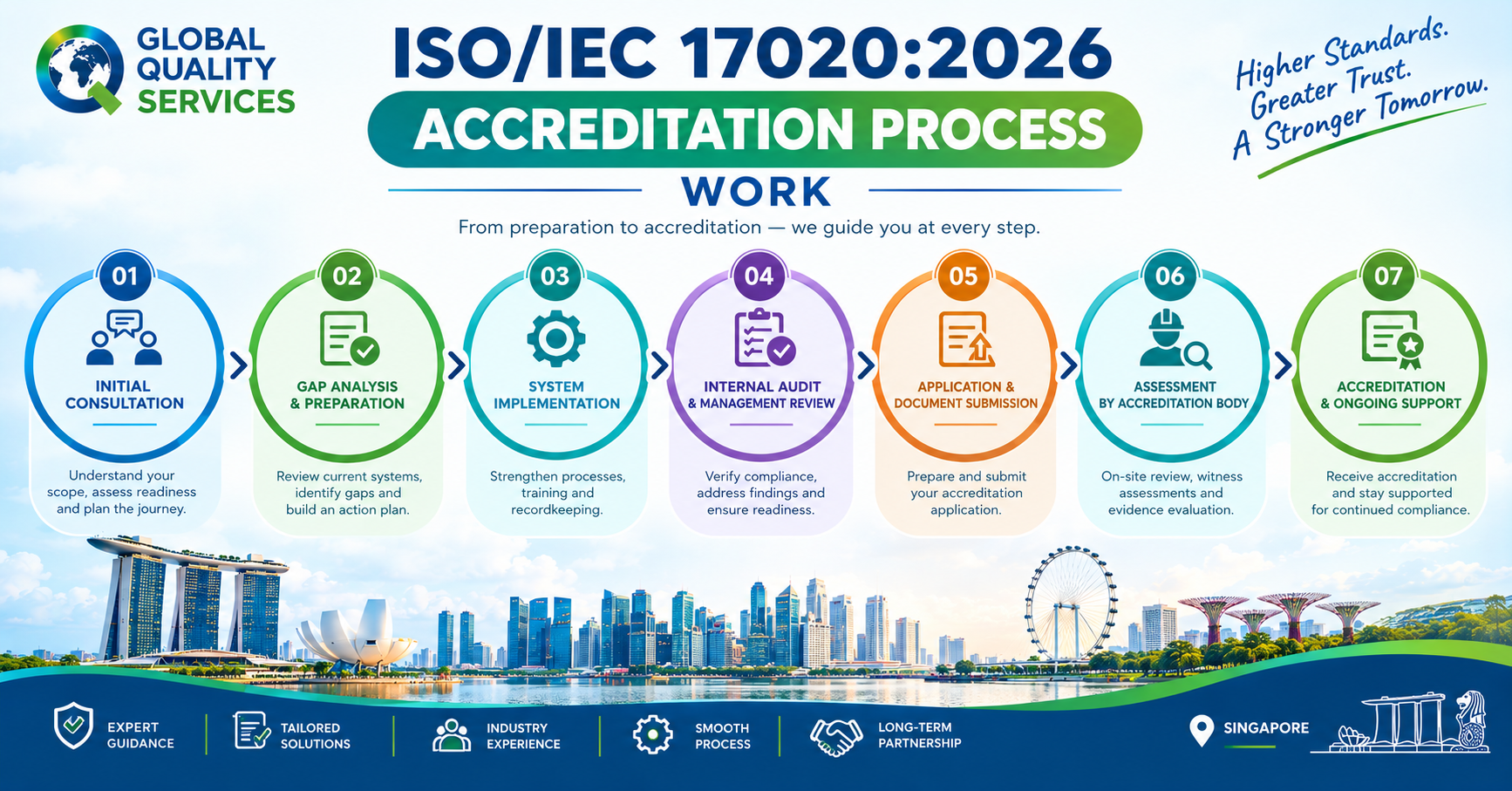
The preparation process generally involves the following stages:
1. Define the Accreditation Scope
Identify the inspection or site supervision activities the organization wants included within its scope.
2. Conduct a Gap Assessment
GQS reviews existing processes, personnel arrangements, documentation, technical controls, and records against applicable requirements.
3. Develop and Implement Controls
The organization establishes or updates procedures covering impartiality, competence, inspection methods, equipment, records, reporting, complaints, corrective action, and other applicable requirements.
4. Verify Implementation
Internal audits, management reviews, competency assessments, and project or inspection records can provide evidence that the system is functioning effectively.
5. Prepare for SAC Assessment
The organization prepares its application, documentation, scope, personnel evidence, technical records, and other required information for the applicable accreditation assessment.
6. Address Findings
Any nonconformities identified during assessment need to be analyzed and appropriately corrected before the accreditation decision.
ISO/IEC 17020:2012 to 2026 Transition
Organizations already operating under ISO/IEC 17020:2012 should review their existing system against the 2026 edition rather than assuming that existing documentation is sufficient.
Particular attention should be given to independence arrangements, risk-based thinking, competence, data and information controls, inspection processes, and evidence of effective implementation. The transition should also consider any current SAC requirements applicable to the organization’s accreditation scope.
ISO/IEC 17020:2026 Consultancy in Singapore
GQS supports organizations across Singapore, including inspection and technical service companies operating in areas such as Tuas, Jurong, Pioneer, Boon Lay, Changi, Woodlands, Sungei Kadut, and the Central Business District.
Our consultancy can include:
- ISO/IEC 17020:2026 gap assessment
- Accreditation scope review
- Documentation and SOP development
- Impartiality risk assessment
- Personnel competence and authorization controls
- Inspection process development
- Equipment and record controls
- Internal audit and management review preparation
- 2012-to-2026 transition support
- SAC assessment readiness
For Site Supervision Firms, support can also cover the requirements relating to site supervision plans, competency evidence, technology and equipment, BIM, remote supervision, supervision records, and corrective-action processes.
Why Choose Global Quality Services?
GQS takes a practical approach to ISO/IEC 17020:2026 consultancy. Instead of treating accreditation as a documentation exercise, we help organizations connect the requirements with their actual inspection activities, personnel, technical methods, records, and operational controls.
Our objective is to help your organization understand what needs to be demonstrated and prepare systematically for the applicable independent accreditation assessment. If your organization performs inspection or site supervision activities in Singapore, now is an appropriate time to review your existing arrangements against ISO/IEC 17020:2026 and the applicable SAC requirements.
Contact Global Quality Services to discuss your ISO/IEC 17020:2026 consultancy requirements in Singapore.
Frequently Asked Questions
Is ISO/IEC 17020:2026 a certification standard?
ISO/IEC 17020:2026 specifies requirements for inspection bodies. In Singapore, formal recognition is generally pursued through the applicable SAC accreditation scheme.
What is the difference between ISO/IEC 17020 and ISO/IEC 17021?
ISO/IEC 17020 applies to inspection bodies, while ISO/IEC 17021-1 applies to organizations that audit and certify management systems.
Can an in-house inspection department apply?
Yes. SAC’s inspection-body accreditation scheme covers both in-house and independent inspection bodies, subject to the applicable requirements and defined scope.
What changed in ISO/IEC 17020:2026?
The new edition includes changes to independence classification, risk-based thinking, and data and information controls, among other revisions.
Does GQS provide the accreditation?
No. GQS provides consultancy and assessment-readiness support. Formal accreditation is granted by the relevant accreditation body following its independent assessment and decision process.