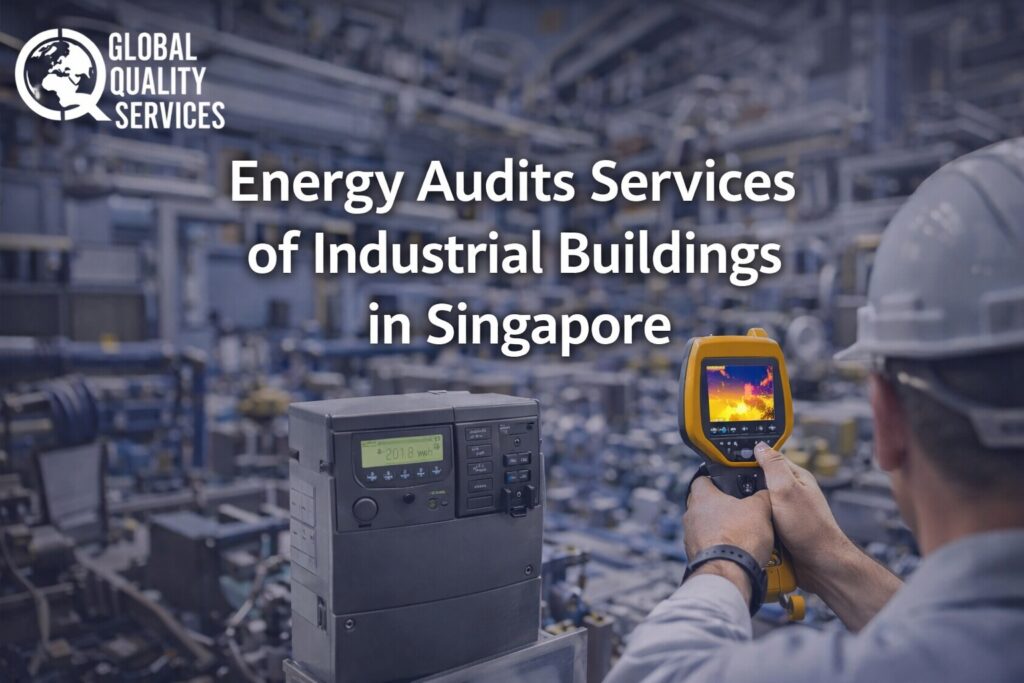
Energy audit services of industrial buildings in Singapore have become essential as businesses focus on reducing operational costs and improving sustainability. With rising energy consumption and strict environmental regulations, industries must optimize energy usage to stay competitive.
An energy audit helps identify inefficiencies, reduce waste, and improve overall system performance. By working with professional energy audit service providers, industrial facilities can achieve better energy management, lower utility bills, and comply with Singapore’s energy efficiency standards.
What are Energy Audit Services for Industrial Buildings
Energy audit services involve a detailed assessment of how energy is consumed within an industrial facility. Experts evaluate equipment, systems, and processes to identify inefficiencies and recommend improvements.
These audits typically cover:
- Electrical systems and machinery
- HVAC (heating, ventilation, and air conditioning) systems
- Lighting systems
- Production processes and energy flow
The goal is to reduce energy consumption while maintaining operational efficiency and productivity.
Why Energy Audit Services are Important for Industrial Buildings
Energy audits play a critical role in improving efficiency and reducing operational risks.
- Reduce Energy Costs: Audits identify areas of excessive energy consumption, helping businesses lower electricity bills and operational expenses.
- Improve Operational Efficiency: Optimized systems perform better, reducing downtime and increasing productivity.
- Ensure Regulatory Compliance: Singapore has strict energy efficiency regulations, and audits help businesses meet compliance requirements.
- Support Sustainability Goals: Energy-efficient operations reduce carbon emissions and contribute to environmental sustainability.
Key Energy Efficiency Regulations in Singapore
Understanding regulations ensures compliance and avoids penalties while improving operational performance.
- Energy Conservation Act (ECA)
- Mandatory Energy Management Practices (MEMP)
- Singapore Green Plan 2030
- ISO 50001 Energy Management System
These regulations encourage industries to monitor, report, and improve energy performance consistently.
Types of Industrial Buildings That Need Energy Audits
Energy audit services are essential for various industrial facilities:
- Manufacturing plants
- Warehouses and logistics hubs
- Data centers
- Chemical processing units
- Food processing industries
These facilities consume significant energy, making audits crucial for cost control and efficiency.
When Should You Conduct an Energy Audit
Timely audits help businesses stay efficient and compliant.
Regular Audits
Most industrial facilities should conduct energy audits annually or every few years based on usage.
Event-Based Audits
You should conduct audits when:
- Expanding operations
- Installing new equipment
- Experiencing high energy bills
- Planning sustainability initiatives
- Preparing for certifications
Common Issues Identified During Energy Audits
Energy audits often uncover inefficiencies that impact costs and performance:
- Inefficient or outdated equipment
- Energy leakage and power loss
- Poor insulation and HVAC inefficiencies
- Excessive energy consumption during idle times
- Lack of monitoring and control systems
Addressing these issues improves efficiency and reduces operational costs.
Energy Audit Checklist for Industrial Buildings
Here is a comprehensive energy audit checklist to help evaluate system performance, identify inefficiencies, and improve energy management in industrial buildings.
- Energy consumption analysis
- Electricity usage patterns
- Peak demand assessment
- Equipment efficiency evaluation
- HVAC system performance
- Lighting system efficiency
- Insulation and heat loss check
- Compressed air systems review
- Power factor analysis
- Energy monitoring systems
Step-by-Step Energy Audit Process
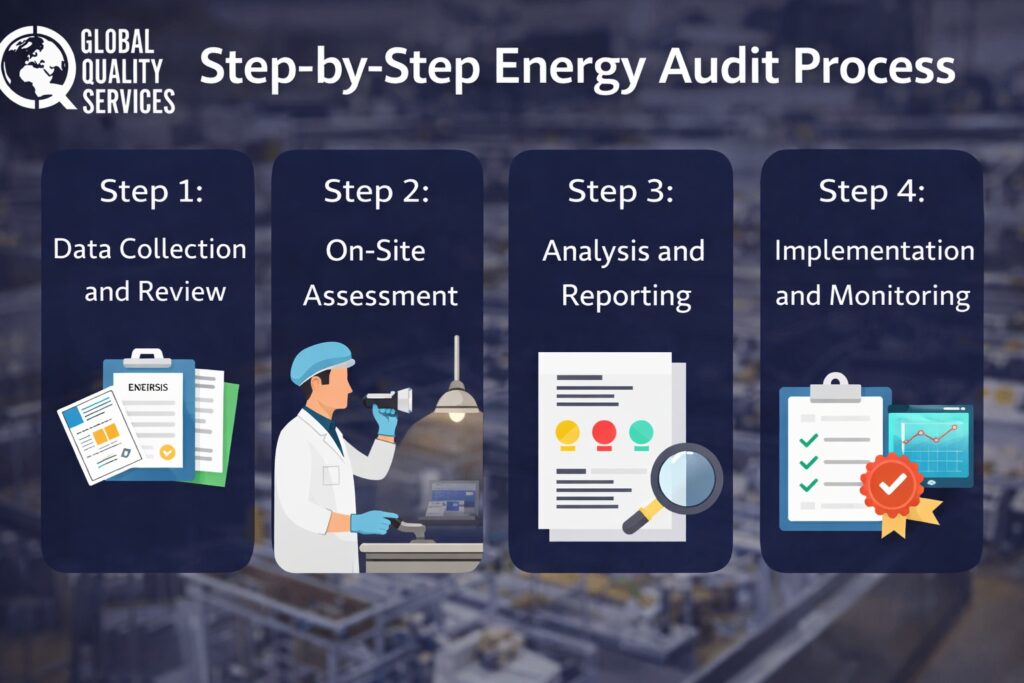
A systematic approach ensures accurate analysis and effective improvements.
Step 1: Data Collection and Review
Auditors collect energy bills, system performance data, and operational details to analyze consumption patterns, identify trends, and establish a baseline for evaluating energy efficiency and potential improvements.
Step 2: On-Site Assessment
Experts conduct a detailed on-site inspection of equipment, systems, and processes to identify inefficiencies, energy losses, and operational gaps that may impact overall performance and energy usage.
Step 3: Analysis and Reporting
Auditors analyze collected data and findings to prepare a comprehensive report outlining energy inefficiencies, cost-saving opportunities, and actionable recommendations to improve energy performance and operational efficiency.
Step 4: Implementation and Monitoring
Businesses implement recommended improvements and continuously monitor energy performance to ensure sustained efficiency, reduced consumption, and long-term cost savings while maintaining compliance with energy management standards.
Why Choose Professional Energy Audit Services in Singapore
Choosing professional energy audit services in Singapore ensures accurate analysis, expert insights, and reliable recommendations to improve efficiency and reduce operational costs. Experienced auditors use advanced tools to identify hidden energy losses and optimize system performance while ensuring regulatory compliance. With expert support, your business can achieve sustainable growth and long-term savings. Contact us today.
FAQ’s
- What is an energy audit for industrial buildings?
An energy audit is a detailed evaluation of energy usage in an industrial facility. It identifies inefficiencies, recommends improvements, and helps reduce energy consumption while maintaining operational efficiency and compliance. - Are energy audits mandatory in Singapore?
Yes, under the Energy Conservation Act, large energy-consuming companies in Singapore must conduct regular energy audits and submit reports to ensure compliance with energy efficiency regulations and standards. - How often should industrial energy audits be conducted?
Industrial energy audits are typically conducted every one to three years, depending on energy consumption levels, regulatory requirements, and operational changes within the facility to maintain efficiency and compliance. - Who conducts energy audit services in Singapore?
Certified energy auditors, engineering professionals, and accredited inspection agencies conduct energy audits using advanced tools and methodologies to assess energy usage and recommend efficiency improvements. - How long does an energy audit take?
An energy audit usually takes a few days to a few weeks, depending on the facility size, complexity, and scope of assessment, including data analysis, on-site inspection, and reporting.