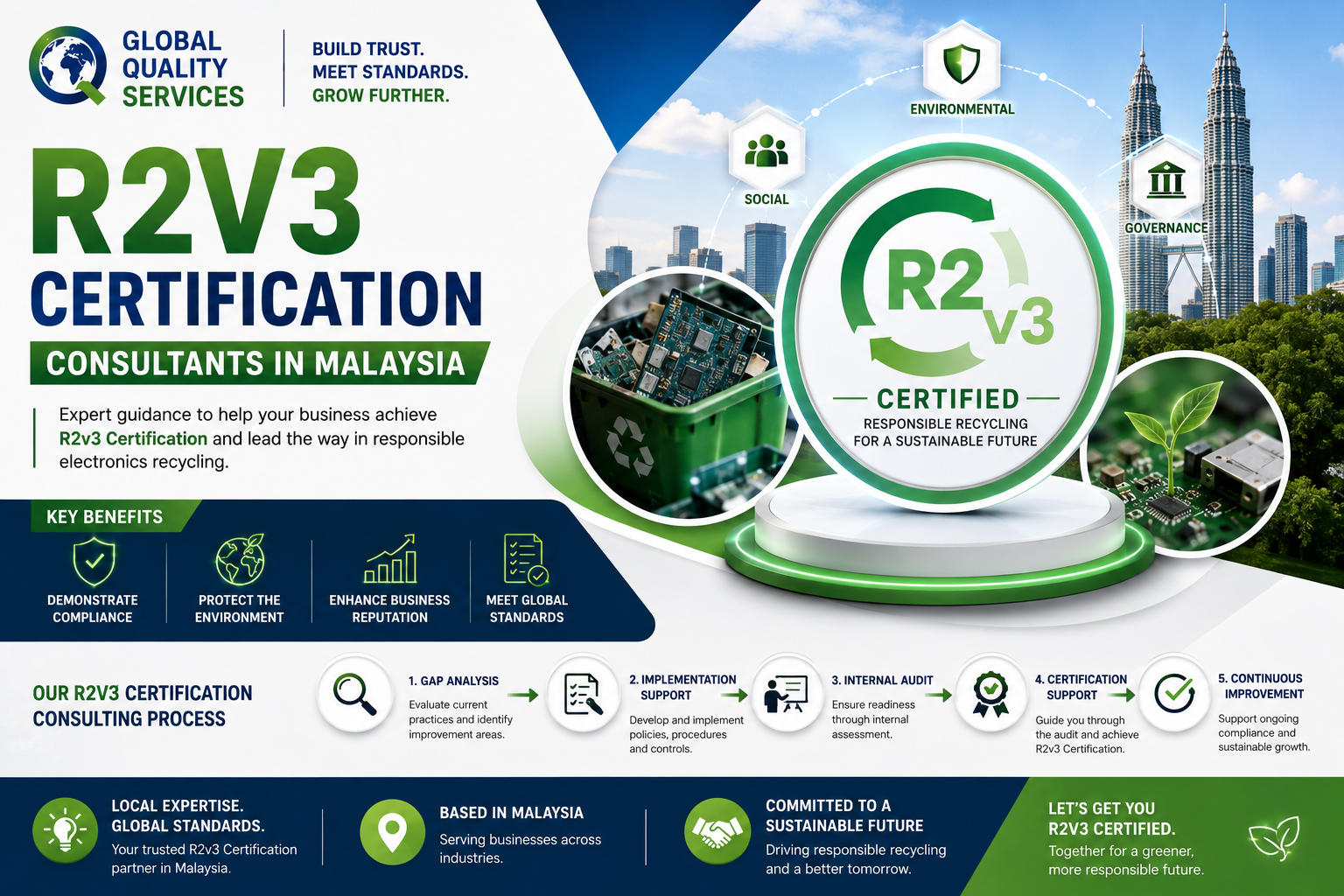
R2v3 Certification is a globally recognised standard for responsible electronics recycling, reuse, refurbishment, and IT asset disposition (ITAD). It helps organisations demonstrate responsible practices for electronic equipment, data security, environmental protection, worker safety, and downstream processing. At GQS Singapore, we provide R2v3 certification consulting support for organisations in Malaysia. Our consultants help you understand the applicable R2v3 requirements, identify gaps in your existing processes, develop the necessary documentation, and prepare your organisation for the certification audit.
What Is R2v3 Certification?
R2v3, or Responsible Recycling Version 3, is the current version of the R2 Standard developed by SERI. It provides a structured framework for organisations that collect, refurbish, reuse, recycle, or manage used electronics and IT equipment. The standard places strong emphasis on responsible management of electronic materials, secure data handling, environmental, health and safety controls, and proper management of downstream vendors. R2v3 uses core requirements, along with applicable process requirements or appendices, depending on the activities and services a facility carries out.
R2v3 Certification Requirements
R2v3 certification requirements depend on your organisation’s activities and the scope of certification. Our consultants help you determine which requirements apply to your operations.
Responsible Electronics Management
Organisations need appropriate controls for receiving, sorting, processing, reuse, refurbishment, recycling, and disposal of electronic equipment.
Data Security
R2v3 requires effective processes to identify data-bearing equipment and to ensure data is securely sanitised or destroyed before the equipment is reused or processed.
Environmental, Health and Safety
Your organisation needs controls to identify and manage environmental and workplace risks associated with the processing of electronics.
Downstream Vendor Management
R2v3 requires organisations to evaluate and control downstream vendors to maintain traceability and responsible management of materials throughout the recycling chain.
Documentation and Records
Policies, procedures, operational records, tracking information, and other evidence must be maintained to demonstrate that R2v3 requirements are being implemented effectively.
R2v3 Certification Process in Malaysia
Our R2v3 consulting approach is designed to make certification easier to understand and manage.
1. Initial Gap Assessment
We review your current operations, processes, documentation, facility practices, and existing controls against the applicable R2v3 requirements. This helps identify areas that need improvement before you begin the formal certification process.
2. Documentation Development
Our consultants help you develop, update, and organise the policies, procedures, records, risk assessments, and other documents required by R2v3. We ensure the documentation reflects your actual operations rather than using a one-size-fits-all approach.
3. Implementation Support
We guide your team in implementing the required R2v3 controls across your operations. This may include data security, environmental controls, material tracking, worker safety, downstream vendor management, and other applicable requirements.
4. Training and Awareness
We help relevant employees understand their R2v3 responsibilities and the procedures they need to follow. Training and awareness also help ensure that your documented processes are consistently followed in day-to-day operations.
5. Internal Audit and Corrective Action
Before the certification audit, we help review your implementation and identify any remaining gaps. Where issues are found, we support your team in developing and implementing appropriate corrective actions.
6. Certification Audit Support
Once your organisation is ready, the certification audit is conducted by an approved certification body. We help your team prepare the required evidence, understand the audit expectations, and respond appropriately to any findings raised during the audit.
Who Needs R2v3 Certification?
R2v3 is particularly relevant to organisations involved in the management of used electronics, including:
- IT Asset Disposition (ITAD) companies
- Electronics recyclers
- Electronics refurbishers
- Data centre equipment disposal providers
- E-waste processing facilities
- Electronics reuse and recovery organisations
- Downstream processors handling electronic materials
R2v3 can also help organisations demonstrate responsible practices to customers, business partners, and enterprise clients.
Benefits of R2v3 Certification
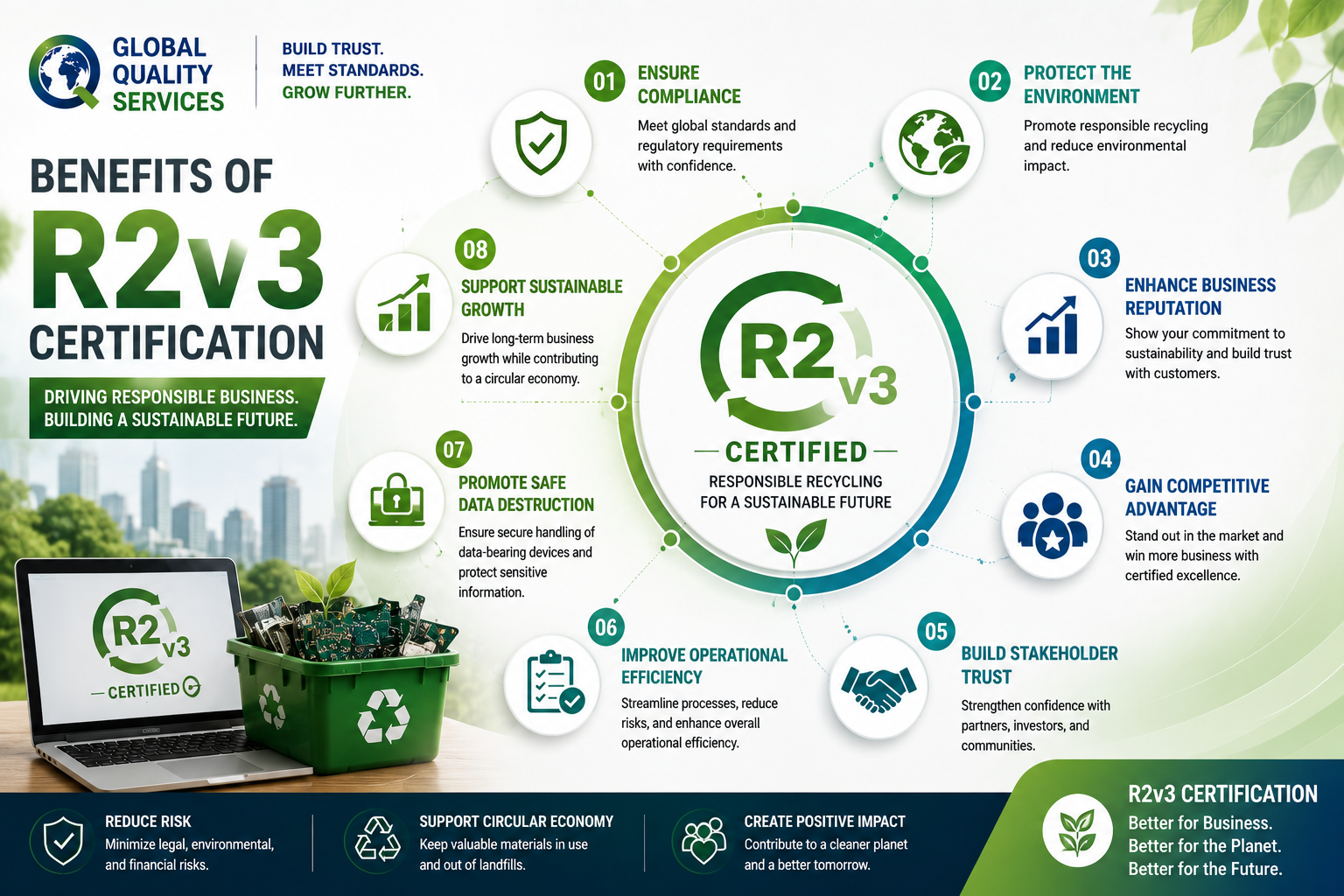
Let us understand the benefits of R2V3 certification in detail:
Builds Customer Confidence
R2v3 certification demonstrates that your organisation follows a recognised framework for responsible electronics management. It can give customers and business partners greater confidence in how their electronic equipment and data are handled.
Strengthens Data Security
R2v3 provides requirements for managing data-bearing devices and establishing appropriate data sanitisation or destruction processes. This can help reduce the risk of sensitive information remaining on equipment before reuse, resale, or recycling.
Improves Environmental Practices
The standard helps organisations establish better controls for handling electronic materials and managing environmental risks. This supports more responsible recycling, reuse, recovery, and disposal practices.
Supports Responsible Supply Chains
R2v3 places importance on downstream vendor management and traceability. This helps organisations maintain better visibility over how materials are handled after they leave their facility and supports more responsible supply-chain practices.
Supports Business Opportunities
Certification can strengthen your organisation’s credentials when working with customers that expect responsible recycling or IT asset disposition practices. It may also help demonstrate your commitment to recognised industry practices when responding to business or procurement requirements.
Improves Operational Controls
Implementing R2v3 can help bring greater structure to processes such as equipment handling, data security, material tracking, employee responsibilities, and vendor management. Clearer processes can also make it easier to monitor performance and identify areas for improvement.
Why Choose GQS Singapore for R2v3 Consulting?
Global Quality Services provides structured certification consulting designed around your organisation’s actual operations. Our approach focuses on practical implementation rather than simply preparing documents for an audit. We help you understand the applicable R2v3 requirements, identify gaps, establish appropriate processes, train relevant personnel, and prepare for certification. With our support, your organisation can approach the R2v3 audit with a clearer understanding of its requirements and responsibilities.
Preparing for R2v3 certification does not have to be complicated. GQS Singapore can help your organisation in Malaysia understand the standard, close compliance gaps, implement effective controls, and prepare for the certification audit. Contact GQS Singapore today to discuss your R2v3 certification requirements.
FAQs
What is R2v3 certification?
R2v3 certification is a certification against SERI’s Responsible Recycling Standard for organisations involved in electronics reuse, refurbishment, recycling, and related IT asset disposition activities.
Is R2v3 certification mandatory in Malaysia?
R2v3 is generally a voluntary industry certification rather than a statutory requirement in Malaysia. However, customers, contractors, or supply-chain partners may require R2 certification when selecting electronics recycling or ITAD providers.
How can GQS Singapore help with R2v3 certification?
GQS Singapore provides consulting support including gap assessment, documentation, implementation guidance, training, internal audit preparation, and certification audit support.
Who can conduct the R2v3 certification audit?
The formal certification audit must be conducted by an appropriately approved certification body. A consultant such as GQS Singapore can support your organisation in preparing for the audit but does not replace the independent certification body. SERI specifically notes that certification bodies must meet its certification requirements.
How long does R2v3 certification take?
The timeline depends on your organisation’s size, activities, existing management systems, facility readiness, and the gaps identified during the initial assessment. A gap assessment is the best starting point for determining a realistic timeline.