
PCI DSS is especially important for organizations that accept, process, store, or transmit payment card data through websites, POS systems, mobile applications, payment gateways, or other payment channels. Our consultants help organizations understand the requirements of PCI DSS v4.0.1 and develop practical controls that support secure payment operations. Whether you are preparing for your first PCI DSS assessment or strengthening an existing compliance program, Global Quality Services provides structured consulting support from assessment through readiness.
What Is PCI DSS?
The Payment Card Industry Data Security Standard (PCI DSS) is a global security standard designed to protect payment card data. It applies to organizations whose systems, processes, or services store, process, transmit, or otherwise affect the security of payment account data. The current version is PCI DSS v4.0.1. The revision clarified and corrected parts of PCI DSS v4.0 without adding or removing requirements. The future-dated requirements introduced under PCI DSS v4.x became effective on March 31, 2025.
What Does PCI DSS Cover?
PCI DSS covers several areas of information security, including network security, secure configurations, account data protection, vulnerability management, access control, authentication, logging, security testing, incident response, and information security policies. The standard also places greater emphasis on understanding the organization’s environment and maintaining security controls throughout the year. This makes PCI DSS more than a documentation exercise. It requires organizations to establish security practices that continue to protect payment environments over time.
PCI DSS Certification vs. Compliance
PCI DSS is not a conventional certification standard like ISO 27001. Organizations demonstrate compliance through the validation method that applies to their environment. Depending on the organization and the requirements of the relevant payment brand or acquirer, validation may involve a Self-Assessment Questionnaire (SAQ), a Report on Compliance (ROC), or other applicable documentation. PCI SSC states that compliance-accepting entities determine the applicable validation and reporting method. For this reason, Global Quality Services focuses on PCI DSS consulting, compliance assessments, implementation guidance, and readiness support rather than issuing a PCI DSS certificate.
PCI DSS Assessment Process
The first step is to understand how payment account data moves through your organization. A payment transaction may involve several connected components, including payment channels, applications, systems, networks, employees, and external service providers. Our consultants review these relationships to help establish an appropriate PCI DSS scope before the detailed assessment begins.
Identifying the PCI DSS Scope
PCI DSS scope determines which systems, processes, people, and technologies need to be considered during the assessment. Global Quality Services helps organizations trace the movement of payment account data from the initial payment channel through the relevant applications, systems, networks, personnel, and service providers. This helps reduce the risk of excluding an important component or unnecessarily expanding the scope of the assessment. PCI DSS v4.x also requires merchants to confirm their PCI DSS scope at least once every 12 months and when significant changes occur.
Conducting the Gap Assessment
Once the scope is understood, we compare the existing security controls with the applicable PCI DSS v4.0.1 requirements. The assessment looks at how your organization protects payment account data, controls access, manages vulnerabilities, monitors security events, conducts testing, manages third parties, and responds to security incidents. The findings provide a clear view of where your current environment meets the requirements and where improvements are needed.
Remediation and Readiness
After identifying gaps, we help your team develop a practical remediation approach. This may involve improving technical controls, updating policies, strengthening access management, addressing vulnerabilities, or preparing additional evidence. A readiness review can then be performed to determine whether the organization is prepared for the applicable validation process. For SAQ-based validation, PCI SSC requires organizations to select an SAQ for which they meet the stated eligibility criteria. Organizations should also confirm the applicable validation requirements with the entity to which the SAQ will be submitted.
Benefits of PCI DSS Compliance
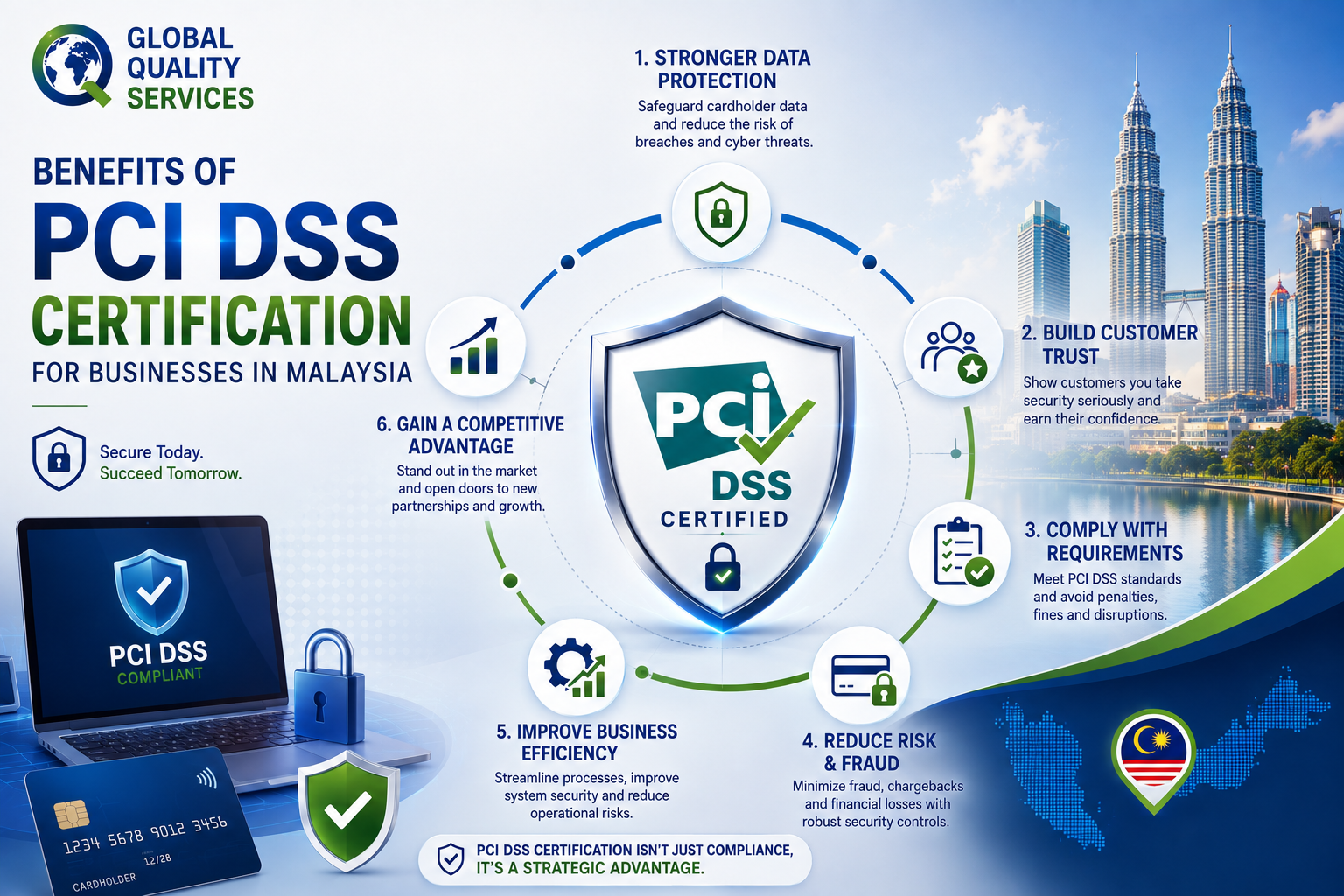
Let us have a look at the benefits of PCI DSS compliance:
Protecting Payment Account Data
The primary objective of PCI DSS is to strengthen the protection of payment account data. Implementing appropriate security controls can reduce the opportunities for unauthorized access, misuse, or compromise of sensitive payment information.
Strengthening Information Security
PCI DSS encourages organizations to establish stronger controls across networks, systems, applications, access management, vulnerability management, monitoring, and security testing. This can improve the organization’s overall security posture rather than addressing payment security in isolation.
Improving Security Visibility
A structured PCI DSS program helps organizations understand where payment data exists, which systems can affect it, who has access, and which third parties are involved. Better visibility can make it easier to identify weaknesses and respond to security events.
Supporting Business and Customer Confidence
Demonstrating appropriate payment security practices can help organizations meet applicable contractual and payment-industry requirements while giving customers and business partners greater confidence in how payment information is handled.
Who Needs PCI DSS Compliance?
Several businesses in Malaysia need to protect their client’s critifcal information and thus require PCI DSS compliance. Let us dig deeper to know more:
E-Commerce and Online Businesses
Businesses that accept card payments through websites or online applications may need to consider PCI DSS requirements based on how their payment environment operates. This includes businesses using payment gateways, embedded payment forms, hosted payment pages, or other online payment technologies.
Retail and Hospitality Businesses
Retail stores, restaurants, hotels, and other businesses that accept card payments via POS terminals may also be subject to PCI DSS requirements. The applicable scope depends on how payment information is handled and which systems connect to the payment environment.
Payment and Technology Service Providers
Payment processors, payment service providers, hosting providers, software providers, and other technology companies may have PCI DSS responsibilities when their services store, process, transmit, or can affect the security of payment account data. The validation requirements for service providers can differ from those applicable to merchants.
Organizations Using Third-Party Payment Services
Outsourcing payment processing does not automatically remove an organization’s PCI DSS responsibilities. The organization still needs to understand which responsibilities remain with it and which are handled by its service provider. PCI DSS therefore requires organizations to manage relevant third-party relationships and understand the impact of those providers on their payment environment.
Why Businesses in Malaysia Choose Global Quality Services for PCI DSS Consulting
Choosing the right PCI DSS consultant can make the difference between simply completing a compliance checklist and building a payment security program that your organization can actually maintain. Some providers focus heavily on documentation without understanding the underlying payment environment, while others identify gaps without providing your team with practical guidance for remediation. At Global Quality Services, we combine compliance expertise with a practical, implementation-focused approach:
- PCI DSS v4.0.1-Focused Guidance: Our consulting approach is aligned with the current PCI DSS v4.0.1 requirements, helping organizations avoid relying on outdated PCI DSS v3.2.1 practices.
- Scope-First Assessment: We first examine your payment flows, systems, applications, networks, and third-party services to help establish an appropriate PCI DSS scope and avoid unnecessary compliance effort.
- Actionable Gap Analysis: We don’t simply identify non-compliant areas. Our consultants explain the underlying gap, the applicable requirement, the remediation priority, and the practical steps your team can take to address it.
- E-Commerce Security Expertise: For online businesses, we address important PCI DSS v4.0.1 considerations around payment-page scripts, script authorization, integrity, and mechanisms for detecting unauthorized changes.
- Documentation & Evidence Support: We help your team organize policies, procedures, technical records, testing reports, risk analyses, and other evidence so that applicable controls can be clearly demonstrated during validation.
- Third-Party Responsibility Guidance: If your payment environment involves gateways, processors, cloud platforms, hosting providers, or other service providers, we help clarify shared responsibilities and supporting evidence.
- Assessment-Ready Approach: Our objective is to prepare your organization for the applicable PCI DSS validation process rather than simply completing paperwork. Where independent validation is required, we maintain a clear distinction between consulting support and the formal assessment.
Start Your PCI DSS Compliance Journey with Global Quality Services
An unclear PCI DSS scope, incomplete controls, or inadequate evidence can create unnecessary delays when your organization is preparing for compliance validation. Global Quality Services provides structured PCI DSS consulting in Malaysia to help you understand applicable requirements, identify security gaps, strengthen controls, and prepare the evidence required for your assessment. Whether you are preparing for your first PCI DSS assessment, reviewing an existing compliance program, or moving to PCI DSS v4.0.1, our consultants can help you establish a practical roadmap.
Frequently Asked Questions
Is PCI DSS a certification?
PCI DSS is a payment security standard rather than a conventional certification standard. Organizations demonstrate compliance through the validation method applicable to their environment, which may include an SAQ or ROC.
What is the latest version of PCI DSS?
PCI DSS v4.0.1 is the current version. It is the version organizations should use when preparing for current PCI DSS assessments. The future-dated requirements under PCI DSS v4.x became effective on March 31, 2025.
Does every business need a PCI DSS assessment?
The applicability and validation requirements depend on the organization’s role in the payment ecosystem, payment environment, and requirements established by the relevant compliance-accepting entity. Businesses should confirm their specific validation obligations with their acquirer or payment brand.
Does outsourcing payment processing remove PCI DSS responsibilities?
No. Outsourcing payment processing can change the organization’s PCI DSS scope, but it does not automatically remove all responsibilities. Businesses still need to understand their remaining controls and responsibilities relating to the payment environment and third-party providers.