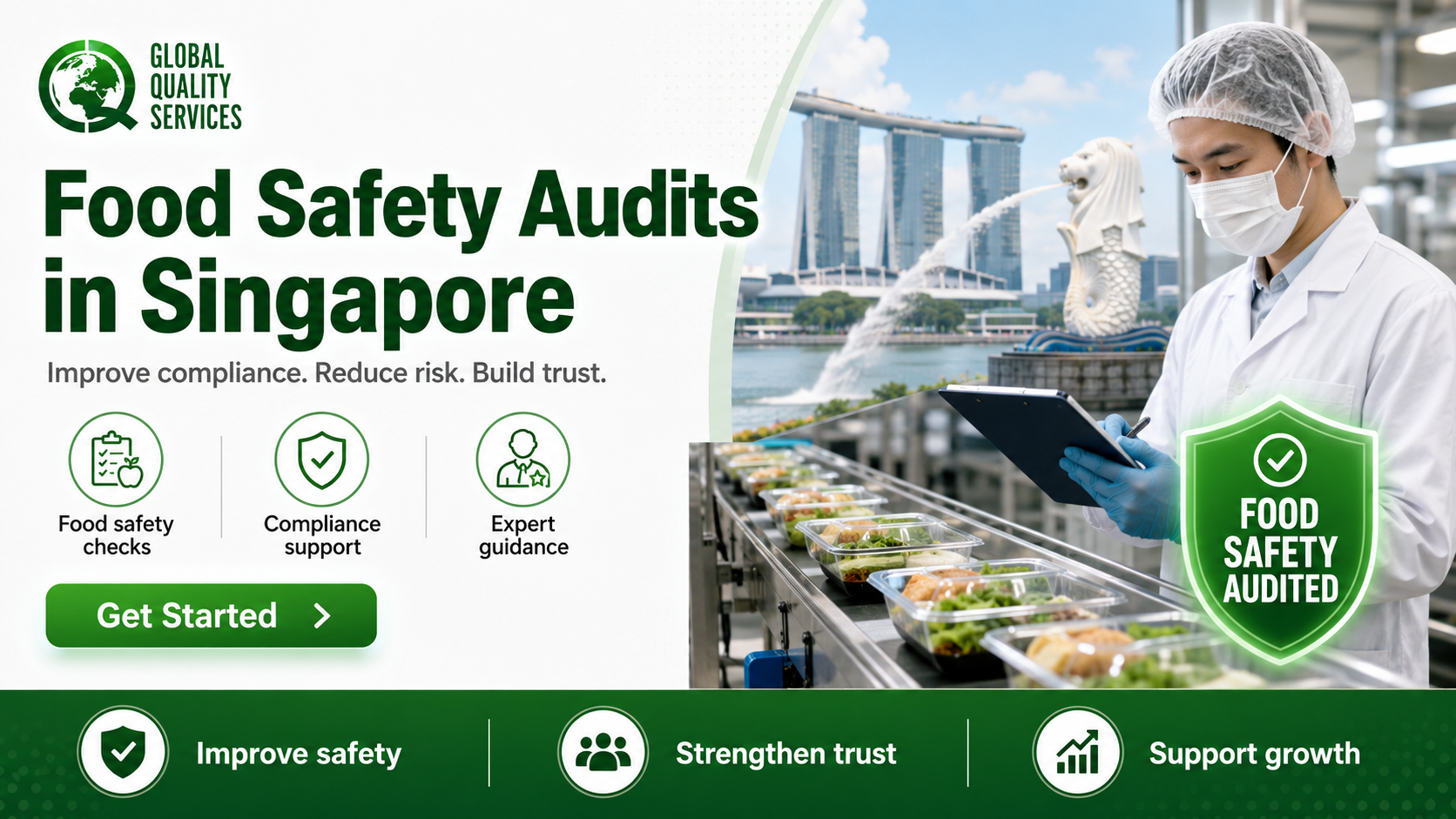
Food safety Audits in Singapore play a critical role in maintaining high hygiene and compliance standards across the food industry. With strict regulations and continuous monitoring, businesses must ensure safe food handling practices at every stage of operations. Regular inspections help identify risks, improve processes, and maintain consistent quality.
According to the Singapore Food Agency, over 73,000 food establishment inspections were conducted in 2023, highlighting the scale of enforcement and the importance of routine audits in preventing violations, ensuring regulatory compliance, and protecting overall public health.
What are Food Safety Audits in Singapore
Food safety audits in Singapore involve a thorough evaluation of food businesses to ensure they follow proper hygiene, handling, storage, and processing standards. Certified inspectors assess operations against Singapore Food Agency (SFA) regulations and international guidelines, identify potential risks, and recommend corrective actions to maintain compliance, protect consumer health, and ensure safe, high-quality food production.
Why Food Safety Audits are Important for Your Business
Operating without proper inspections exposes your business to serious risks. Here’s why these services are critical:
- Protect Consumer Health: Inspections help prevent contamination and foodborne illnesses by ensuring strict hygiene practices.
- Ensure Legal Compliance: Singapore enforces strict food safety laws. Regular inspections help you meet these regulations and avoid penalties.
- Build Customer Trust: Maintaining high hygiene standards enhances your brand credibility and customer confidence.
- Reduce Financial Risks: Early detection of issues prevents costly recalls, operational disruptions, and reputational damage.
Types of Businesses That Need Food Safety Audits
Food safety audits are essential across multiple sectors to ensure safe operations and compliance:
- Restaurants and Cafes: Maintain kitchen hygiene and safe food handling
- Food Manufacturing Units: Monitor production processes and contamination risks
- Catering Services: Ensure safe food preparation and transportation
- Food Export Businesses: Meet international food safety standards
- Warehouses and Cold Storage: Maintain proper storage and temperature control
When Should You Conduct Food Safety Audits
Timely inspections help maintain compliance and prevent operational risks.
Regular Inspections
Most businesses should conduct inspections annually or semi-annually based on operational scale.
Event-Based Inspections
You should schedule inspections when:
- Launching a new facility
- Expanding operations
- Changing suppliers or processes
- Receiving customer complaints
- Preparing for certifications
Common Issues Found During Food Safety Audits
Without proper inspections, businesses often face these risks:
- Poor staff hygiene practices
- Incorrect food storage temperatures
- Cross-contamination between raw and cooked food
- Expired or mislabeled products
- Unclean equipment and surfaces
- Missing or incomplete documentation
These issues directly impact food safety and business credibility.
Food Safety Audits Checklist
Here is the food safety audit checklist to help you evaluate hygiene, handling practices, storage conditions, and overall compliance effectively.
Hygiene and Sanitation
- Clean kitchen environment
- Staff personal hygiene
Food Storage
- Proper temperature control
- Correct labeling and segregation
Food Handling
- Safe preparation methods
- Prevention of cross-contamination
Documentation
- Supplier records
- Cleaning and maintenance logs
Pest Control
- Preventive measures and monitoring
Step-by-Step Food Safety Audit Process
A systematic inspection process ensures thorough evaluation and compliance at every stage.
Step 1: Documentation Review
Inspectors review licenses, previous audit reports, and food safety records to evaluate compliance status, identify gaps, and understand operational practices before conducting the physical inspection process.
Step 2: On-Site Inspection
Experts visit the facility to assess hygiene standards, food handling procedures, storage conditions, and equipment cleanliness, ensuring all practices align with food safety regulations and industry requirements.
Step 3: Risk Analysis and Reporting
Inspectors analyze findings and prepare a detailed report highlighting non-compliance issues, associated risks, and practical corrective actions required to improve food safety standards and ensure regulatory compliance.
Step 4: Corrective Actions and Certification
After implementing corrective measures, a follow-up inspection verifies compliance. Once all standards are met, certification is issued, confirming that the facility adheres to required food safety regulations.
Why Choose Global Quality Services for Food Safety Audits
Choosing Global Quality Services for food safety aidit ensures expert guidance, accurate audits, and full compliance with Singapore regulations. Their experienced professionals identify risks early, provide practical corrective solutions, and deliver clear, actionable reports to improve your operations.
With a strong focus on quality, efficiency, and reliability, they help protect your brand reputation and customer trust. Contact us today to ensure your food business meets the highest safety standards.
FAQ’s
- Are food safety audit mandatory in Singapore?
Yes, food safety audits are mandatory in Singapore. Food businesses must comply with Singapore Food Agency (SFA) regulations to maintain hygiene standards, ensure food safety, and protect public health. - How often should audits be conducted?
Food safety audits are typically conducted annually or semi-annually. The frequency depends on business type, operational risks, and regulatory requirements to maintain consistent hygiene, safety standards, and compliance. - Who conducts food safety audits?
Food safety audits are conducted by certified auditors, trained food safety professionals, and accredited inspection agencies. Regulatory authorities like the Singapore Food Agency may also perform official inspections. - What happens if a business fails inspection?
If a business fails inspection, authorities may issue fines, suspend operations, or mandate corrective actions. Businesses must resolve identified issues promptly to meet compliance standards and resume normal operations. - How long does a food safety audits take?
A food safety audits usually takes one to three days. The duration depends on the facility’s size, operational complexity, and scope of inspection, including evaluation, testing, and reporting.