

For organizations already running an ISO 27001-certified Information Security Management System (ISMS), adopting ISO 27701 often seems straightforward on paper. In practice, the biggest challenge is not implementation—it is alignment. ISO 27701 does not exist as a standalone framework. It extends ISO 27001 into a Privacy Information Management System (PIMS), which means your existing controls must evolve to address privacy requirements. This is where control mapping becomes critical. Without proper mapping, organizations either duplicate controls unnecessarily or leave gaps in privacy coverage. A well-structured control mapping approach ensures that your ISMS and PIMS operate as a single, integrated system.
Understanding the Relationship Between ISO 27001 and ISO 27701
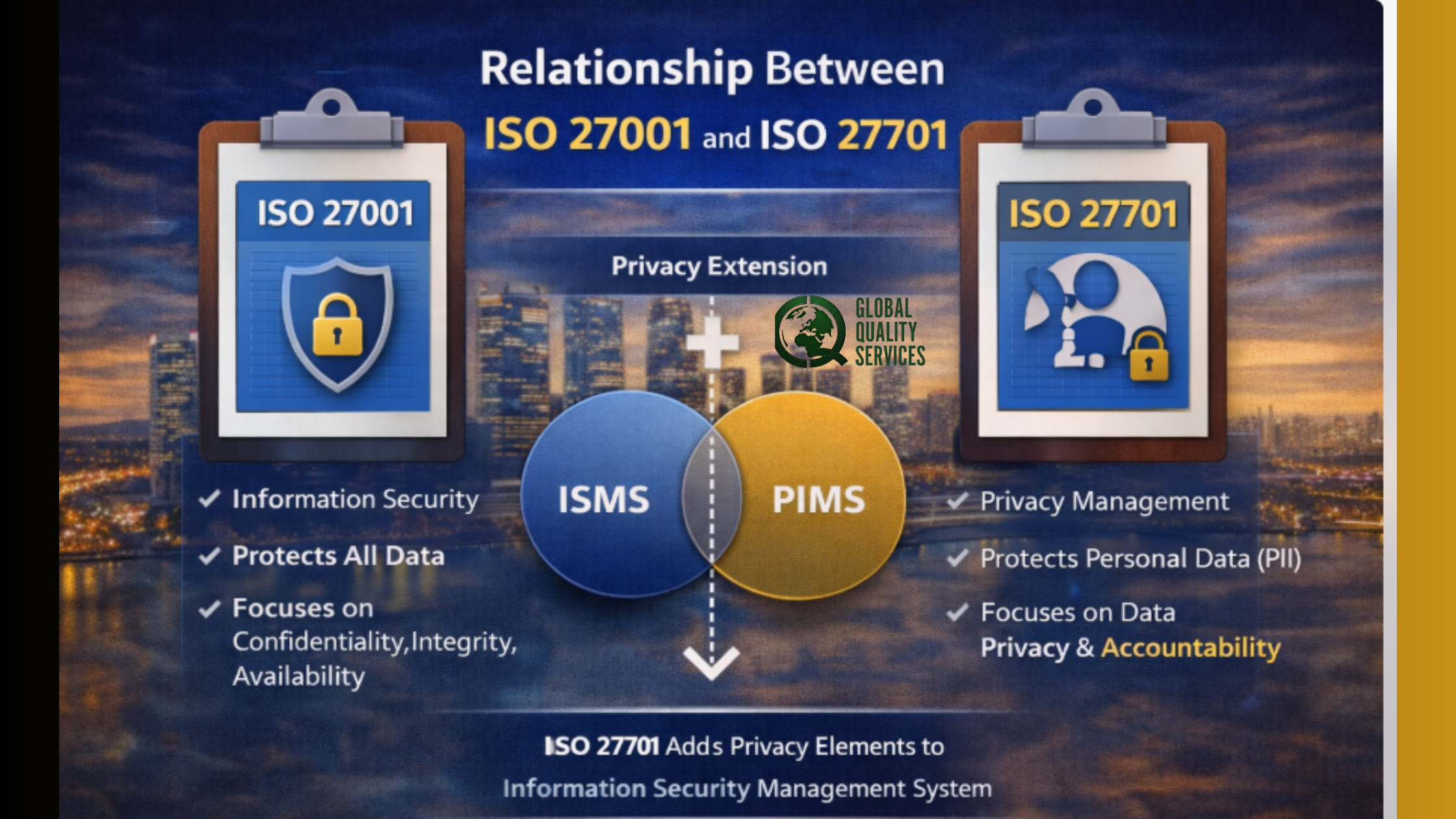
To approach control mapping correctly, you need to understand how ISO 27701 is designed. ISO 27001 focuses on protecting information assets broadly—confidentiality, integrity, and availability. It does not differentiate between types of data. ISO 27701 builds on this by introducing a specific focus on Personally Identifiable Information (PII). For example, ISO 27001 requires access control mechanisms. ISO 27701 does not replace this—it adds context. This shift—from technical control to contextual control—is the foundation of ISO 27701 mapping. This means privacy is not treated as a separate function. Instead, it is layered onto your existing security controls.
What Control Mapping Actually Means in Practice
Control mapping in ISO 27701 is not just about aligning clauses on paper—it is about translating your existing ISO 27001 controls into privacy-aware mechanisms that reflect how personal data is actually handled within your organization. In practice, this means evaluating each control to determine whether it adequately addresses the collection, use, sharing, and retention of PII, and then extending it where necessary to meet privacy expectations. It requires linking technical safeguards with business context, ensuring that every control not only protects data but also justifies why that data is being processed, who is responsible for it, and how compliance can be demonstrated during audits.
Where ISO 27001 Controls Typically Fall Short
ISO 27001 controls are designed to secure information broadly, but they often fall short when it comes to the context and accountability required for personal data processing. While the standard ensures that data is protected through mechanisms like access control, encryption, and monitoring, it does not inherently require organizations to define why personal data is being processed, how long it should be retained, or whether its use aligns with legal and regulatory expectations.
This creates a gap where systems may be technically secure but still non-compliant from a privacy perspective. ISO 27701 addresses this limitation by adding layers of purpose, transparency, and data subject rights, forcing organizations to move beyond protection and toward responsible and justifiable data handling practices.
Breaking Down ISO 27701 Control Extensions
To understand ISO 27701 properly, it is not enough to list additional controls—you need to see how existing ISO 27001 controls are expanded in scope, intent, and accountability. ISO 27701 does not introduce an entirely new system; it deepens control logic by adding privacy context, legal alignment, and user-centric accountability. Below is how key control areas evolve in practice:
Access Control Evolves into Purpose-Driven Data Access
Under ISO 27001, access control is primarily designed to ensure that only authorized users can access systems and data. Access is granted based on roles, responsibilities, and least privilege principles. ISO 27701 extends this by introducing purpose limitation and data minimization. For example, a marketing team member may have system access under ISO 27001. This shift forces organizations to move from role-based access to context-aware access governance, which is significantly more mature. This means access is no longer justified solely by role—it must also be aligned with the specific purpose for which personal data is processed.
Asset Management Becomes PII-Centric Data Mapping
ISO 27001 requires organizations to maintain an inventory of information assets such as databases, applications, and infrastructure. However, it does not mandate classification based on personal data usage. ISO 27701 transforms asset management into PII mapping and classification. This introduces the concept of data lifecycle visibility—from collection to storage, usage, sharing, and deletion. Without this layer, organizations may have secure systems but still fail privacy compliance because they cannot demonstrate control over personal data movement.
Incident Management Expands into Privacy Breach Response
In ISO 27001, incident management focuses on identifying, responding to, and recovering from security incidents such as unauthorized access or system failures. ISO 27701 adds a critical dimension: impact on individuals and regulatory obligations. This transforms incident management from a technical response process into a legal and reputational risk function. Organizations must also ensure coordination between IT, legal, and compliance teams—something ISO 27001 alone does not enforce.
Supplier Management Becomes Privacy Accountability Across Third Parties
ISO 27001 includes supplier security requirements to ensure that vendors meet basic information security standards. This typically involves contracts, due diligence, and periodic reviews. ISO 27701 significantly expands this by introducing data processing accountability. This means supplier management is no longer about security posture alone, but about how personal data is handled across the entire ecosystem.
Logging and Monitoring Become Accountability Evidence
Under ISO 27001, logging and monitoring are used to detect unauthorized access, system misuse, and potential security incidents. ISO 27701 extends this into privacy accountability and auditability. This introduces the concept of accountability-by-design, where every action on personal data can be traced, justified, and explained. It also means logs are no longer just security tools—they become compliance evidence.
The Role of Data Mapping in Control Alignment
One of the most critical enablers of ISO 27701 mapping is data visibility. Without a clear understanding of where PII exists, mapping becomes theoretical. Organizations must establish:
- What personal data is collected
- Where it is stored
- How it moves across systems
- Who has access to it
This is often referred to as data flow mapping. Once this visibility is established, control mapping becomes far more precise because you are aligning controls to real data flows, not assumptions.
Common Mistakes That Weaken Control Mapping
Even well-intentioned implementations can fail due to a few recurring issues. Organizations often treat ISO 27701 as an add-on rather than an extension. This leads to duplicated policies and fragmented controls. Another issue is over-reliance on templates. Generic documentation may meet structure requirements but fails to reflect actual operations, which becomes evident during audits. There is also a tendency to ignore operational teams. Privacy is not just a compliance function—HR, marketing, and customer support often process personal data and must be part of the mapping process.
Why Strong Control Mapping Improves Audit Outcomes
From an audit perspective, control mapping demonstrates maturity. Auditors are not just checking whether controls exist. They are assessing whether your system is logically structured and consistently applied. ISO 27701 control mapping is where most organizations either simplify or complicate their privacy journey. A weak approach leads to duplication, confusion, and audit challenges. A strong approach integrates privacy into existing security controls, creating a unified system that is easier to manage and scale.
Conclusion
The goal is not to build a new framework. It is to evolve your ISMS into a system that understands not just how data is protected, but how it is used, why it is used, and whether that use is justified. Organizations that get this right do not just achieve compliance—they build a structured, accountable, and future-ready privacy framework. Connect with us today at Global Quality Services.