

For most organizations, ISO 27001 certification is treated as the finish line. In reality, it is the starting point of a continuous compliance cycle. The real challenge begins after certification, when surveillance audits are introduced to verify whether your Information Security Management System (ISMS) is still functioning as intended.
Surveillance audits are not designed to re-test everything from scratch. Instead, they assess whether your controls are active, your risks are managed, and your system has evolved alongside your business. Organizations that approach these audits reactively often struggle with inconsistencies, outdated documentation, and repeated findings.
A structured surveillance audit strategy changes that dynamic. It shifts the focus from periodic preparation to continuous control, allowing your ISMS to operate as a living system rather than a static framework.
Understanding the Role of Surveillance Audits
Before building a strategy, it is important to understand how surveillance audits differ from certification audits. Certification audits are comprehensive and evaluate the full ISMS against ISO 27001 requirements. Auditors look for evidence of:
- Ongoing risk management activities
- Control implementation across departments
- Updates reflecting business or system changes
- Closure of past non-conformities
Surveillance audits, on the other hand, are selective and risk-based. Auditors focus on critical controls, high-risk areas, and changes that have occurred since the last audit. This means your organization is not being tested on how well you prepared documentation, but on how consistently your system operates in real conditions.
Why Most Organizations Struggle with Surveillance Audits
The gap between certification and surveillance performance usually comes down to mindset. Many organizations treat ISO 27001 as a one-time project. After certification, attention shifts back to business operations, and the ISMS is maintained only at a surface level. Over time, this leads to misalignment between documented processes and actual practices.
One common issue is documentation decay. Policies created during certification are rarely updated, even when systems, vendors, or workflows change. Another issue is control fatigue—teams stop following procedures because they are seen as compliance overhead rather than operational necessity.
There is also a lack of ownership. Without clearly defined responsibilities, controls become fragmented across departments, making it difficult to demonstrate consistency during audits. These issues do not appear overnight. They build gradually, which is why organizations often feel unprepared when surveillance audits approach.
Moving from Preparation to Continuous Readiness
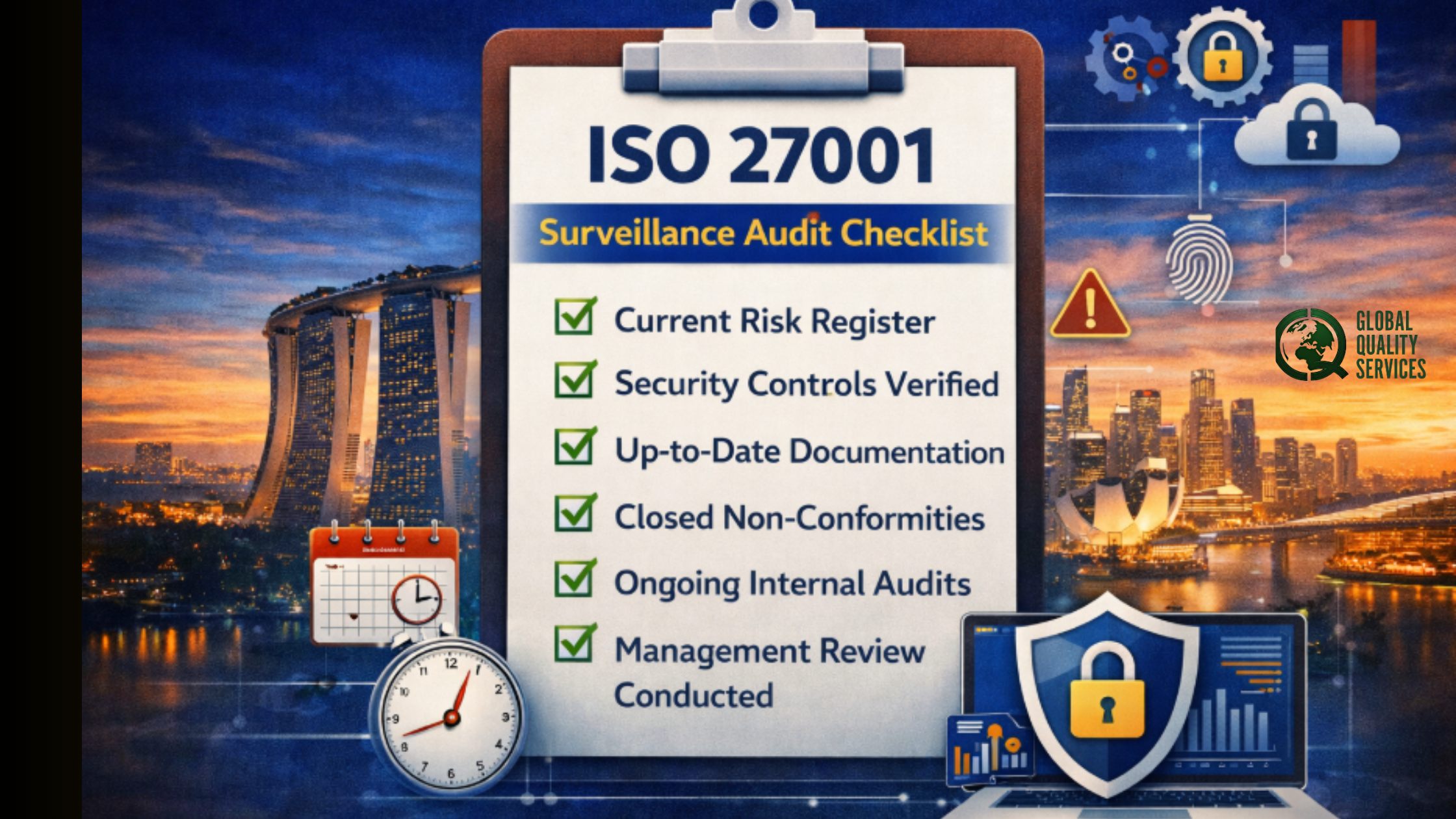
The most effective surveillance audit strategy is based on a simple shift: stop preparing for audits and start operating in a state of readiness. This means your ISMS should reflect actual business activity at all times. Risk registers should be current, access controls should match active users, and logs should be maintained as part of daily operations—not created retrospectively.
Continuous readiness reduces audit pressure significantly. When your system is already aligned, audit preparation becomes a review process rather than a corrective exercise. To achieve this, organizations must embed ISMS activities into operational workflows. Security should not sit with a single team; it must be distributed across functions such as IT, HR, procurement, and operations.
Strengthening Internal Audit as a Strategic Tool
A stronger approach is to treat internal audits as a continuous validation mechanism. Conducting them quarterly allows you to identify issues early, validate control effectiveness, and ensure documentation reflects actual practices. More importantly, internal audits should go beyond checklists. They should test real scenarios:
- Are terminated employees’ access rights removed immediately?
- Are backup systems functioning and recoverable?
- Are vendor risks being reviewed periodically?
Internal audits are often underutilized. Many organizations conduct them once a year, primarily to satisfy ISO requirements. This limits their effectiveness.
Documentation That Reflects Reality
One of the most common audit findings is the gap between documentation and actual operations. ISO 27001 does not require excessive documentation. It requires accurate and relevant documentation. The problem arises when organizations maintain documents created during certification but fail to update them as the business evolves.
For example, if your organization adopts new cloud systems, changes vendors, or expands operations, your ISMS scope, risk assessments, and control frameworks must reflect those changes. Auditors look for consistency. If your policy states one process and your team follows another, it raises questions about control effectiveness.
Maintaining documentation should not be a periodic activity. It should be part of change management. Every operational change should trigger a review of ISMS elements.
Risk Management as the Core of Surveillance Success
ISO 27001 is fundamentally a risk-based standard. Surveillance audits heavily focus on how well risks are identified, assessed, and managed. Many organizations maintain a risk register but do not actively use it. Risks are identified during certification and rarely updated unless required for audits. A mature approach involves continuous risk evaluation. Whenever there is a change—new technology, new vendor, or new process—the associated risks should be assessed and documented.
Control effectiveness must also be validated. For instance, having a firewall is not enough. You must demonstrate that it is configured correctly, monitored, and aligned with current threats. This shift from static to dynamic risk management significantly improves audit outcomes.
Managing Non-Conformities with Depth
Non-conformities are a normal part of surveillance audits. The issue is not their occurrence, but how they are handled. Organizations often focus on quick fixes to close findings. This approach may resolve the immediate issue but does not prevent recurrence.
A stronger strategy involves root cause analysis. Instead of asking “what went wrong,” the focus should be on “why it went wrong.” This allows you to address systemic issues rather than isolated incidents. Tracking non-conformities centrally and monitoring their closure ensures accountability and reduces repeated findings across audit cycles.
Aligning Teams and Leadership
Surveillance audits test organizational alignment as much as they test technical controls. If employees are unaware of ISMS processes or cannot explain their responsibilities, it indicates weak integration. Training should not be limited to onboarding—it should be ongoing and role-specific.
Leadership also plays a critical role. Management reviews should not be treated as formalities. They should evaluate ISMS performance, review risks, and allocate resources where needed. When leadership is actively involved, the ISMS becomes part of business strategy rather than a compliance requirement.
Turning Surveillance Audits into an Advantage
Organizations that approach surveillance audits strategically gain more than compliance. They develop stronger operational discipline, better visibility into risks, and improved control over processes. This translates into reduced security incidents, improved client confidence, and stronger positioning in competitive markets. Instead of viewing audits as disruptions, they become checkpoints for system maturity.
Conclusion
ISO 27001 surveillance audits are designed to ensure that your ISMS remains effective over time. Organizations that rely on last-minute preparation often struggle because their systems are not aligned with real operations.
A structured surveillance audit strategy focuses on continuous readiness, active risk management, and consistent control implementation. It integrates security into daily workflows rather than isolating it as a compliance function.
When implemented correctly, this approach does more than help you pass audits—it builds a resilient, scalable, and trustworthy organization. Contact Global Quality Services to know more.