
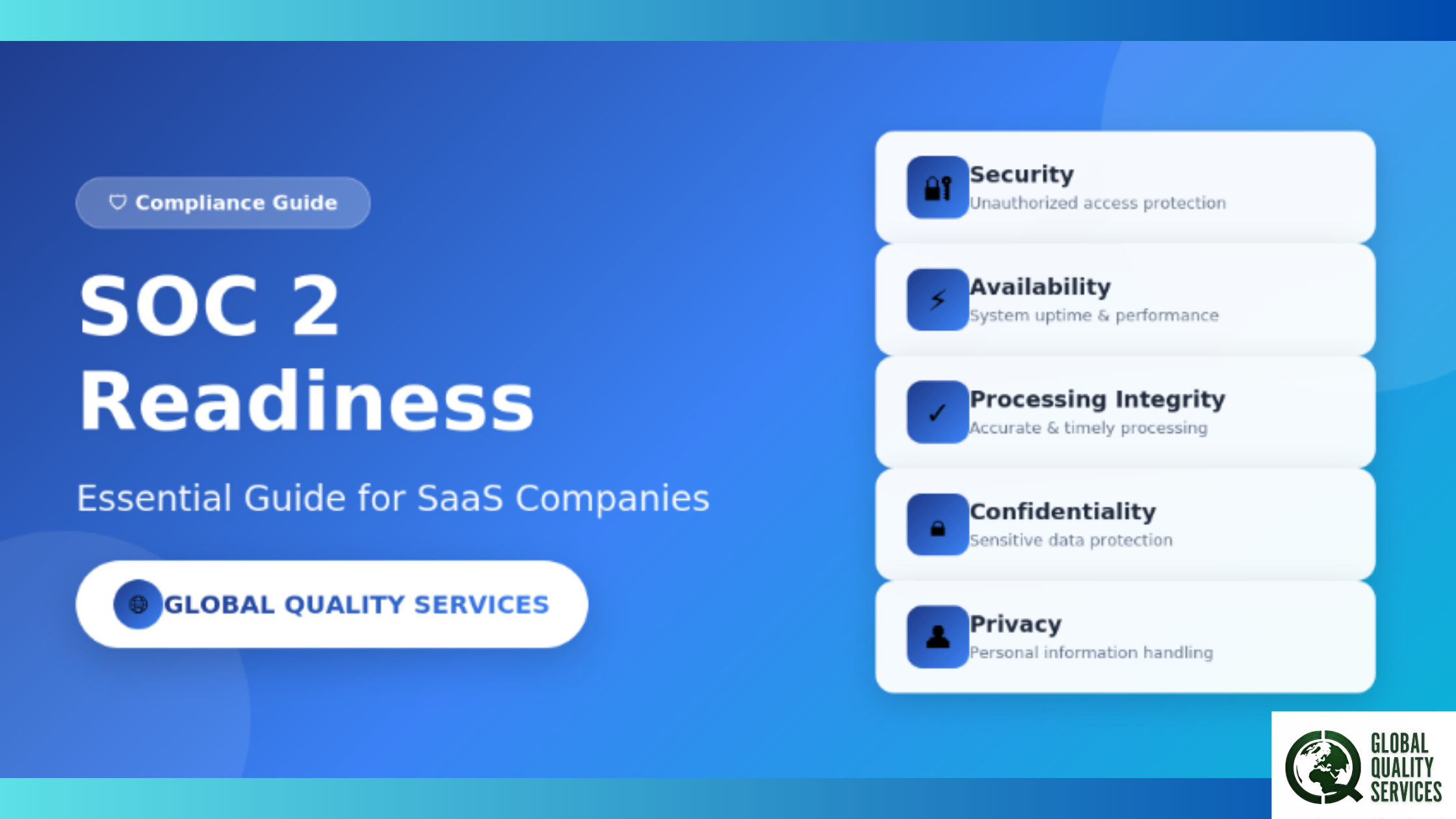
For SaaS startups in Singapore and across Asia-Pacific, SOC 2 compliance has become the gateway to enterprise contracts. When prospects ask “Do you have SOC 2?” and you don’t, deals stall. This guide breaks down what SOC 2 readiness means and how to navigate the compliance journey efficiently.
Why SOC 2 Matters for SaaS Startups
SOC 2 evaluates how service organizations manage customer data based on five Trust Services Criteria: Security (mandatory), Availability, Processing Integrity, Confidentiality, and Privacy. Unlike prescriptive standards, SOC 2 is flexible, allowing you to tailor controls to your business model.
Companies that achieve SOC 2 unlock enterprise contracts, streamline vendor due diligence, and strengthen actual security posture—reducing breach risk while meeting customer expectations.
Understanding Type 1 vs Type 2: Which Do You Need?
SOC 2 Type 1 assesses control design at a single point in time. Auditors examine policies and procedures but don’t test ongoing effectiveness. This report provides validation within 1-3 months and is well-suited for early-stage startups that need quick proof of security. However, many enterprise buyers now expect Type 2.
SOC 2 Type 2 evaluates both design and operational effectiveness over 3-12 months. Auditors collect evidence throughout the observation period, verifying controls function consistently. Type 2 costs significantly more and requires sustained control operation, but provides stronger assurance.
Most established SaaS companies target Type 2. If you have the time and resources, skip Type 1 and proceed directly to Type 2 to avoid dual-audit costs.
The SOC 2 Readiness Checklist
Readiness means having controls designed, implemented, documented, and operating before your formal audit begins. Here’s what you need to prepare:
1. Define Your Audit Scope
Identify which Trust Services Criteria apply to your business beyond the mandatory Security criterion. SaaS companies offering uptime guarantees should include Availability, while those processing sensitive transactions need Processing Integrity. Document which systems, applications, infrastructure, and personnel fall within scope. Cloud-hosted SaaS platforms typically include production environments, development systems, administrative access, and third-party integrations.
2. Establish Core Security Policies
SOC 2 requires documented policies governing information security, access control, change management, incident response, business continuity, and vendor management. These aren’t checkbox exercises—auditors verify employees actually follow them.
Critical policies include:
- Information Security Policy (your overarching security commitment)
- Acceptable Use Policy (how employees handle company resources)
- Access Control Policy (who gets access to what, and how)
- Incident Response Plan (detecting, responding to, containing security events)
- Business Continuity and Disaster Recovery Plan (maintaining operations during disruptions)
- Vendor Management Policy (vetting and monitoring third-party risks)
Write policies reflecting actual practices, not aspirational ones. If you commit to quarterly access reviews, you must execute them quarterly with documented evidence.
3. Implement Technical Controls
Access Management: Multi-factor authentication for all systems, role-based access control, quarterly access reviews, immediate deprovisioning for departing employees.
Logging and Monitoring: Centralized logging for authentication, system changes, and administrative actions. Configure alerts for suspicious activities and retain logs for one year minimum.
Encryption: Use TLS 1.2+ for data in transit and industry-standard encryption for data at rest. Document encryption methods and key management.
Vulnerability Management: Monthly vulnerability scans, annual penetration testing, documented patch management for critical vulnerabilities.
Change Management: Document and approve production changes, maintain change logs, implement rollback procedures, separate development and production environments.
4. Vendor Risk Management
With 84% of companies using SaaS applications that experienced breaches, your security depends on vendor choices. Maintain a vendor inventory, review critical vendors’ SOC 2 reports or security documentation, document evaluation processes, and include security requirements in contracts. Auditors verify systematic third-party risk management.
5. Business Continuity and Disaster Recovery
Implement regular automated backups, documented recovery procedures, and tested restoration processes. Define Recovery Time Objectives and Recovery Point Objectives. Test backups regularly—untested backups aren’t backups. Document disaster recovery plans and conduct annual testing.
6. Employee Security Awareness
With 95% of breaches involving human error, training is critical. Implement security training covering password management, phishing, data handling, and incident reporting. Train new hires within their first week and provide annual refreshers. Document training activities and maintain completion records for auditor review.
7. Documentation and Evidence Collection
Start collecting evidence immediately: access review reports, change management tickets, vulnerability scan results, security training certificates, incident response records, backup test results, and vendor assessments. Organize evidence systematically by control area. Many companies use GRC platforms to automate collection and centralize documentation.
Maintaining Compliance After Certification
Annual Type 2 audits require sustained control operation that Global Quality Services experts can help you achieve. Plan for quarterly access reviews, monthly vulnerability scans, continuous log monitoring, annual penetration testing, regular training, and vendor assessments. Automation platforms reduce maintenance burden.
Getting Started with SOC 2 Readiness
Begin by securing executive commitment, defining audit scope and applicable criteria, conducting gap assessment, prioritizing remediation based on timeline, implementing controls systematically, and establishing evidence collection processes. Consider engaging a readiness consultant for your first SOC 2—the investment typically pays off through faster certification and fewer audit exceptions.
Frequently Asked Questions
How long does SOC 2 readiness take?
Preparation typically requires 3-6 months for organizations starting from scratch, depending on existing security maturity. Companies with strong security foundations may achieve readiness faster, while those requiring significant control implementation need longer preparation periods.
Can we achieve SOC 2 without consultants?
Yes, particularly if you have internal security and compliance expertise. However, first-time implementations benefit significantly from consultant guidance to avoid common pitfalls and accelerate timelines. Many companies use consultants for initial readiness and handle maintenance internally.
What’s the difference between SOC 2 and ISO 27001?
ISO 27001 is an international standard for information security management systems, while SOC 2 is a US-based auditing framework. ISO 27001 provides certification, whereas SOC 2 produces an attestation report. Many companies pursue both—there’s significant overlap in control requirements.
Do Singapore companies need SOC 2?
SOC 2 isn’t legally required in Singapore, but it’s essential for SaaS companies selling to US enterprises or multinational corporations. Many Singapore-based companies pursue SOC 2 to access international markets and demonstrate world-class security practices.
What happens if we fail the SOC 2 audit?
SOC 2 doesn’t have traditional pass/fail outcomes. If controls don’t meet requirements, auditors document exceptions in the report. Significant exceptions may result in qualified opinions, impacting customer trust. Work with your auditor to remediate issues before report finalization.
Is SOC 2 Type 1 worth pursuing?
Type 1 can unblock urgent deals and demonstrate security commitment, particularly for early-stage companies. However, most enterprise buyers ultimately require Type 2. If time and resources permit, skip Type 1 and pursue Type 2 directly to avoid dual audit costs.