
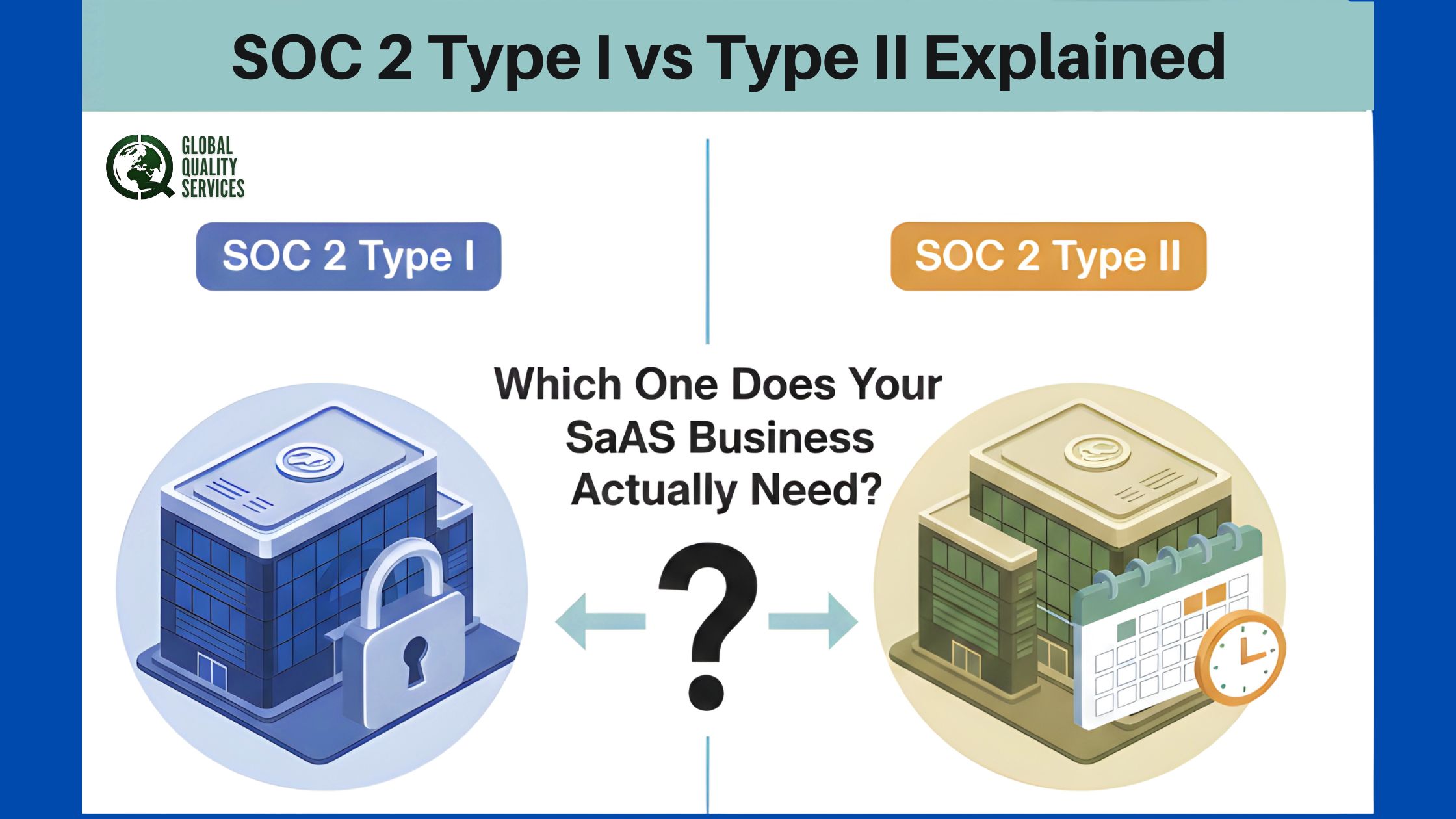
If you’re a SaaS or cloud company chasing enterprise deals, you’ve probably heard the question: “Are you SOC 2 compliant?” But here’s what most guides don’t tell you upfront — there are two types of SOC 2 reports, and choosing the wrong one can cost you time, money, and credibility with buyers. Let’s break it all down so you can make a confident decision.
What Is SOC 2?
SOC 2 (System and Organization Controls 2) is a security framework developed by the American Institute of Certified Public Accountants (AICPA). It evaluates how a company manages customer data across five Trust Service Criteria: Security, Availability, Processing Integrity, Confidentiality, and Privacy. Security is mandatory; the rest are optional depending on your business.
SOC 2 Type I: The Snapshot
A SOC 2 Type I report evaluates whether your security controls are designed appropriately at a single point in time. Think of it as a photograph — an auditor reviews your policies, procedures, and system configurations and confirms they look right today.
- What it covers: Control design and documentation as of the audit date.
- What it doesn’t cover: Whether those controls actually worked over time.
Type I is faster and cheaper to obtain, making it a popular starting point for early-stage startups trying to unlock their first enterprise contracts.
SOC 2 Type II: The Track Record
A SOC 2 Type II report evaluates whether your controls were designed appropriately AND operating effectively over an observation period — typically 6 to 12 months. It’s a video, not a photograph. Auditors don’t just review documentation; they test evidence to confirm your controls worked consistently throughout the period.
Type II is widely considered the gold standard and is what most enterprise buyers and procurement teams actually want to see.
Key Differences at a Glance
| Factor | SOC 2 Type I | SOC 2 Type II |
|---|---|---|
| Audit Scope | Point-in-time design review | 6–12 month operational review |
| Evidence Required | Policies, configurations | Logs, tickets, access reviews, screenshots |
| Time to Complete | 4–8 weeks | 6–12 months |
| Cost (Typical) | $10,000–$30,000 | $30,000–$100,000+ |
| Buyer Credibility | Good starting point | Preferred by enterprise |
| Renewal Frequency | As needed | Annually recommended |
Audit Scope: What Auditors Actually Test
With Type I, auditors focus on design. They’ll review your access control policies, encryption configurations, incident response plans, and vendor management documentation. The question they’re answering: “Are these controls reasonable and properly designed?”
With Type II, auditors go deeper. They’ll pull samples of access logs, change management tickets, employee onboarding/offboarding records, and vulnerability scan results across the observation window. The question becomes: “Did these controls actually run as intended — every day, for months?”
The evidence burden for Type II is substantially higher, which is why most companies use tools like Vanta, Drata, or Sprinto to automate continuous evidence collection before and during the audit.
Timeline and Cost Reality
Type I can typically be completed in 4–8 weeks after you’ve implemented your controls. Budget $10,000–$30,000 for a reputable auditor, plus internal team time.
Type II requires patience. You need to first implement controls, then run them for a minimum observation period (usually 6 months for a first-time audit), and then complete the audit itself. Total timeline from zero to report: 9–15 months. Costs range from $30,000 to over $100,000 depending on your company size, system complexity, and auditor.
The good news: many companies pursue Type I first to close deals quickly, then move to Type II within 12–18 months.
What Buyers Actually Expect
Here’s the honest reality. Most mid-market buyers will accept a Type I to get a deal moving. Most enterprise buyers — especially in financial services, healthcare, and government — require Type II before signing a contract. Some Fortune 500 procurement teams won’t even open a security questionnaire without a valid Type II report in hand.
If your ICP (ideal customer profile) includes companies with 500+ employees or deals over $50K ACV, budget and plan for Type II. The ROI becomes clear quickly — a single enterprise deal often covers the entire audit cost.
Which Should You Choose?
Start with Type I if: You’re pre-Series A, you need to close your first 5–10 enterprise deals quickly, or you’re building out controls for the first time and want an external validation checkpoint.
Go straight to Type II if: Your buyers are consistently asking for it, you’re in a regulated industry, you have a competitive deal cycle where compliance is a differentiator, or you have the infrastructure to support a 6+ month observation period.
The most common playbook: Type I now, Type II within 12 months. It gets you to market faster while building toward the credential enterprise buyers demand.
Ready to Start Your SOC 2 Journey?
Whether you’re just beginning to build your security program or you’re ready to go under audit, the most important step is getting your controls in place. Work with a compliance automation platform to continuously collect evidence from day one — it makes the eventual Type II audit dramatically faster and less painful.
Start your SOC 2 readiness assessment today with Global Quality Services and find out exactly where your gaps are before an auditor does.
FAQs
Q: Can I skip Type I and go straight to Type II? Yes. There’s no requirement to complete Type I first. Many companies go directly to Type II, especially if they’ve already been operating with mature controls for several months.
Q: How long is a SOC 2 report valid? There’s no official expiry, but most buyers consider reports older than 12 months outdated. Type II reports are typically renewed annually.
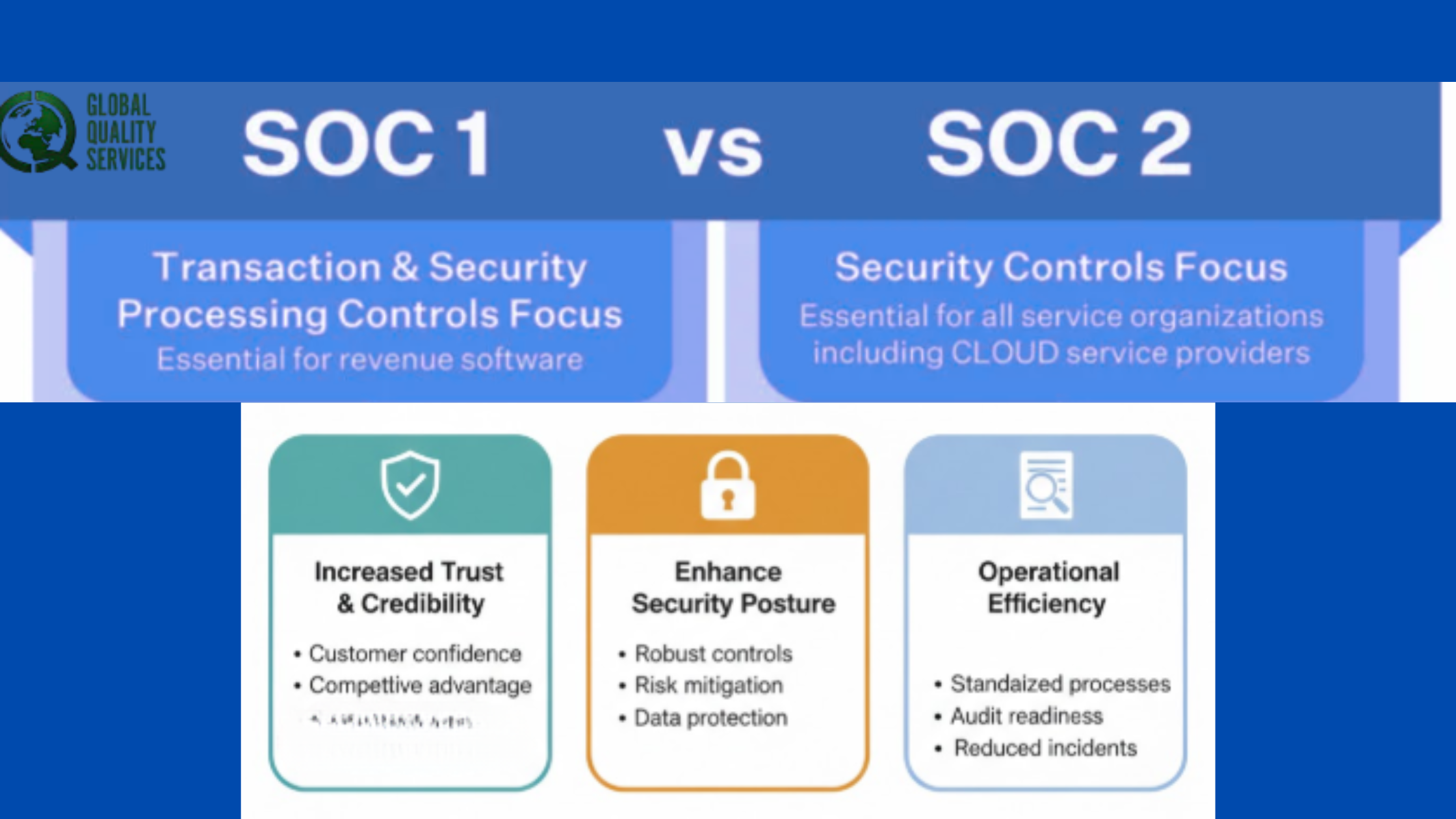
Q: Do I need SOC 2 if I’m SOC 1 or ISO 27001 certified? These are complementary, not interchangeable. SOC 1 focuses on financial reporting controls. ISO 27001 is an international standard with different scope. SOC 2 remains the preferred framework for US-based cloud and SaaS buyers.
Q: What’s the difference between SOC 2 and SOC 3? SOC 3 is essentially a public-facing summary of a SOC 2 Type II report. It doesn’t include auditor findings or system descriptions — just the opinion. It’s used for marketing purposes.
Q: How much internal time does a SOC 2 audit require? Expect to invest 200–400 hours of internal time for a first-time audit, primarily from your engineering, security, and HR teams. Compliance automation tools can cut this significantly.
Q: Can I share my SOC 2 report publicly? SOC 2 reports are confidential. Most companies share them under NDA with prospects. You can share a SOC 3 report publicly.