
Singapore’s electronics, IT asset disposition (ITAD), and refurbishment sector continues to grow as global clients push for higher sustainability, transparency, and data security standards. With increasing regulatory scrutiny and ESG expectations, companies dealing with used electronics must demonstrate responsible handling of devices, components, and materials.
This is where the R2v3 Certification—the latest and most stringent version of the Responsible Recycling Standard—becomes essential. For Singapore businesses aiming to compete internationally, R2v3 serves as a critical benchmark for operational excellence, environmental responsibility, and market credibility.
This blog breaks down the full scope of R2v3, its requirements, benefits, challenges, certification process, and how Singapore companies can choose the right partner for implementation.
Understanding R2v3 Certification
Background & Scope of R2v3
R2v3 is the newest version of the Responsible Recycling Standard developed by SERI (Sustainable Electronics Recycling International). The standard applies to companies engaged in:
-
IT Asset Disposition (ITAD)
-
Refurbishment and repair
-
Used electronics resale
-
Electronics recycling and material recovery
-
Brokering and downstream vendor management
The v3 version introduces stronger requirements related to environmental protection, worker safety, risk management, data security, and traceability. It also includes a modular structure so companies can certify only the processes relevant to their operations.
Why R2v3 Matters for Singapore Businesses
Singapore serves as a hub for technology, electronics import-export, and regional IT operations. As a result, companies face increasing pressure to handle electronic equipment responsibly. R2v3 is valuable because it:
-
Builds credibility with multinational clients
-
Ensures secure handling of data-bearing devices
-
Strengthens environmental compliance
-
Supports sustainability and circular economy goals
-
Demonstrates transparency across the entire equipment lifecycle
For local recyclers, refurbishers, logistics providers, and ITAD service firms, achieving R2v3 certification opens doors to global supply chains that demand certified partners.
Key Requirements of R2v3 Certification
Environmental, Health & Safety Controls
R2v3 includes strict EHS (Environmental, Health & Safety) requirements. Companies must:
-
Implement an EHS Management System (similar to ISO 14001 & ISO 45001)
-
Identify operational risks and environmental aspects
-
Train workers handling hazardous components
-
Maintain safety equipment and PPE
-
Establish spill control, emergency response, and hazard mitigation procedures
-
Prevent environmental releases and reduce waste
These controls protect staff, reduce operational risk, and ensure safe processing of electronic components.
Documentation & Record-Keeping
R2v3 places significant importance on documentation. Companies must maintain:
-
Tracking records for all incoming and outgoing devices
-
Logs of data sanitisation and destruction
-
Testing results for equipment intended for reuse or resale
-
Downstream vendor assessments and approvals
-
Records of R2 Controlled Streams
-
Policies governing reuse, recycling, and materials handling
Accurate records are essential for demonstrating compliance during audits.
Audit & Certification Requirements
To achieve certification, companies must undergo:
-
A full review of documentation and procedures
-
On-site audits examining real-time processes
-
Verification of data security and handling practices
-
Interviews with staff and management
-
Assessment of downstream vendor controls
-
Review of compliance with legal and environmental requirements
Only SERI-accredited certification bodies can conduct official R2v3 audits.
Step-by-Step R2v3 Certification Process
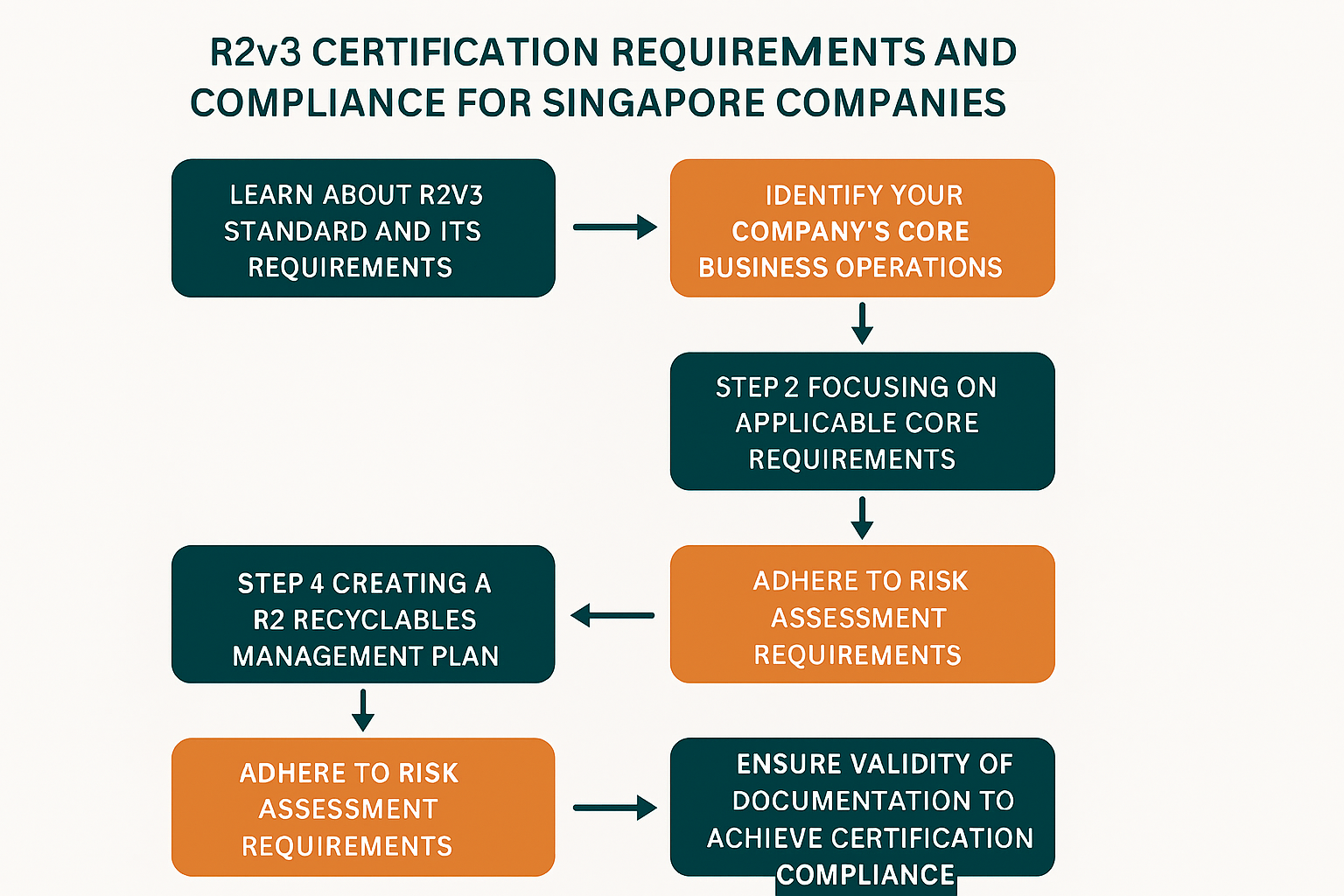
Initial Gap Assessment
The first step is understanding where your organisation stands. A gap assessment identifies:
-
Processes already aligned with R2v3
-
Policies and documentation that need to be developed
-
Operational risks and non-conformities
-
Required improvements for full compliance
A thorough gap assessment helps avoid costly last-minute corrections during the audit.
Control Implementation
After gaps are identified, companies begin implementing the required controls:
-
Developing new policies and updating existing ones
-
Training staff in R2v3 procedures and EHS practices
-
Setting up systems for tracking materials and documenting all activities
-
Improving data sanitisation processes
-
Strengthening downstream vendor due diligence
-
Conducting internal audits and mock audits
This stage usually takes the most time and determines how smooth the final audit will be.
External Audit & Certification
The R2v3 certification audit happens in two stages:
-
Stage 1 Audit: Evaluation of documentation, preparedness, and system design
-
Stage 2 Audit: Full operational audit including evidence review, worker interviews, and physical inspection
If non-conformities are found, corrective actions must be submitted and verified before certification is awarded.
Benefits of R2v3 Certification for Singapore Companies
Achieving R2v3 certification offers far more than a compliance badge. For Singapore companies operating in ITAD, refurbishment, recycling, or electronics processing, the benefits touch every part of the business—operational efficiency, customer trust, sustainability, and long-term growth.
1. Compliance with International Standards
R2v3 aligns your facility with globally recognised requirements for responsible recycling, data protection, worker safety, and environmental management. This is extremely valuable for Singapore companies because:
-
Many multinational clients only work with R2-certified vendors.
-
It demonstrates adherence to strict guidelines for handling data-bearing devices.
-
It positions your organisation in line with global ESG and circular economy expectations.
-
It strengthens your legal and regulatory compliance posture.
This alignment gives Singapore companies a significant edge when bidding for regional or international contracts.
2. Stronger Sustainability & Market Advantage
Customers, regulators, and investors increasingly prioritise sustainability. R2v3 supports this by ensuring responsible reuse, refurbishment, and recycling of electronics. As a certified facility, you benefit from:
-
A strong sustainability profile that appeals to green-conscious partners.
-
Higher customer trust, thanks to transparent and verifiable processes.
-
Better business opportunities, as certified companies often bypass lengthy due-diligence reviews.
-
Improved operational efficiency, driven by standardised procedures and reduced waste.
Over time, R2v3-labeled equipment or services become easier to market, helping companies stand out in Singapore’s competitive ITAD and electronics ecosystem.
Common Challenges in R2v3 Compliance (Expanded Explanation)
While R2v3 offers substantial value, meeting its requirements can be demanding. Singapore companies—especially those new to compliance frameworks—often encounter the following hurdles:
1. Building a Complete Material Tracking System
R2v3 requires full traceability from receiving equipment to final downstream processing. Setting up a tracking system for every unit or batch can be challenging if:
-
Processes are still manual
-
Data is recorded inconsistently
-
There is no centralised tracking software
A lack of traceability leads to audit failures and compliance gaps.
2. Downstream Vendor Management
Every downstream vendor—from refurbishers to recyclers—must meet stringent R2 controls. Companies often struggle with:
-
Collecting documentation from downstream partners
-
Checking their compliance status
-
Monitoring their environmental and data-handling practices
This becomes especially complicated when vendors are located overseas.
3. Meeting Rigorous Data Security Requirements
Data-bearing devices must be sanitised or destroyed according to highly specific procedures. Companies may face challenges in:
-
Documenting sanitisation for every device
-
Implementing secure destruction methods
-
Training staff in proper data-handling protocols
Even minor lapses can lead to non-conformance.
4. Keeping Documentation Consistent
R2v3 places heavy emphasis on written procedures, logs, and evidence. Many facilities struggle with:
-
Maintaining daily logs
-
Updating documentation as processes evolve
-
Ensuring employees follow written instructions
Documentation gaps are the most common cause of audit delays.
5. Aligning EHS Controls with Operational Reality
Environmental, health, and safety controls must not only exist—they must be practiced. Challenges arise when:
-
Staff are not properly trained
-
EHS controls are outdated
-
Facilities lack hazard assessments or emergency planning
Closing these gaps requires both time and investment.
Choosing the Right Partner for R2v3 Certification (Expanded Explanation)
Selecting the right consultant or certification partner is one of the most important decisions in the entire process. A strong partner simplifies compliance, avoids costly mistakes, and accelerates certification.
Here’s what to look for:
1. Proven Experience With R2 Standards
Your partner should have a track record of helping companies implement R2v3 or earlier R2 standards. Experienced consultants bring:
-
A deep understanding of SERI interpretations
-
Templates, frameworks, and documentation tools
-
Insights into common audit findings
-
Guidance on structuring processes efficiently
This saves months of trial-and-error.
2. Clear Methodology and End-to-End Guidance
A reliable partner should offer a structured, step-by-step approach that includes:
-
Initial gap analysis
-
Policy and procedure development
-
Training for staff
-
Mock audits before the official audit
-
Support during corrective action closure
End-to-end support ensures nothing is missed between planning and certification.
3. Expertise in EHS, Data Security, and ITAD Operations
R2v3 covers multiple disciplines. Your partner must understand:
-
Environment, Health & Safety
-
Chain-of-custody tracking
-
Data sanitisation & secure destruction
-
Refurbishment and recycling workflows
-
Legal and regulatory compliance in Singapore
This cross-functional expertise ensures all requirements are addressed fully.
4. Strong Industry Reputation
Look for partners with:
-
Positive reviews
-
Case studies and client references
-
Partnerships with SERI-recognised auditors
-
Experience across various ITAD or recycling facilities
A reputable partner increases your chances of passing audits successfully.
5. Local Knowledge of Singapore Regulations
While R2v3 is international, Singapore-specific laws also apply, such as:
-
E-waste management regulations
-
Workplace safety requirements
-
Environmental protection guidelines
A partner familiar with local compliance ensures you meet both R2v3 and Singapore’s regulatory expectations.
Conclusion
R2v3 certification is a powerful signal of responsibility, safety, and operational excellence. As Singapore strengthens its position in the global electronics and sustainability ecosystem, this certification helps companies build trust, enhance process integrity, and comply with the highest industry standards. By understanding the requirements, implementing the right controls, and working with qualified partners from Global Quality Services, organisations can achieve smooth certification and unlock new business opportunities in a competitive market.