
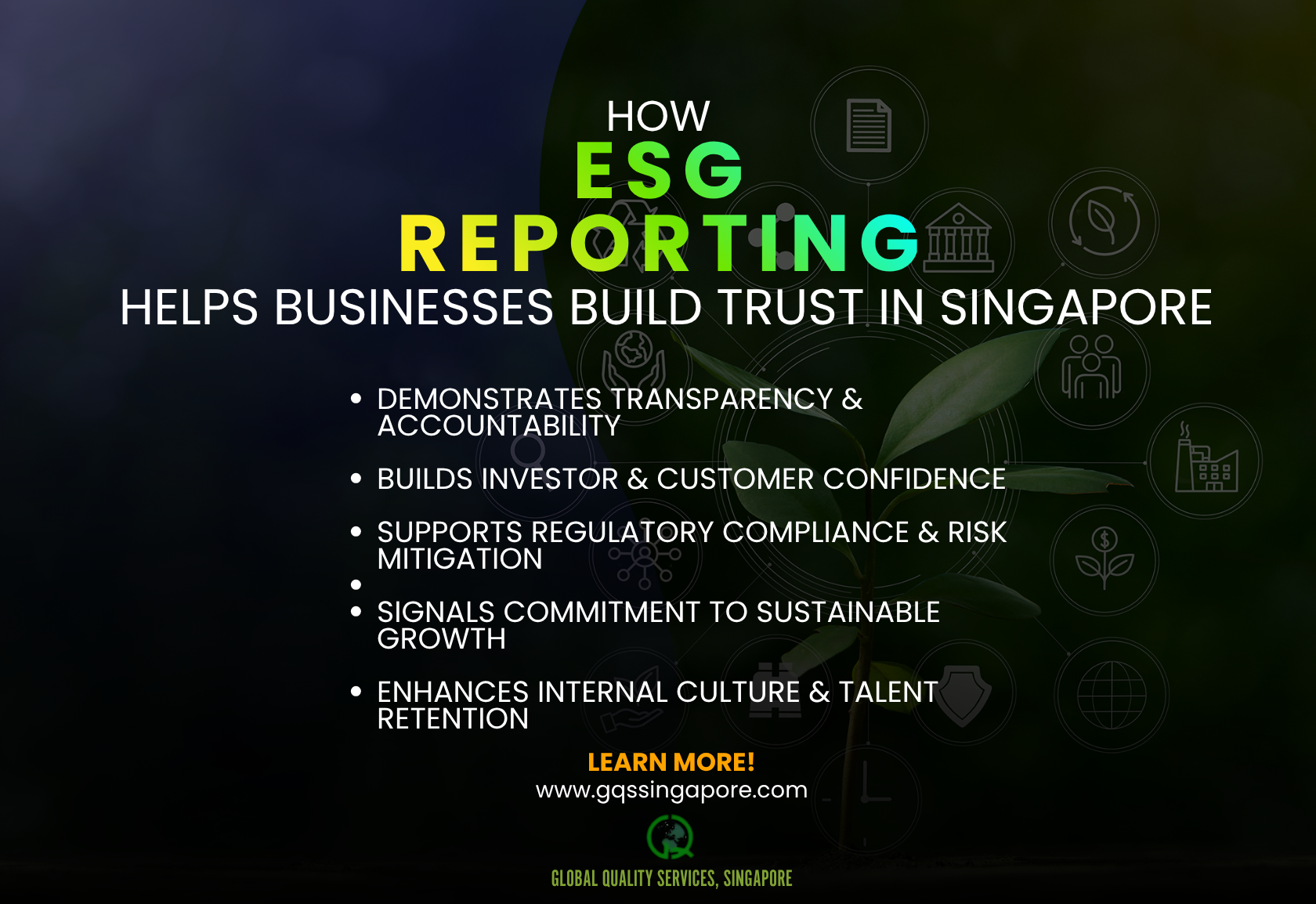
Singapore’s business is moving rapidly toward sustainability, ethical responsibility, and transparent governance. Customers, investors, and regulators now expect companies to demonstrate how they manage environmental impact, support communities, and uphold strong governance standards. ESG reporting has become the framework that ties all these expectations together.
For businesses in Singapore, ESG reporting isn’t just a compliance requirement—it’s a powerful tool to build long-term trust and credibility.
ESG Reporting in Singapore’s Business Context
The shift toward sustainability and responsible business practices has accelerated across Singapore. As companies navigate stricter regulations, rising consumer awareness, and global expectations, ESG reporting helps organisations clearly and credibly communicate their commitments.
What is ESG Reporting?
ESG (Environmental, Social, and Governance) reporting involves documenting how an organisation manages its environmental footprint, addresses social responsibilities, and maintains strong corporate governance. It provides a structured view of a company’s sustainability performance, risk management practices, and long-term strategic direction.
Growing Importance of ESG in Singapore
In Singapore, ESG reporting has gained significant momentum due to several factors:
-
Increasing regulatory expectations from authorities
-
Strong investor interest in sustainability-linked performance
-
Corporate commitments toward the Singapore Green Plan 2030
-
Rising consumer demand for responsible business practices
As a global financial hub, Singapore encourages organisations to adopt transparent ESG practices that align with international sustainability standards.
Core Elements of ESG Reporting
Effective ESG reporting covers three major pillars—environment, social responsibility, and governance. Each area reflects how responsibly a company operates and how well it manages risks.
Environmental Reporting Requirements
Environmental reporting focuses on how a business reduces its ecological footprint. This includes:
-
Energy consumption and efficiency
-
Carbon emissions and reduction initiatives
-
Sustainable resource use
-
Waste and water management
-
Progress toward climate commitments
Companies are increasingly expected to align with frameworks like the Task Force on Climate-related Financial Disclosures (TCFD) and Singapore’s sustainability guidelines.
Social Impact & Corporate Responsibility
The social pillar assesses how a company contributes to people—employees, communities, and society at large. Common reporting areas include:
-
Workplace safety, training, and employee well-being
-
Diversity and inclusion initiatives
-
Community engagement and volunteer programs
-
Human rights and fair labour practices
Transparent social reporting shows that a business values people as much as profits.
Governance Reporting Standards
Governance is the foundation of responsible business. Governance reporting includes:
-
Board composition, diversity, and independence
-
Anti-corruption and ethical conduct policies
-
Risk management frameworks
-
Data protection and cybersecurity practices
-
Compliance with local and international regulations
Strong governance frameworks enhance credibility and reduce organisational risk.
How ESG Reporting Builds Trust with Stakeholders
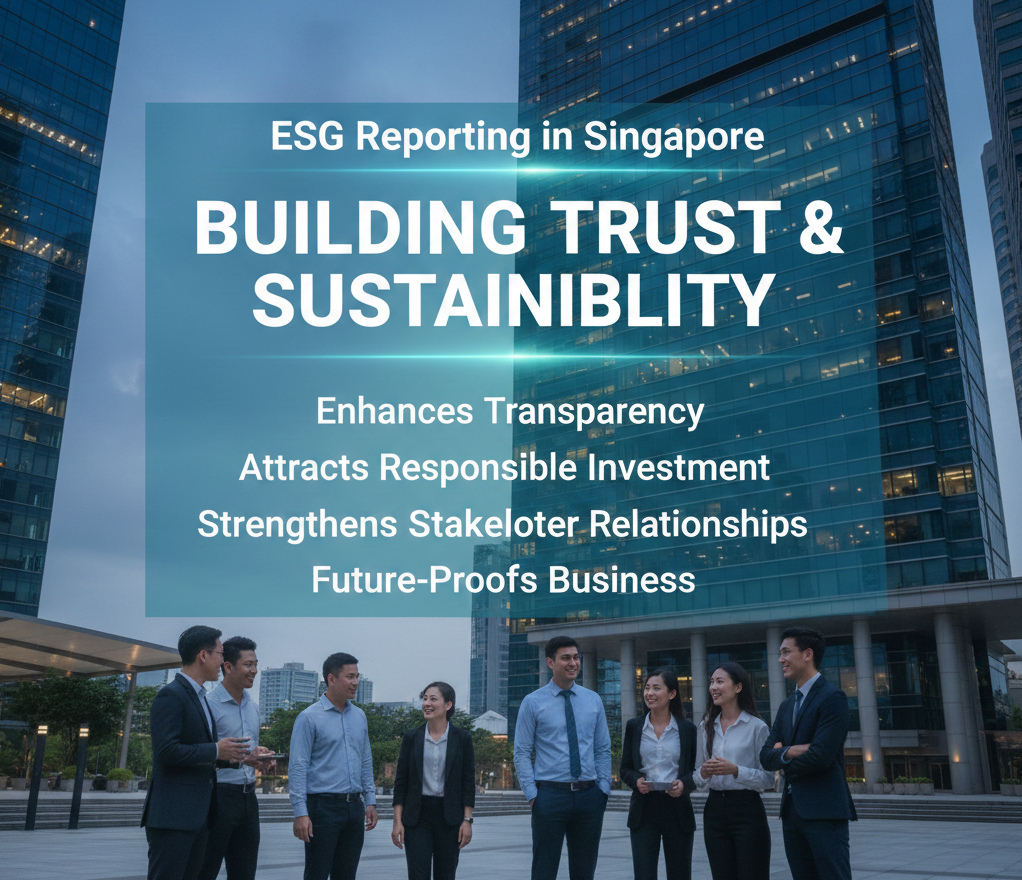
ESG reporting is not only about meeting requirements—it also strengthens relationships with those who matter most to the business.
Enhancing Brand Reputation
Companies with clear sustainability commitments often earn higher customer loyalty. Transparent reporting shows that the business operates responsibly, reduces negative impact, and contributes meaningfully to society. This builds long-term trust and improves brand perception.
Meeting Investor Expectations
Investors are increasingly using ESG data to assess long-term value and risk. Reliable ESG reporting helps businesses:
-
Attract responsible investment
-
Reduce perceived risk
-
Demonstrate future readiness
-
Align with ESG-linked financing opportunities
For many investors, ESG transparency is no longer optional—it is a core part of due diligence.
Complying with Regulatory Requirements
Singapore’s regulatory landscape is evolving quickly. Sectors such as finance, real estate, and manufacturing already face mandatory sustainability disclosures. ESG reporting ensures that companies stay compliant, avoid penalties, and remain competitive in a market driven by accountability.
Best Practices for ESG Reporting in Singapore
To build trust and deliver meaningful reports, companies should adopt structured and transparent reporting practices.
Data Collection & Management
Accurate ESG reporting starts with reliable data. Companies should:
-
Establish internal data owners
-
Use digital tools for sustainability tracking
-
Perform regular audits
-
Ensure consistency across reporting cycles
Good data management helps avoid gaps and increases report credibility.
Transparent Reporting Frameworks
Using recognised ESG frameworks gives reports structure and global relevance. Popular frameworks include:
-
GRI (Global Reporting Initiative)
-
SASB (Sustainability Accounting Standards Board)
-
TCFD (Task Force on Climate-related Financial Disclosures)
These frameworks provide guidance on what to report, how to report, and how to measure progress.
Future of ESG Reporting in Singapore
The future of ESG reporting in Singapore will bring greater standardisation, stronger regulatory oversight, and deeper integration of sustainability into business strategy. Digital reporting, climate-related disclosures, and supply-chain ESG assessments will become more common. Companies that adopt ESG practices early will be better prepared and more competitive as new requirements evolve.
Conclusion
ESG reporting has become an essential component of responsible business in Singapore. By providing clear insights into environmental impact, social responsibility, and governance practices, companies build credibility and foster trust with investors, customers, regulators, and employees. With thoughtful reporting, strong data management, and transparent frameworks, businesses can strengthen their reputation and position themselves for long-term, sustainable growth.
Ready to strengthen your compliance journey? Partner with Global Quality Services for expert guidance, end-to-end support, and audit-ready results. Contact our team today.