
Singapore businesses are retiring more IT equipment than ever, and improper disposal now carries serious PDPA and environmental risks. IT Asset Disposition (ITAD) compliance ensures data is securely erased, e-waste is responsibly processed, and every device follows a documented, audit-ready lifecycle. With strict regulations such as the PDPA and RSA, companies need structured processes, certified vendors, and robust internal policies to avoid breaches, penalties, and brand damage. A compliant IT Asset Disposition (ITAD)program protects sensitive data, supports sustainability, and strengthens customer trust—making it essential for every organisation in Singapore.
Why ITAD Compliance is Critical for Singapore Businesses
With frequent hardware refresh cycles and widespread digital adoption, organisations accumulate obsolete equipment faster than ever. Without compliant ITAD procedures, companies risk PDPA breaches, data leaks, improper recycling, and reputational fallout. Compliance safeguards information while supporting responsible sustainability initiatives.
Regulatory Landscape for ITAD in Singapore
Singapore’s legal framework places strong emphasis on data protection and environmental responsibility, making regulatory awareness essential for every organisation that handles end-of-life IT equipment.
Singapore’s Personal Data Protection Act (PDPA) & ITAD
The PDPA sets strict rules for how personal data is collected, managed, stored, and ultimately disposed of. During ITAD, businesses must ensure complete and irreversible data sanitisation. Any lapse can lead to significant penalties and loss of trust.
Environmental Regulations & E-Waste Disposal Requirements
Singapore’s Resource Sustainability Act (RSA) and the e-waste Extended Producer Responsibility (EPR) Scheme require electronic waste to be channeled through approved pathways. Companies are expected to work with responsible recyclers, ensure recovery of usable materials, and comply with NEA’s eco-management guidelines.
Key Requirements for ITAD Compliance
For organisations aiming to meet regulatory expectations, several core components form the basis of a compliant ITAD framework.
Secure Data Erasure & Destruction
Data must be wiped or destroyed using certified methods such as DoD-level sanitisation, degaussing, shredding, or cryptographic erasure. Maintaining a clear chain of custody prevents unauthorised access during disposal.
Certified Recycling & Disposal Processes
End-of-life equipment should be managed by recyclers with recognised certifications like R2, e-Stewards, or local NEA approvals. Certification confirms adherence to sustainable recovery and secure disposal practices.
Documentation & Audit Trails
Accurate documentation is mandatory for compliance. This includes destruction certificates, asset inventories, logistics records, and tracking reports that demonstrate transparency throughout the ITAD process.
Best Practices for ITAD Compliance in Singapore
To maintain strong ITAD governance, companies can implement proven strategies that help streamline processes and reduce risk.
Establishing Clear IT Asset Policies
Internal policies should cover the full lifecycle of IT assets—from acquisition to disposal. Clear guidelines help employees follow proper procedures for data security and equipment handling.
Working with Certified ITAD Vendors
Choosing experienced, certified vendors ensures compliance with PDPA and environmental regulations. Vendor screening helps validate security processes, recycling standards, and logistics protocols.
Periodic Compliance Audits
Regular audits help organisations identify gaps, verify ITAD documentation, and ensure ongoing compliance with regulatory requirements. Audits are particularly useful during major hardware refresh cycles.
Challenges Singapore Companies Face in ITAD Compliance
Despite strong awareness, many organisations encounter practical obstacles in achieving full ITAD compliance.
Data Security Risks
Residual data left on devices remains the biggest vulnerability. Mishandled drives or laptops can expose sensitive business information during disposal.
Cost Management & Vendor Selection
Balancing ITAD costs with compliance requirements can be challenging. Some low-cost vendors may lack proper certifications or secure handling capabilities.
Regulatory Updates
Singapore frequently updates its data protection and sustainability guidelines. Businesses must stay informed to ensure their ITAD process remains aligned with current regulations.
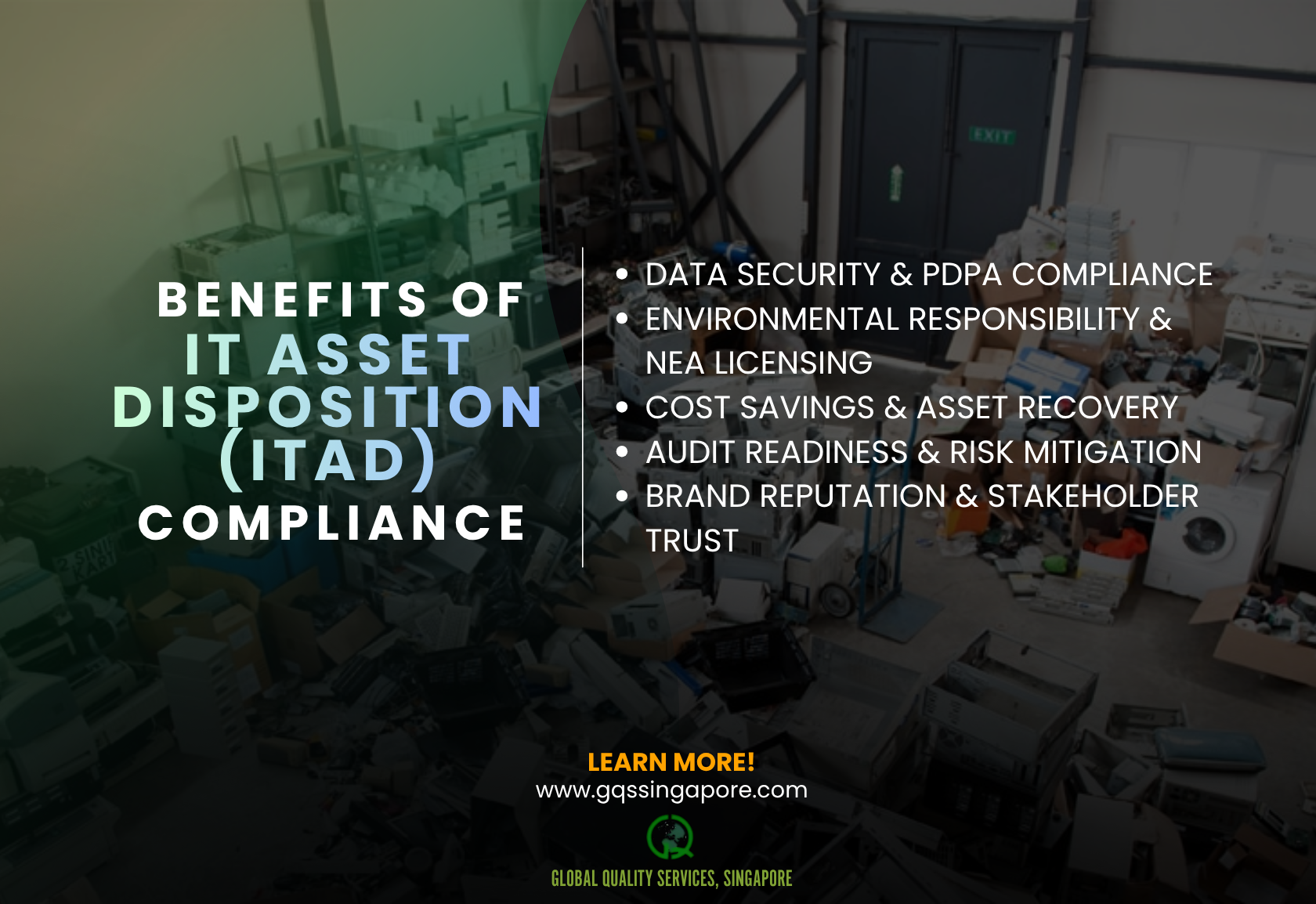
Benefits of ITAD Compliance for Singapore Businesses
A well-managed ITAD strategy delivers far more than regulatory adherence—it contributes directly to operational and reputational strength.
Enhanced Data Protection & Risk Reduction
Effective ITAD eliminates data-related vulnerabilities and strengthens the organisation’s cybersecurity posture.
Regulatory & Environmental Compliance
Compliance ensures businesses meet PDPA, RSA, and e-waste management expectations, avoiding penalties and operational disruptions.
Brand Reputation & Customer Trust
Responsible handling of retired assets builds credibility. Customers appreciate organisations that prioritise data security and sustainable practices.
How GQS Can Support ITAD Compliance in Singapore
With deep experience in compliance-driven asset management, GQS provides structured support tailored to Singapore’s regulatory environment.
End-to-End ITAD Compliance Solutions
GQS manages the full ITAD lifecycle—from data sanitisation and secure logistics to recycling, disposal, and documentation—ensuring every step meets compliance standards.
Vendor Selection & Audit Support
We help businesses evaluate ITAD providers, verify certifications, and conduct audits to validate compliance and eliminate risks.
Customized ITAD Strategies for Businesses
GQS designs bespoke ITAD strategies based on asset volume, data sensitivity, and operational needs, ensuring alignment with PDPA and environmental regulations.
Conclusion
ITAD compliance has become essential for Singapore organisations managing sensitive data and electronic waste. By adopting secure processes, partnering with certified vendors, and staying aligned with local regulations, companies can protect their data, strengthen compliance, and build long-term trust. Global Quality Services supports businesses at every stage of this journey with structured and reliable ITAD services.