
If you’re building a FinTech startup in Singapore, you’ve probably heard the term ISO 27001 thrown around — in investor calls, MAS filings, or partnership conversations. But what exactly is it, why does it matter, and how do you get there without derailing your product roadmap?
This guide breaks it all down in plain English.
What Is ISO 27001? (And Why FinTechs Can’t Ignore It)
ISO 27001 is the international gold standard for information security management. It’s a framework that helps organisations protect sensitive data — customer records, financial transactions, personal information — from breaches, leaks, and cyber threats.
For FinTechs in Singapore, it’s not just a nice-to-have. It’s fast becoming a baseline expectation from regulators, enterprise clients, and investors alike.
What MAS Expects from Singapore FinTechs
The Monetary Authority of Singapore (MAS) sets the regulatory tone for all financial services companies in the country. Two key frameworks shape cybersecurity expectations:
MAS Technology Risk Management (TRM) Guidelines outline how financial institutions should manage technology risks — covering system resilience, access controls, vendor management, and incident response. While TRM guidelines are not identical to ISO 27001, the two frameworks are closely aligned. Achieving ISO 27001 certification demonstrates strong, auditable compliance with TRM expectations.
MAS Notice on Cyber Hygiene mandates baseline controls for all MAS-regulated entities. ISO 27001 helps you meet and exceed these requirements systematically.
In short: if you’re regulated by MAS or plan to be, ISO 27001 is your clearest path to demonstrating readiness.
Key Risk Controls You Must Implement
ISO 27001 requires you to identify your information security risks and implement controls accordingly. For FinTechs, the most critical controls include:
- Access Control — Only authorised users can access sensitive systems and data. Role-based access, multi-factor authentication (MFA), and regular access reviews are essential.
- Encryption — All sensitive customer and financial data must be encrypted both in transit and at rest.
- Incident Response — You must have a documented, tested plan for detecting and responding to security breaches within defined timeframes.
- Vendor and Third-Party Risk Management — Many FinTechs rely on cloud providers, payment processors, and APIs. ISO 27001 requires you to assess and manage the security posture of all third parties.
- Business Continuity and Disaster Recovery — Plans must be in place to ensure your services remain available during disruptions.
- Security Awareness Training — Every employee is a risk vector. Regular training is mandatory.
Required Policies Every FinTech Must Have
Before certification, you’ll need documented policies covering information security, acceptable use of systems, password management, data classification, incident management, physical and environmental security, and change management. These aren’t just paperwork — auditors check that policies are actively followed, not just written.
Your ISO 27001 Roadmap: From Zero to Certified
Getting certified typically takes 9 to 18 months for a FinTech startup, depending on your current security maturity. Here’s a simplified roadmap:
- Months 1–2: Gap Analysis — Assess your current security posture against ISO 27001 requirements. Identify what’s missing.
- Months 3–5: Build Your ISMS — Establish your Information Security Management System. Define scope, write policies, assign responsibilities.
- Months 6–9: Implement Controls — Roll out technical and operational controls across your organisation.
- Months 10–12: Internal Audit — Conduct an internal audit to find gaps before the external assessors do.
- Months 13–15: Stage 1 Audit — An accredited certification body reviews your documentation.
- Months 16–18: Stage 2 Audit — Auditors assess whether your controls are working in practice. Pass this and you’re certified.
Certification is valid for three years, with annual surveillance audits.
How ISO 27001 Unlocks Funding and Partnerships
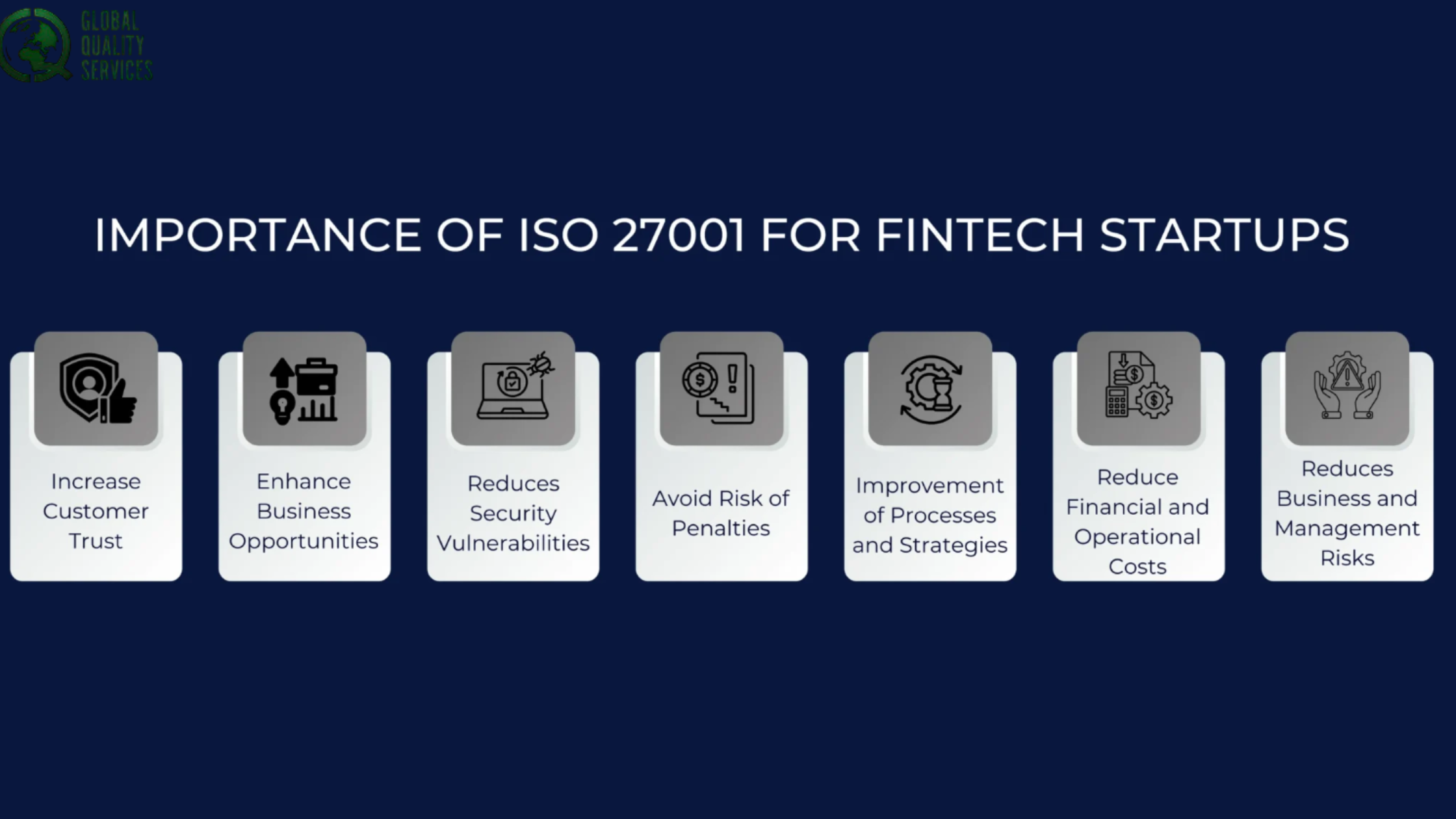
This is the part founders often overlook. ISO 27001 certification signals to investors and enterprise clients that your startup takes security seriously — and that you’re built to scale responsibly.
VCs conducting due diligence will ask about your security posture. Enterprise B2B clients — especially banks, insurers, and government-linked companies — often make ISO 27001 a procurement requirement. Achieving it removes a major barrier to closing high-value deals. It also strengthens applications for MAS licensing and accelerator programmes that prioritise regulatory readiness.
Simply put: certification can directly accelerate your revenue and fundraising timeline.
Start Your ISO 27001 Journey Today
Whether you’re pre-revenue or scaling fast, the best time to start is now. Early implementation is far less costly than retrofitting security after a breach — or losing a major contract because you couldn’t pass a security assessment.
Take the first step: Conduct a gap analysis against ISO 27001:2022 requirements. Global Quality Services offers free initial assessments. Look for firms with MAS TRM expertise and FinTech-specific experience.
Frequently Asked Questions
How much does ISO 27001 certification cost in Singapore?
For a FinTech startup with 10–50 employees, expect to invest SGD $30,000–$80,000 including consultancy, tooling, and audit fees. Costs vary based on complexity and existing security maturity.
Is ISO 27001 mandatory for Singapore FinTechs?
It is not legally mandated, but MAS-regulated entities are expected to meet the TRM Guidelines, which ISO 27001 strongly supports. It is increasingly required by enterprise clients and investors.
How long does ISO 27001 certification take?
Most FinTech startups achieve certification within 12–18 months. Mature organisations with existing controls can do it faster.
Can a small FinTech startup realistically get certified?
Yes. ISO 27001 is scalable. You define the scope, so a startup can certify a specific product or business unit first, then expand.
What’s the difference between ISO 27001 and SOC 2?
ISO 27001 is an internationally recognised standard with formal certification. SOC 2 is a US-focused auditing standard common in SaaS. If you’re targeting Singapore and Southeast Asian markets, ISO 27001 carries more weight with regulators and enterprise buyers.
Does ISO 27001 help with MAS licensing applications?
Yes. Demonstrating a structured ISMS with ISO 27001 certification strengthens your MAS licence application by showing proactive risk management.