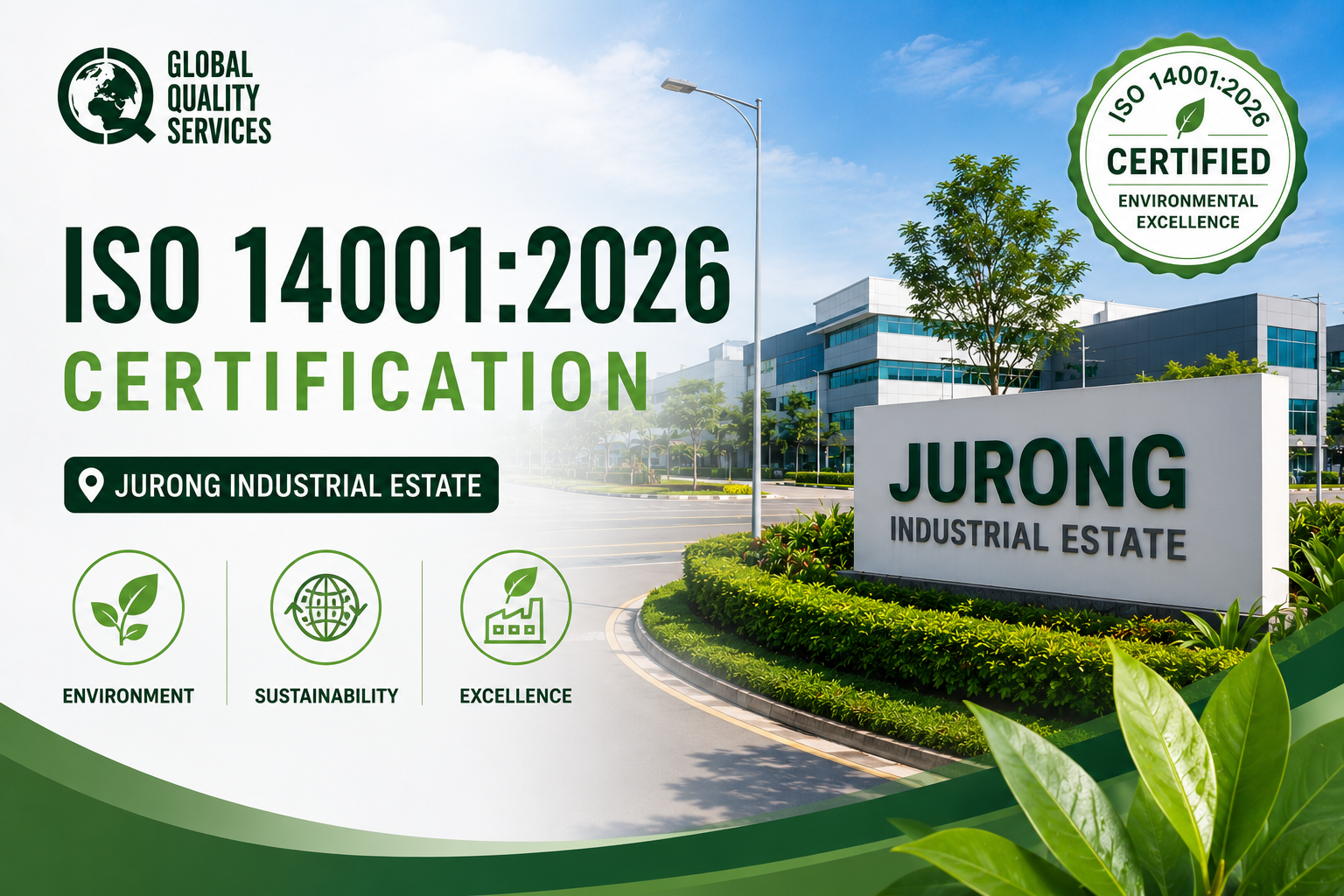
Jurong Industrial Estate is Singapore’s oldest and largest industrial zone, home to refineries, chemical plants, metal works, shipyards, and heavy manufacturing operations that sit close to residential areas and water catchments.
Facilities here are already subject to strict discharge, emissions, and scheduled waste rules enforced by the National Environment Agency, and many tenancy agreements with JTC carry their own environmental obligations. ISO 14001:2026 certification provides Jurong-based businesses with a structured, auditable way to meet these obligations, rather than managing them ad hoc across different departments.
The 2026 edition also raises the bar specifically in areas that matter to process and heavy industry: climate-related risk, resource use, pollution control, and life-cycle impact across suppliers and outsourced processes. For a chemical or metal processing plant in Jurong, that means closer scrutiny of how raw material sourcing, water use, and waste handling are documented and reviewed, not just whether a policy exists on paper.
ISO 14001:2026 was published in April 2026, replacing ISO 14001:2015. It keeps the same overall clause structure, so an existing environmental management system is not being rebuilt from scratch. Key pointers for Jurong Industrial Estate businesses:
- Transition deadline: ISO 14001:2015 certificates remain valid until April 2029. After that, only ISO 14001:2026 certificates count.
- Climate risk: Organizations must now assess whether climate change is relevant to their operations and factor it into their context and planning, rather than treating it as a separate exercise.
- Resource and biodiversity scope: Resource availability and biodiversity sit alongside pollution and climate as context factors relevant to plants that draw on shared water and land resources in Jurong.
- Life-cycle and supply chain: Environmental aspects now extend to externally provided processes, products, and services, not just what happens on-site.
- New change management clause: A dedicated clause on planning organizational changes means that any process, equipment, or supplier change must be assessed for environmental impact before it occurs.
- No fresh start needed: A working ISO 14001:2015 system typically needs targeted updates, not a rebuild.
What changed with ISO 14001:2026 Certification
ISO 14001:2026 was published in April 2026, replacing ISO 14001:2015. It keeps the same overall clause structure, so an existing environmental management system is not being rebuilt from scratch. The main changes sharpen requirements around climate risk assessment, biodiversity and resource availability, life-cycle thinking, and a new clause on planning organizational changes.
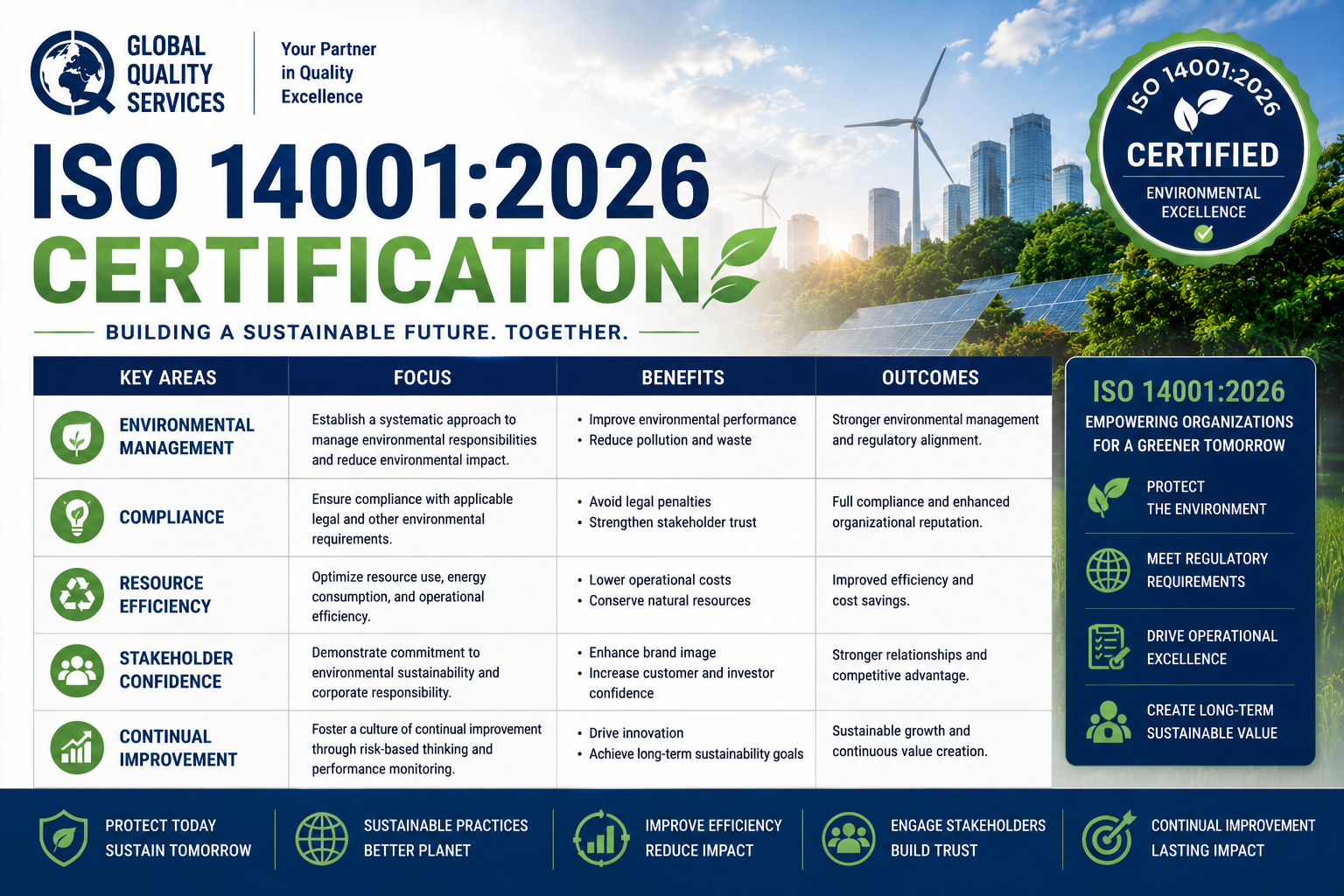
Organizations still holding ISO 14001:2015 certificates have a transition window running until April 2029, after which only ISO 14001:2026 certificates remain valid. GQS builds new certifications directly against the 2026 requirements and also manages transition audits for businesses still on the 2015 edition.
What certification does for your business
Beyond regulatory compliance, ISO 14001:2026 certification is increasingly a prerequisite for working with multinational clients and for government tenders that screen suppliers on environmental governance.
It also tends to surface real operational savings: tighter control over energy, water, and raw material use, fewer compliance incidents, and a clearer audit trail if NEA or JTC ever requests one. For exporters, it signals credibility in markets where ISO certification is a baseline expectation rather than a differentiator.
How Global Quality Services Helps in the Certification Process
GQS starts with a site-specific gap analysis against ISO 14001:2026, mapped to your existing processes rather than a generic checklist. We then build out the documentation, environmental aspects register, and operational controls your facility actually needs, train relevant staff, run internal audits, and prepare the team for the certification body’s assessment.
Throughout, we work against the national standards framework maintained by Enterprise Singapore, so the system we build aligns with how accredited certification bodies in Singapore actually audit.
Our consultants are familiar with the specific environmental considerations of Jurong’s process-industry mix, which makes the gap analysis faster and the documentation more relevant than a one-size-fits-all template would.
For businesses that also hold or are pursuing ISO 9001 or ISO 45001, we can integrate the environmental management system with existing quality and safety systems, since all three now share a similar high-level structure. Ready to start your gap analysis? Contact GQS Singapore to scope ISO 14001:2026 certification for your Jurong Industrial Estate facility.
Frequently Asked Questions
Do I need ISO 14001:2026 if I’m already ISO 14001:2015 certified?
Your 2015 certificate stays valid until the transition deadline of April 2029, but recertification audits after that date will be against ISO 14001:2026. Most businesses transition during a scheduled surveillance or recertification audit rather than as a standalone exercise.
How long does certification take for a Jurong-based facility?
Timelines depend on your current environmental management maturity and facility complexity, but most Jurong Industrial Estate clients complete certification within three to six months, including gap analysis, documentation, implementation, and the certification audit.
Does GQS specifically work with JTC-tenanted facilities?
Yes. We regularly support tenants on JTC-managed land, including facilities with existing tenancy-linked environmental obligations, and structure documentation so it can be referenced directly during regulatory or landlord environmental reviews.
Is ISO 14001:2026 harder to achieve than the 2015 version?
Not significantly. The changes are described as evolutionary rather than a redesign, with a focus on clearer climate, resource, and life-cycle requirements. A well-run 2015 system generally needs targeted updates rather than a full rebuild.